




Crop rotation
Crop Rotation is designed to keep our hard-working soil productive.
Crop Rotation is designed to keep our hard-working soil productive.
Plants are grouped and planted together – according to their preferred soil conditions. These groups are moved around the garden with each new season so they grow in a range of different areas rather being repeatedly grown in one place. Rotating crops in this way helps to prevent a build up of pests and diseases in any given part the garden and reduces the risk of soil becoming exhausted by the same crops drawing nutrients from it season after season.
Plants all attract their specific pests and are susceptible to certain diseases, they also utilize specific nutrients in the soil and benefit from varied soil conditions. If they are grown in the same place year after year then the particular nutrients required by those plants become depleted and the pests and diseases that affect them can start to build up. For example hungry brassicas planted in the same place season after season might soon rob soil of nitrogen and foster a build up of cabbage white butterflies, aphids, slugs and snails in the vicinity of what is for them a reliable food source and habitat. As a result, plants can start to grow weaker and more susceptible to pests and diseases, yields then drop until crops ultimately fail altogether. This is what so often happens in exhaustive commercial agriculture.
If you are into planning and organizing your garden then crop rotation can be a useful guide for growing produce but it need not be totally rigorous. Crop rotation may not suit us all the same way – we don’t share the same gardens and numbers of planting areas after all. It may totally fit in with one style of gardening or be more of a loosely interpreted guide for another. Because it organizes plants into groups, crop rotation gives a gardener a good way to start finding out about what grows well together and this can be useful information regardless of how it is applied. Some like to begin by relying on a rotation plan for a few years and then start making plant positioning more intuitive as time passes and they learn the basics of like growing like with like and maintaining healthy soil. Ultimately, it can become part of a general planting philosophy where a gardener has an idea of what went where in the previous season and uses this to prepare soil and move crops without repeating positions too often.
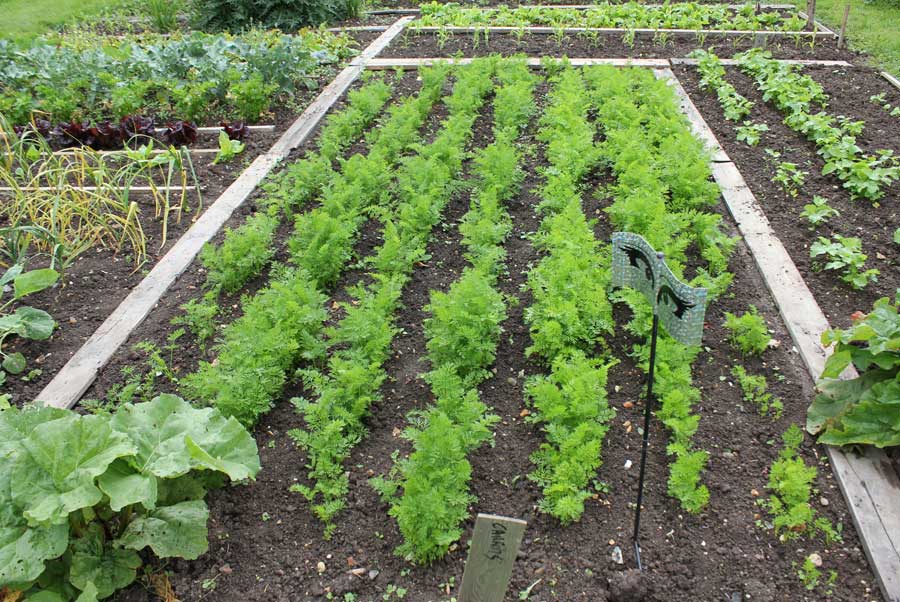
In a rotation system, crops are grouped together according to preferred soil type, required nutrients and the types of pests and diseases that threaten them.
This often sees them grouped in families:
Roots (carrots, beetroot etc.)
Legumes (peas, beans)
Brassicas (cabbages, kale)
Allium or Onion family (garlic, onion, shallot)
Potato family (potato, tomato)
Curcubits (zucchini, pumpkin, cucumber).
These chosen groups of plants are grown together in separate beds/areas and moved to a different bed or planting area in the garden with each new season.

Healthy Soil
Crop rotation helps to prevent soil becoming over-populated with any one pest or the spores of a particular disease associated with a type of plant – such as blight spores building up in soil used repetitively for tomatoes and potatoes.
Shared benefits
Moving plants around the garden enables one group to benefit from the activity of another that has grown before it. For example:
Benefits of a rotation system between four plant groups:
Group 1 Legumes fix nitrogen into the soil. They grow on a well-composted soil and help improve its structure. They are followed by brassicas.
Group 2 Brassicas are nitrogen hungry. They hoover up the nitrogen left by the legumes and grow well on soil that has been well composted and where that compost is well-incorporated. Soil should be firmed before planting for stable root systems. Brassicas are followed by Alliums.
Group 3 Alliums like soil that has been composted for a previous crop – so not too rich. They like a fine soil that has been well broken up by the heavy roots of plants like brassicas. Alliums are followed by Roots.
Group 4 Roots like soil that has been composted for a previous crop (ie. so it is not too rich), well dug through and has a light, sandy texture – this allows plants to produce uniform roots that can easily penetrate the soil.
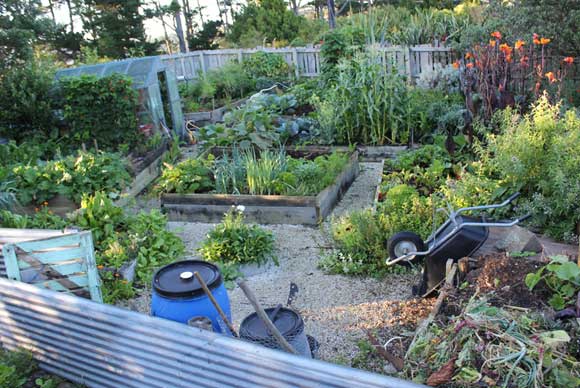
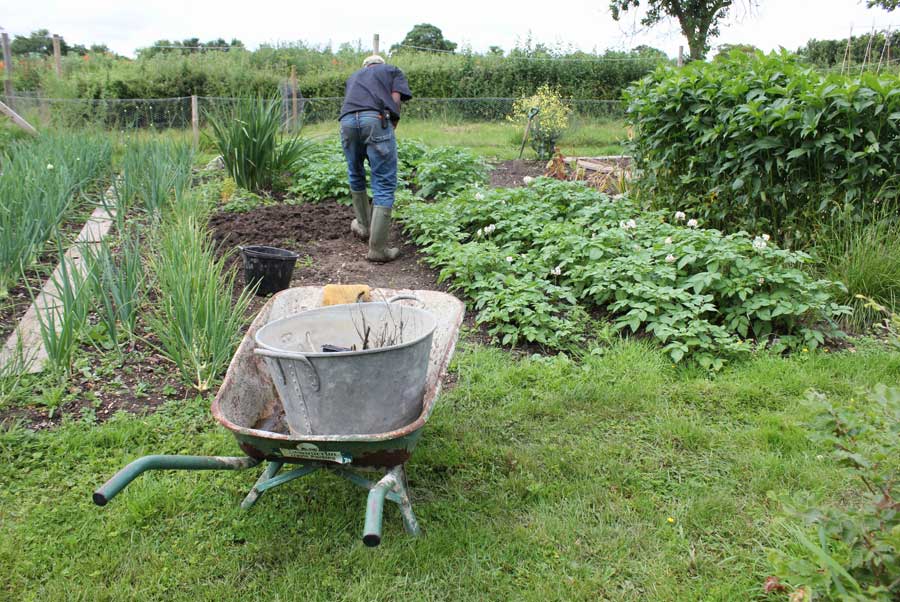
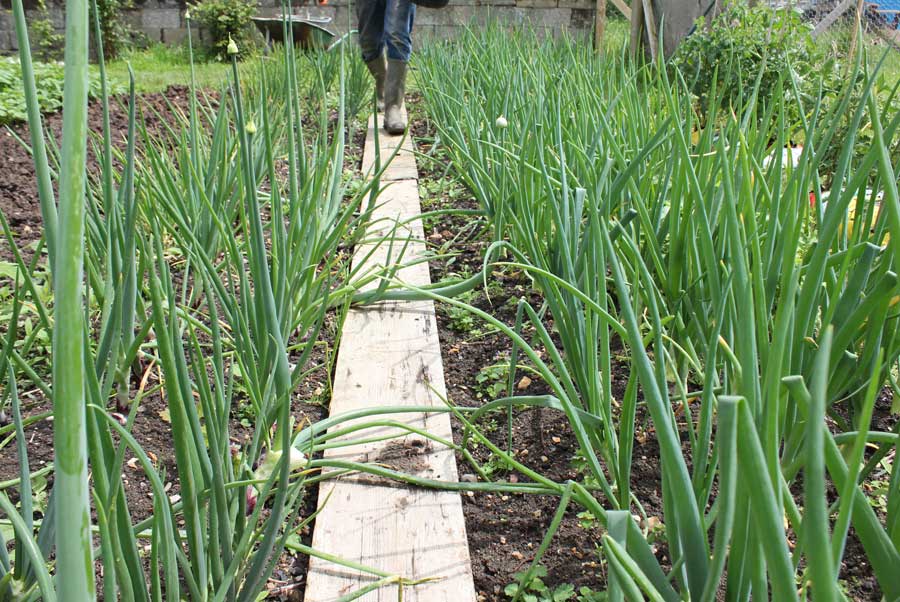
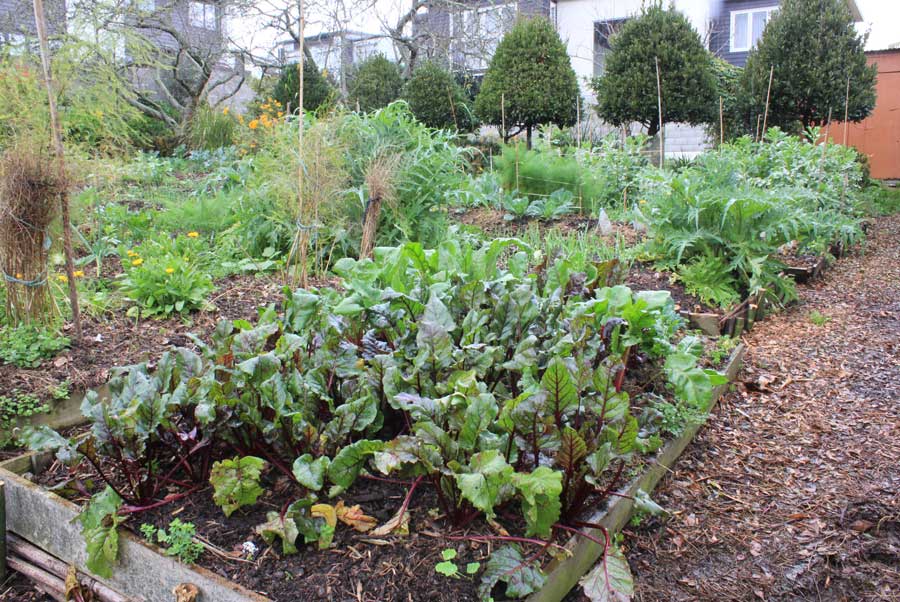


Crop rotation works well by general guidelines. Many of the separated groups will work when mixed and grown alongside or amongst each other.
Brassicas are companion plants for Alliums.
Alliums are companion plants for Roots.
Curcubits are companion plants for Legumes and Roots
You can go for a general sense of planting in groups and then mix things up with the following that can be planted here and there where space permits and appetite dictates:
Lettuce and all salads, annual herbs – basil, coriander, parsley, dill.
Flowers –marigolds (repel pests), calendula, zinnias, cosmos (attract predators) can all be planted amongst your crops. Biennial flowers such as borage and Cleome are best planted in any available areas around your beds – unless your beds are large.
Invasive but highly useful Comfrey should be planted where it can be contained from spreading its persistent roots (tyre stack, raised planter).
Once you have a basic structure to your planting and an understanding of what might work where you can start to diversify your planting wherever possible. This means popping the odd spare seedling or the end of a seed packet into any gaps that you spot or that become available once you are harvesting. There are very few plants that will specifically inhibit the growth of others when popped in and around as individuals.
(Florence fennel is one vegetable that is pretty much allelopathic to all other plants – this means it exudes chemicals that suppress growth in neighbouring plants. It still grow it in my beds but I give it a well –mulched buffer zone of about a hand’s length or two between it and other nearby plants.)
Spread bright, open-faced flowers throughout your beds and in the open ground around them – these will draw in beneficial insects. Let some of your vegetable plants flower so that they too can draw in beneficial insects. If flowers and vegetables self-seed in your beds, nurture the seedlings where possible so they can grow and mature – they have found suitable conditions in which to grow.
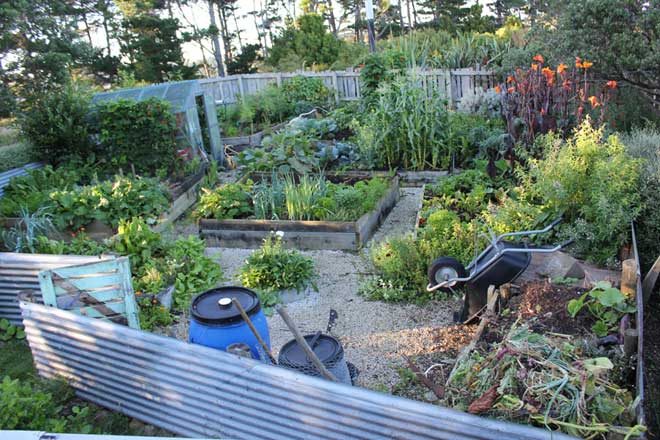
FOUR year crop-rotation is fairly common and requires that you divide your beds or planting areas up into four areas.
The predominant groups for four areas/beds can be:
1. Legumes – Peas, Broad beans (dwarf and runner beans can be grown wherever)
2. Brassicas – Broccoli, Brussels sprouts, Cabbage, Cauliflower, Kale, Kohlrabi, Chinese Greens (Pak choi, Tatsoi) Radishes, Turnips, Silverbeet, Spinach.
3. Alliums – Onion, Garlic, Shallot, Leek, Spring onion, Chives. (can include curcubits)
4. Roots – Beetroot, Carrot, Celeriac, Celery, Florence fennel, Parsley, Parsnip. (can include potatoes and tomatoes, kumara
There are three other groups that don’t need a designated place in a four bed system. These are best planted in additional planting areas outside the main four beds.
Potato family – Potato, Tomato, Kumara (Capsicum, Chilli, Aubergine are OK anywhere). Depending on how many of these you want to plant they can be incorporated into the Roots planting as well as containers (tyre stacks, tubs) and any extra beds you might have.
Curcubits – Cucumber, Marrow, Pumpkin and Squash, Zucchini. Depending on numbers these can be incorporated into the Allium planting as well as containers and any extra beds.
Permanents – Some plants stay in the ground year round – these need a location of their own:
Asparagus
Globe artichoke
Perennial herbs – Rosemary, Sage, Lavender, Thyme, Mint, Marjoram
Rhubarb
Soft fruits – Blueberries, Raspberries etc.
Bed numbering
It helps to sketch a rough plan and number your beds or planting areas from one to four and allocate plant groups as follows:
YEAR ONE – This summer –
BED 1 – Group 1 – Legumes
BED 2 – Group 2 – Brassicas
BED 3 – Group 3 – Onions
BED 4 – Group 4 – Roots
YEAR TWO – Next summer –
BED 1 – Group 2 – Brassicas
BED 2 – Group 3 – Onions
BED 3 – Group 4 – Roots
BED 4 – Group 1 – Legumes
YEAR THREE – Following summer –
BED 1 – Group 3 – Onions
BED 2 – Group 4 – Roots
BED 3 – Group 1 – Legumes
BED 4 – Group 2 – Brassicas
YEAR FOUR – end of first rotation –
BED 1 – Group 4 – Roots
BED 2 – Group 1 – Legumes
BED 3 – Group 2 – Brassicas
BED 4 – Group 3 – Onions
Typical spring/summer plantings in a FOUR bed rotation:
BED 1
Dwarf bean
Runner bean
Peas – mangetout, snap and sugar snap
Salads – lettuce, rocket, mizuna
3 sisters – Sweetcorn (min 20), runner bean, cucumber or squash
Calendula, French marigold, Zinnia, Viola (edges)
POST SUMMER – green manure Blue Lupin (maybe half the bed with other half planted in Broccoli, Cabbage, Kale)
BED 2 (watch out for cabbage white butterflies)
Kale
Cabbage
Broccoli
Cavolo nero
Silverbeet
Spinach
Pak choi
Radish
GROW THROUGH TILL APRIL – then compost for Garlic, Onion and Shallots in June and then Leeks in August
BED 3
Spring onion
Chives
Leeks
Salads
Space for – zucchini, cucumber, squash, melon
AT THE END OF SUMMER, clear and then lightly compost so you can grow roots and salads through winter – or green manure Blue Lupin
BED 4
Beetroot
Carrot (plant French marigold to deter root fly)
Florence fennel (plant separately within bed if possible)
Parsley
Salads
Space for – Tomato, Capsicum, Chilli, Aubergine
Maybe grow a pumpkin out to the side of your bed
CLEAR IN AUTUMN – compost and prepare to plant peas in Winter
Additional bed/planting area if you have one
Tomato
Runner bean
Sunflower
Cucumber
Salads
POST SUMMER – green manure (Broad bean)
Thereafter this bed can be used for crops you really like that are taken out of main 4 bed rotation. You will vary so as not to build up accumulation of pests and diseases. Use flowers and herbs as well as catch crops like salads for diversity.
THREE year crop rotation where a garden has three beds/planting areas
Group your plants as follows:
Group 1
Peas, climbing and dwarf beans, sweet corn, silverbeet, spinach, salads
Group 2
Cabbage, kale, broccoli, Brussels sprout, pak choi, kohlrabi, cauliflower, mizuna, swede, turnip, radish
Group 3
Tomato, potato, cucumber, squash, zucchini, aubergine, capsicum, pumpkin, Florence fennel, carrot, beetroot, celeriac, celery, parsnip, onion, garlic, leek, shallot,
At the end of each season:
Each group move round by one bed so that –
Group 1 is followed by Group 2
Group 2 is followed by Group 3
Group 3 is followed by Group 1