





Basil
Basil
Ocimum basilicum
Basil growing in the garden is a sure sign of summer. It is an easy to grow sun-loving herb that goes a long way in the kitchen. Freshly picked it takes pasta, salads and pizzas to a new dimension in tastiness, whizzed into a quick pesto with garlic, nuts and parmesan cheese it makes a pasta classic and can be used in lots of different snack combinations. At the end of summer when you have more than you know what to do with, you can make a mountain of pesto to freeze for delicious pasta and soups through autumn and winter.
In a nutshell
- Full sun
- Sandy soil
- Easy to grow from seed
- Useful companion plant
- Aromatic summer herb
Quantity
1 plant per person
Companions
- Tomato
- Asparagus,
- Beans
- Chilli pepper
- Aubergine
- Potato
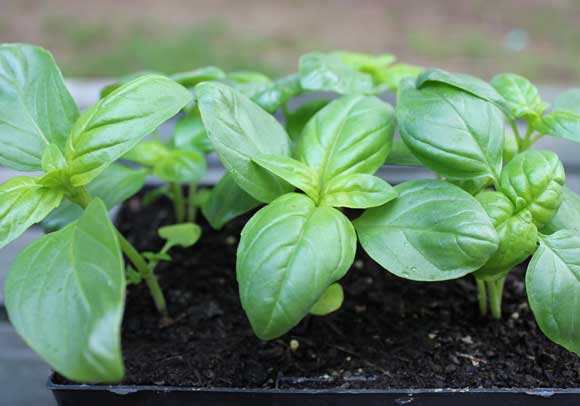
The growing lifecycle

Basil seedlings growing in a tray

Basil seedling newly planted in a bed
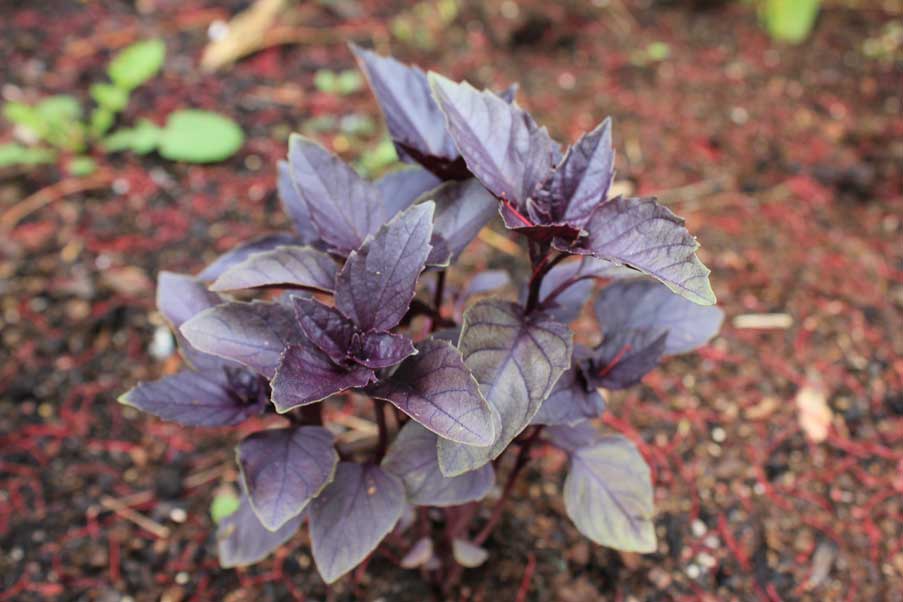
Purple basil growing in a bed
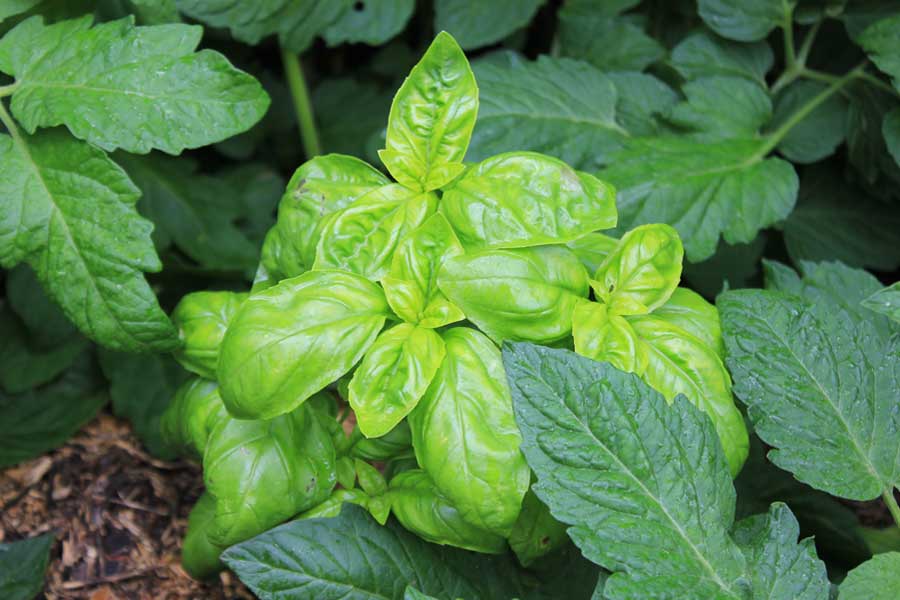
Basil growing at the base of tomato plants

Basil growing strongly

Basil at the end of summer ready for making a winter's supply of pesto
Top variety
1. Sweet Genovese
A commonly grown and highly productive variety. It can grow to about knee height.
Getting started
When
Indoors you can grow basil in a pot on a warm windowsill all year round. Outdoors basil is usually planted at the same time as tomato seedlings. This means from spring once the soil has warmed up
and all risk of frosts has passed.
Where
Basil loves warmth and sunshine, it often shares a planting spot on the sunny side of the base of tomato plants. It grows very well in pots and window boxes.
Soil
Basil likes a free-draining soil that doesn’t hold onto moisture for very long – a watering can of water poured onto the soil should drain away within 30 minutes or so. A fertile, sandy soil with a bit of organic matter dug through it – kitchen compost, well rotted manure, chicken manure pellets or worm compost – is ideal. If your soil is sticky then dig in coarse sand or fine grit to help improve drainage – or plant in a pot or bucket with holes in the bottom.

Sow & plant
Sow
In early spring, sow seeds a finger-tip deep in trays or punnets filled with seed compost and keep on a warm window sill or in a greenhouse until weather has warmed outdoors. Water enough to keep compost moist and thin seedlings as they develop. Seedlings should have as much space between each other as they are tall.
Plant
If going for a spring planting, when your seedlings are about a finger’s length in height move your seedlings to a cooler spot – a cold frame is ideal – to get them used to cooler temperatures of outdoors. If you don’t have a cold frame then maybe a porch or wash house windowsill might do instead.
When the weather has settled and it is reliably warm and sunny, plant seedlings at an average spacing of a good hand’s length to a forearm apart. Protect with a plastic juice bottle cloche as plants establish. Keep an eye out for slug and snail damage overnight. If you see evidence of attack then go on a hunt and utilise your chosen control methods.
Maintain
Remove any cloches as plants establish. Water basil at the base of the plant and in the heat of the day and pinch out the tips of plants when they are about a hand’s length in height.
Aphids can be a problem. Treat any visible infestations with Neem oil, Garlic oil spray or Tomato leaf spray.
Harvest or pick
Pick regularly from the top to discourage plants from flowering and to produce more large, sweet leaves further down the plant.
Sow a new batch of plants every four weeks from spring onwards to ensure a long and aromatic harvest.
More herbs
Grow