





Threats
THERE ARE MANY THREATS TO BEES WORLDWIDE that make it all the more important for us to establish our own hives wherever possible. Bees need as much help as they can get and even in the comparative safety of our gardens, small holdings and farms they are still at risk from a range of pests and diseases. There is a huge element of luck involved in beekeeping – above and beyond the best efforts of well-informed beekeepers to look after and protect their bees. Sometimes things go wrong regardless of our best efforts and its good to know how to spot the signs of any potential issues so that effective preventative action can be taken. Here are a few of the more common pests and diseases that frequently come up in conversations over hive health. These are by no means intended to give you the full picture but to act a small eye opener – especially if you are thinking of keeping bees. The best advice comes from more experienced beekeepers in your local club or association.
Wasps
Wasps are a common sight around beehives between spring and late autumn. In summer they are attracted to nectar and honey and will enter the hive to rob it. In autumn wasps seek protein to feed larvae as their nest populations increase. This coincides with bee colonies slowing down their activity and numbers in the hive beginning to decrease. Wasps will enter hives to rob them of larvae and attack bees, cutting them up before carrying the body parts back to their nest. Many beekeepers put out traps around their hives and seek out wasp nests in the vicinity before getting professional help to destroy them.

American foulbrood
This is a serious issue for beekeepers with usually fairly serious consequences. AFB, as it is known, is a microscopic bacterium that produces spores inside the gut of any bees or larvae that are infected. Larvae die before they reach maturity and AFB spreads through hives killing young larvae as it goes. It can be hard to diagnose AFB as the signs are subtle and often only discernible to experienced beekeepers. The more common signs are patchy brood patterns – with capped brood cells surrounded by areas of uncapped cells – and capped cells with sunken cappings. There are many other ways of spotting a potential outbreak, if you suspect your hive has AFB then contact an AssureQuality apicultural officer or call MAF. If a apiary is diagnosed with an outbreak of AFB then all bees are killed – usually by petrol being poured into the sealed hives – and then all hives, frames and associated parts, along with dead bees, are burned in a sunken pit dug in the ground.

Varroa - How to test
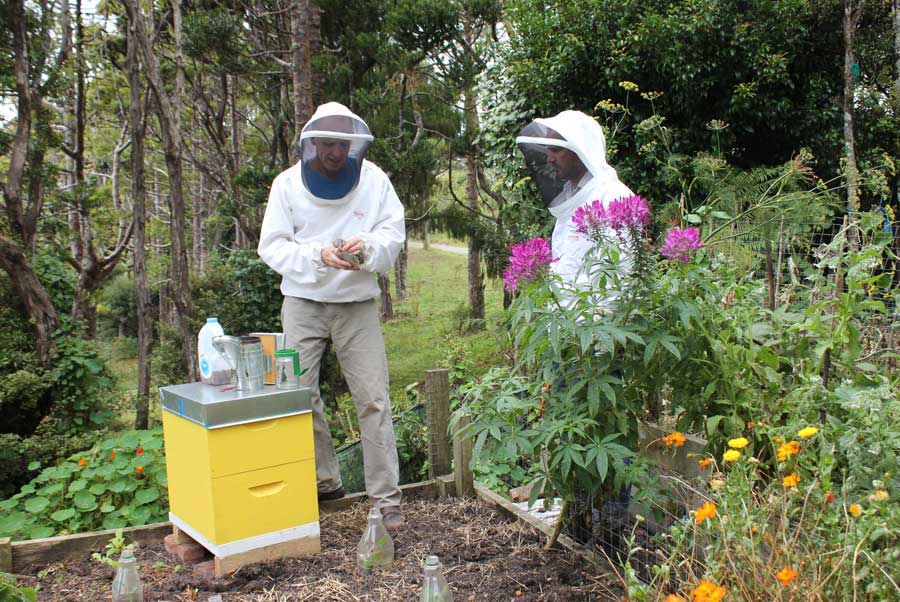
Varroa test
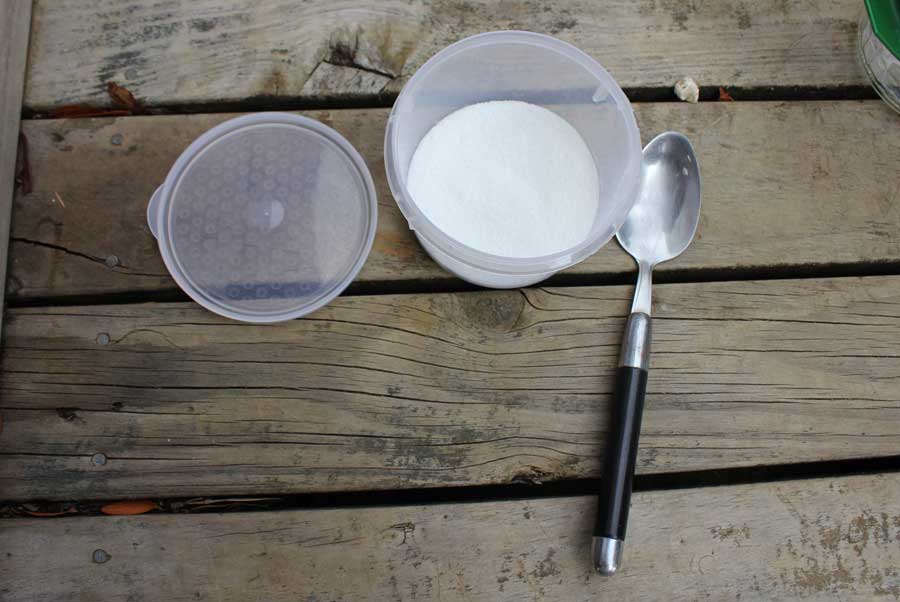
Icing suagr

Sprout Jar with perforated lid

Put about 300 bees in sprout jar

Spoon icing sugar through perforated lid

Varroa test - spoon icing sugar through perforated lid
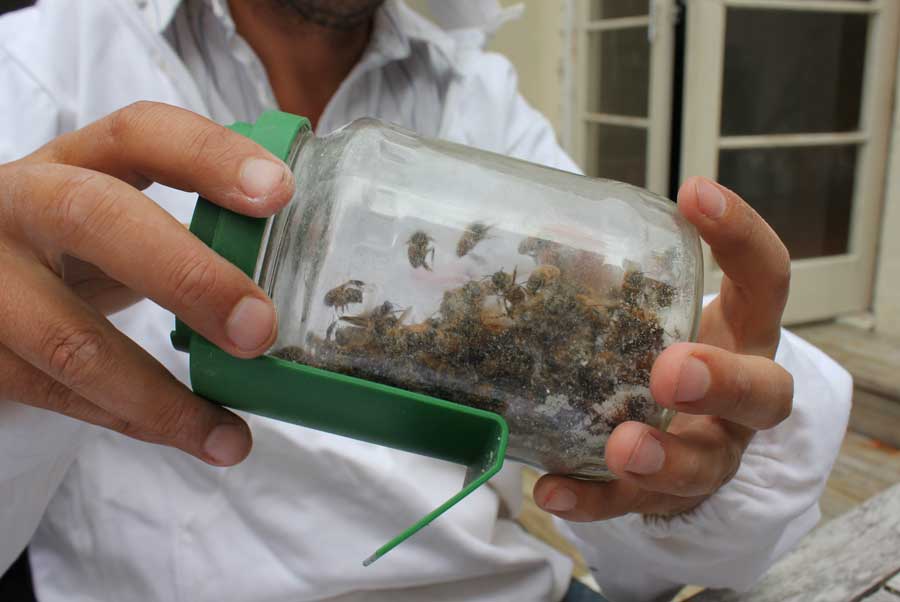
Varroa test shake the sugar
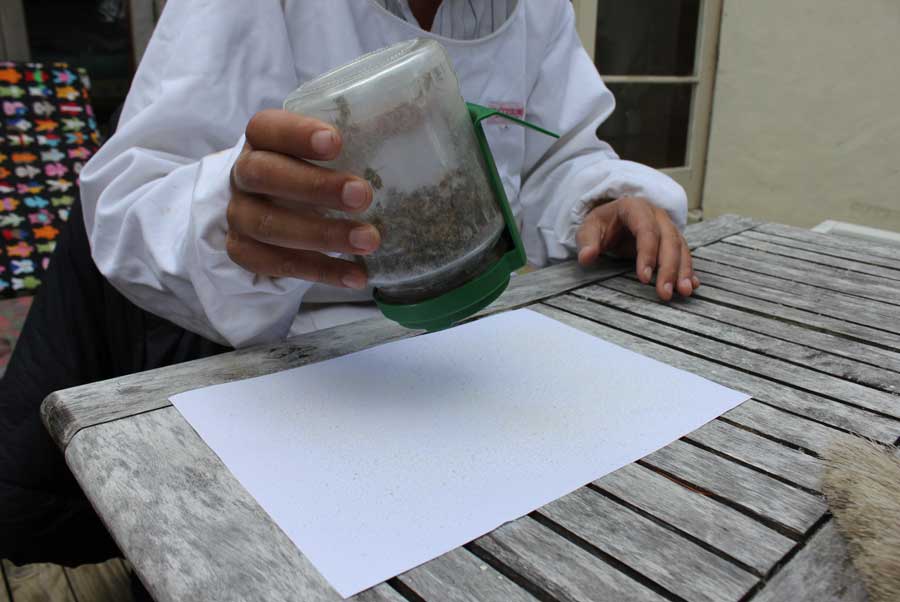
Varroa test shake onto paper
The varroa mite is a global pest problem affecting bee colonies. Varroa are like tiny brown seeds – a bit bigger than a pin head. The mite itself feeds primarily on the blood of drones (male bees) but more damaging are the viruses carried by varroa mites. These are responsible for wiping out most of the wild bee colonies in New Zealand that were beyond treatment. If a hive infested with varroa is not treated it’s population will usually collapse within about a year. There is a range of organic and synthetic chemical treatments for varroa mite and the general advice is to vary any treatments to reduce the potential for varroa to develop resistance. Its advised that any chemical treatments should not be used during periods when honey s being drawn off the hive.
To find out if your hive has a varroa infestation carry out a ‘sugar shaker’ test:
1. Enlist the help of another bee keeper if you can.
2. You’ll need about a table spoon of icing sugar
3. A sprout jar with a perforated lid
4. Put about 300 bees in sprout jar
5 + 6 Sprinkle sugar through perforated lid
7. Gently tumble jar so bees are coated in sugar
8. Holding jar upside down shake gently over paper. Varroa mites will be dislodged from bees and can then be counted on paper to assess level of infestation.
Treating Varroa
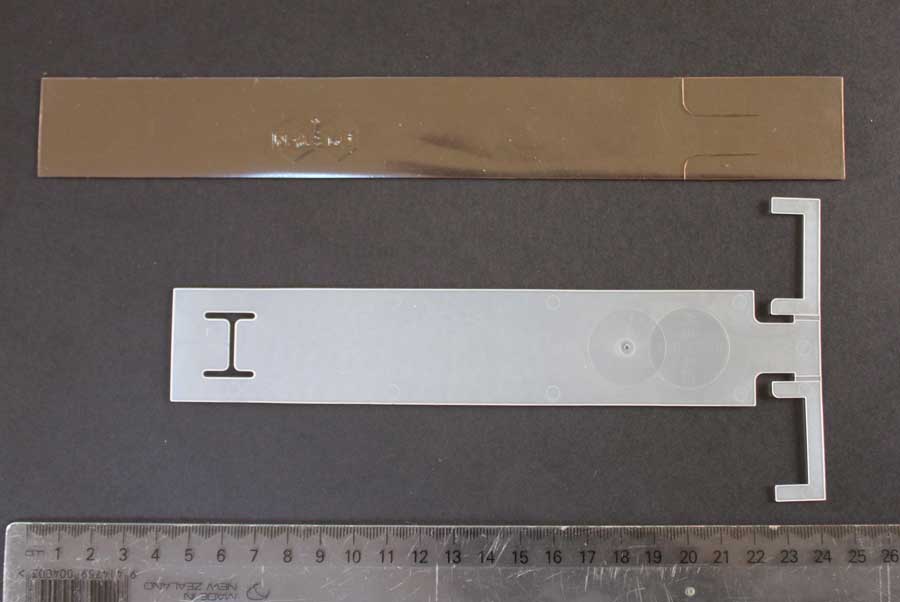
Choose appropriate strip to suit level of infestation

Open hive and expose top of brood chamber
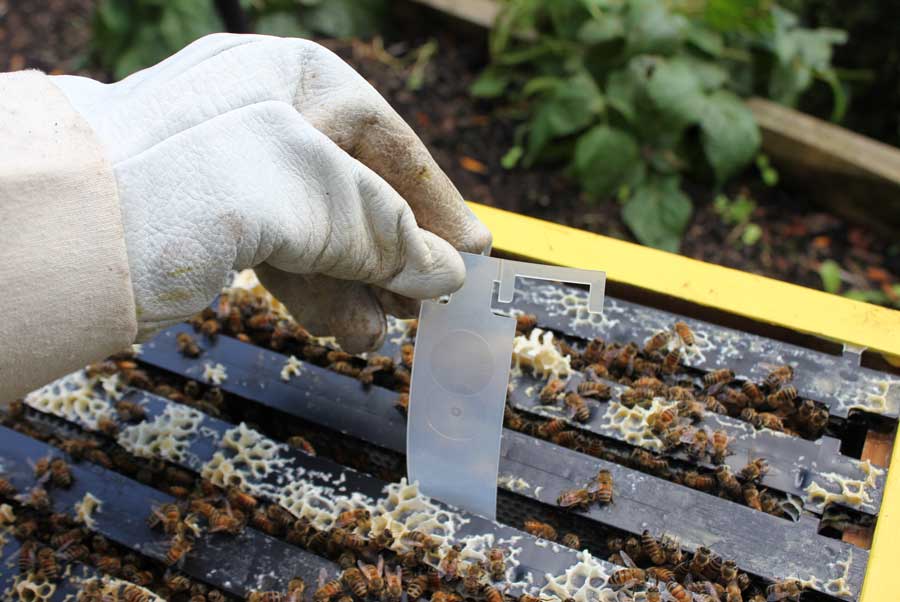
Slip strips between frames
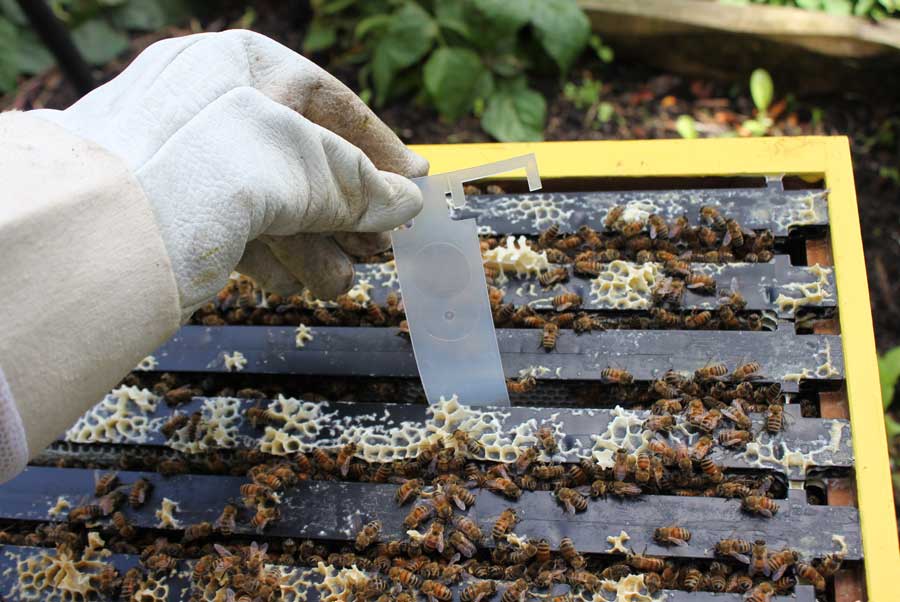
Strips should be lowered carefully to avoid damaging queen

Bend top of strip ready for fixing

Strips in place – job done
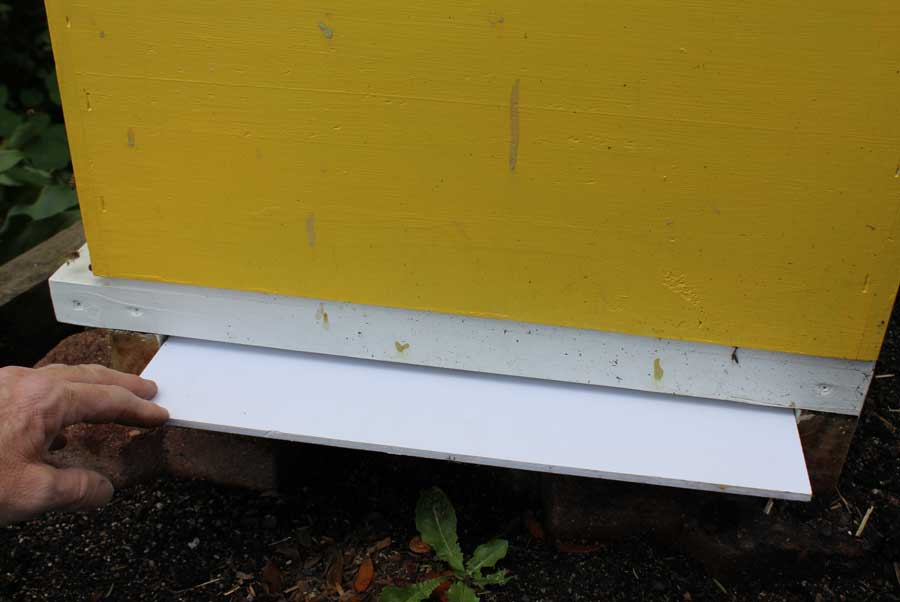
Using a mesh floored base slide sheet under to collect and count dead mites
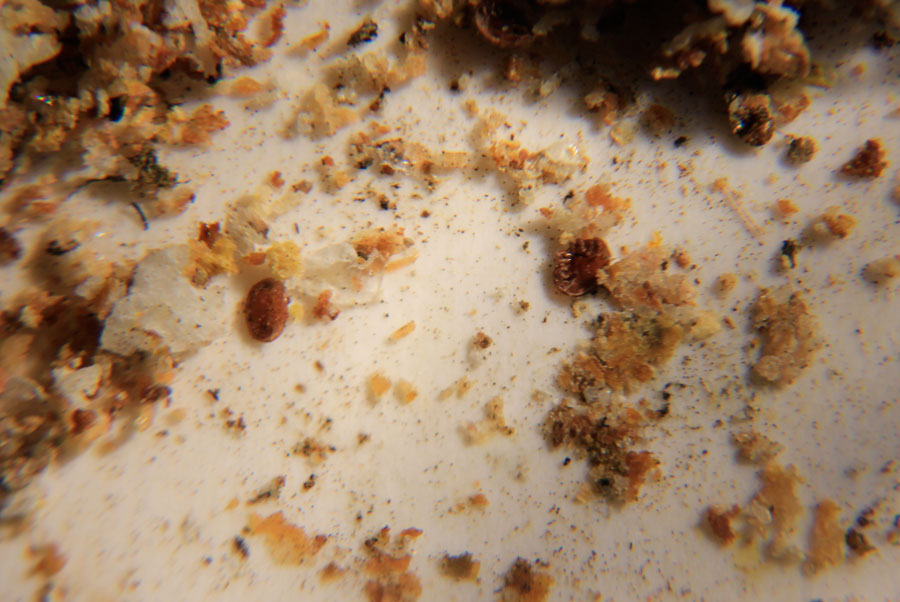
Dead varroa mites - about the same size as a sesame seed
1. Choose appropriate strip to suit level of infestation.
2. Open hive and expose top of brood chamber
3. Slip strips between frames
4. Strips should be lowered carefully to avoid damaging queen
5. Bend top of strip ready for fixing
6. Strips in place – job done
7. Using a mesh floored base slide sheet under to collect and count dead mites
8. Dead varroa mites – about the same size as a sesame seed.
Wax moths

Wax Moth
Wax moths are major problem in hives where the female moths get in to lay their eggs. Eggs hatch out into tiny larvae that burrow through the comb – feeding on honey, pollen and beeswax – and and soon cause major damage. If colonies are strong and have good numbers of healthy bees they should be able to hold off the worst effects of an infestation of wax moths. However if colonies are weak then wax moths can carry on their damaging life cycle un-hindered and a hive will quickly be overrun. Comb honey taken from hives that are suspected to be hosts to wax moths is usually frozen for 48 hours and then defrosted before consumption.