




Plant protection
Helping our plants thrive
Helping our plants thrive
FOR US TO SUCCESSFULLY GROW CERTAIN CROPS we sometimes need to utilise methods that help to prevent hungry inhabitants of our local environment from helping themselves at crucial times. Berry fruit like raspberries, strawberries and blueberries are particularly vulnerable to birds that, uncannily, seem to know exactly when they are just turning ripe. Succulent young seedlings of sweetcorn, lettuce and peas can go down in a matter of hours to pigeons and rabbits thankful for a free feed. Losses are to be expected and its good to share with what is living out in our gardens but we can use a range of devices to increase the odds of getting a decent harvest onto the kitchen table.
If you happen to be in an area with fairly high numbers of natural pests – ask local gardeners about this if you are newly arrived – then there are a few things worth bearing in mind from the outset.
Work out what all the pests are and plant to deal with as many as you can by a few methods as possible. This keeps things simple and helps to reduce unnecessary costs.
Make your food plants easier and cheaper to enclose and protect by growing them all in concentrated areas.
Use existing features like walls and fences, where possible, as part of your protective structures.
If you are laying out your garden, think about where a large structure like a fruit cage might go and how it might fit in practically and visually with the overall design.
Keep gardens all on one level if possible – this is easier to fence.
Group your plants to suit the means of protection – ie. fruit trees in a fenced orchard, berry fruit in a fruit cage, vegetables in a garden enclosed with sunken mesh to deter rabbits.
Organise your protected planting areas so that you can still move easily and practically around the garden. Think of getting you harvest you’re your kitchen, of moving spent foliage into compost bins and easily feeding the likes of chickens and ducks as well as cleaning out houses and harvesting eggs. Access should always permit a wheelbarrow in anything other than a small garden.


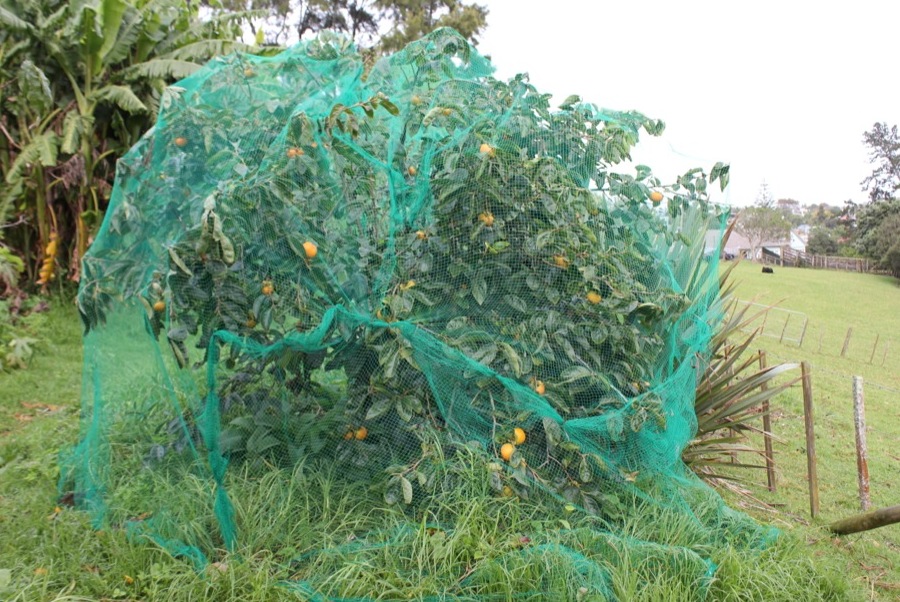


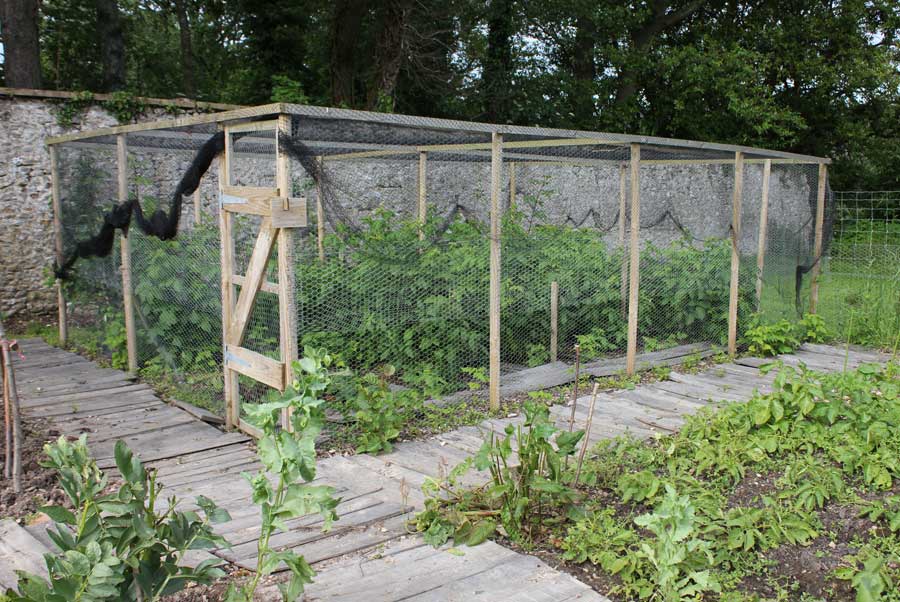
Fruit cages – These are luxury walk-in structures with a wooden or tubular metal frame that keeps mesh off plants and allows easy access for those who can open the door. Importantly they keep birds out and, if mesh is buried underground around the bottom of all sides by about two hands’ lengths, rabbits and rats are kept at bay too. A fruit cage will cost a fair bit so make sure it is going to last. These are permanent structures that are very visible and so it’s worth building them thoughtfully and making them stand the test of time. Mesh can always be replaced but it is worth using good stuff from the outset. You can use untreated timber such as green oak or macrocarpa as an alternative to chemically treated timber that is particularly geared to outdoors. Make sure your fruit cage is over head height by some way and is big enough for all those exciting berry plants that will thrive in a protected environment.
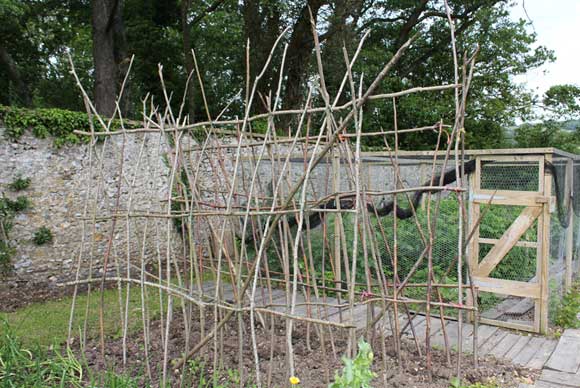
Makeshift enclosures – The principals of a fruit cage can easily be applied to all sorts of gardens and budgets. A bunch of bamboo canes, a few bricks and some loose bird mesh for instance can make a suitable protective structure that can be put up when plants are in bud and taken down after harvest. A few metal hoops and the same loose mesh can also do the trick. All you need to do is make sure that the structure allows for the plants inside to grow and offers you reasonable access for tending to plants and – hopefully – harvesting when things are ready. Sometimes the only practical measure on a short-term planting like a row of cabbages or a large item like a mature grapevine or a tree is to carefully drape mesh over the plants themselves.
Fences and barriers – Fences can help to separate livestock – chickens, ducks, pigs, sheep etc – from your plants. They can also keep out rabbits, possums, rats, wild deer, goats, pigs and other four-legged pests. If your pest is a burrower then you’ll need to use a good strong mesh and bury it underground around the perimeter of your planting area to prevent the likes of rats and rabbits from getting in. It’s worth checking this perimeter reasonably often – especially during the lean months of winter – as these can be persistent animals. Generally mesh and wire are used to keep livestock and pests off crops and the size and strength of wire and strength of posts etc. is dependent on what you are either containing or keeping out.
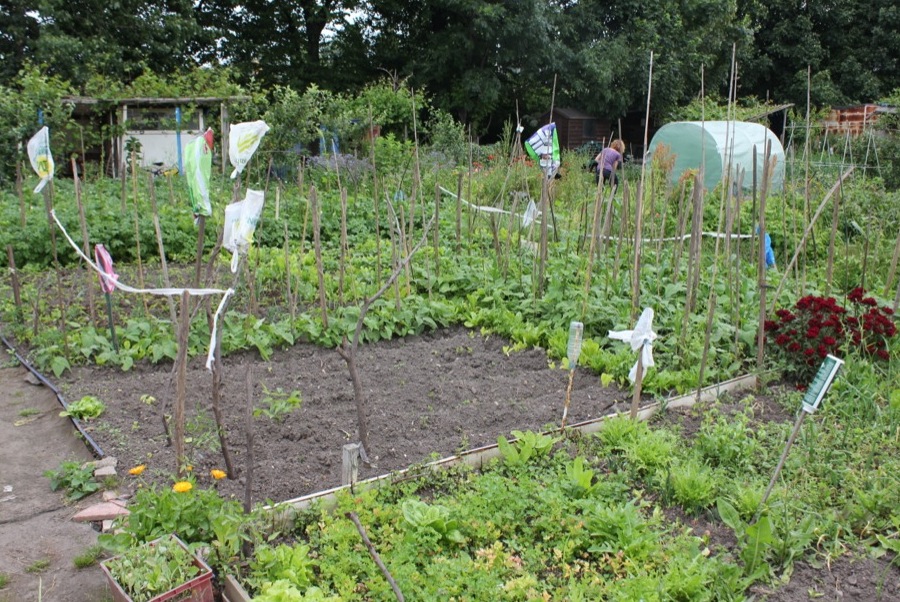
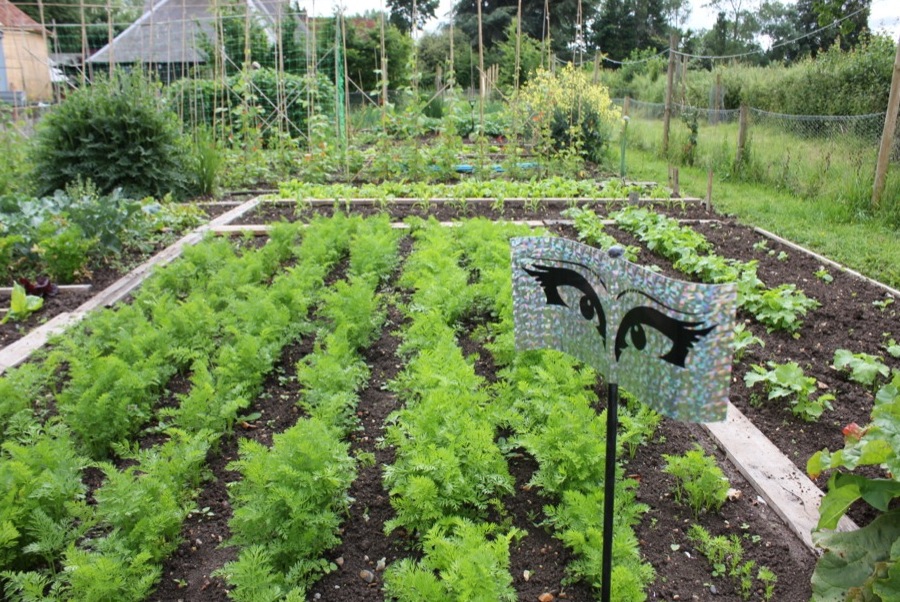
Deterrents – Visual deterrents have long been a method for keeping flocks of birds off concentrated plantings of food crops. Scarecrows probably scare us more than they do the birds but there are some flashy, bright objects that can be of practical use out in the garden. CDs suspended from strings and strips of baking foil are good for constant movement and they catch the light. You can buy bright spinning devices that have large eyes printed onto them – mean to resemble the eyes of a bird of prey. The trick is to keep varying your means of deterrent as eventually birds and animals will get used to things that stay in one location in the garden over time – so keep moving things around and change your set-up every few weeks. There are sound deterrents available but they may annoy your pets and your neighbours.