




How to control aphids
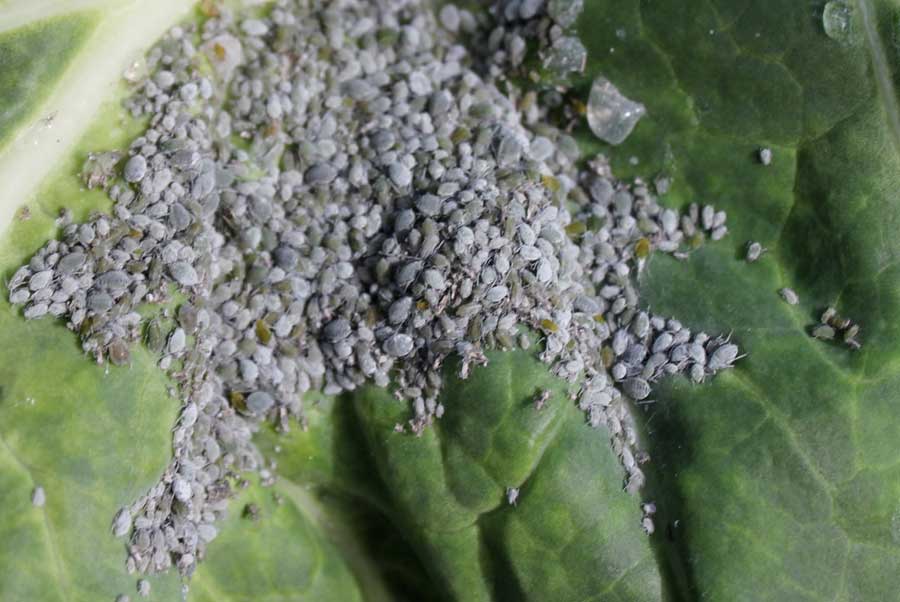
Close up of Aphids

Aphids on cabbage leaf

Close up
APHIDS SUCK THE SAP from plants causing them to become weak, they also spread fungal diseases such as sooty mould, leaf curl and other viruses. They breed fast and prolifically so it doesn’t take long for them to build up sufficient numbers on plants to severely affect them. Growing tips and seedlings wilt, buds become deformed and whole plants can collapse.
Females give birth to live young (nymphs) in spring and summer – about ten per day. These nymphs collect in groups with adults on the underside of leaves and on buds and growing tips. Within about a week they mature into adults and females can start giving birth to more nymphs.
At the end of summer, egg-laying females lay clusters of eggs that remain on foliage and stems through winter before hatching in spring and beginning a whole new cycle.
When to deal with them
The best time to focus your attention on aphid control is in spring. If you reduce numbers at this important time in their breeding cycle you can seriously interrupt their ability to swiftly colonise your garden. Thereafter it pays to attend to them whenever you notice them.
Seek out the newly hatched nymphs and adults and squash them on leaves between your fingers – use gloves if squeamish.
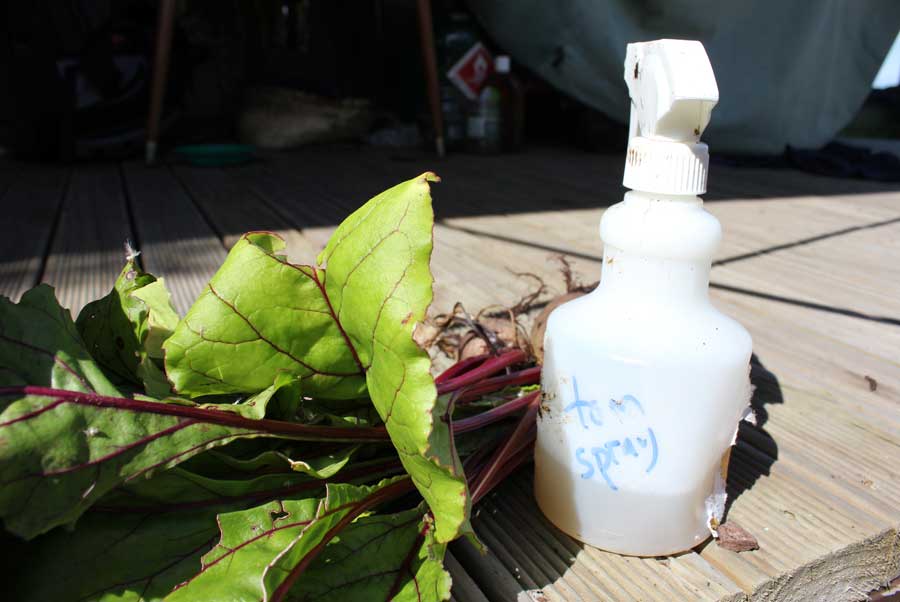
You can wash aphid infestations off buds and the growing tips of plants with a shower jet on a garden hose. Alternatively, if the problem is getting out of hand, spray aphid colonies with either Garlic spray or Tomato leaf spray.
Birds such as silvereyes will pick off aphids so encourage them into your garden with a bird bath.
Hang some sticky yellow bug traps amongst your plants in early spring and these will attract and capture any winged aphids looking for suitable plants to colonise.
Avoid over use of compost and liquid feeds. These are an important source of nutrients for plants but if you over-apply them, foliage becomes very lush and ‘soft’ and this is a huge attraction for aphids – giving them an abundant food source that in turn will see numbers soar.
Plant flowers amongst your food plants to attract ladybugs, hoverflies, lacewings and maintain a good level of diversity in your garden. The more helpful predators you can attract into your garden the less likely it is that you will have a problem with pests such as aphids.