




What are they?
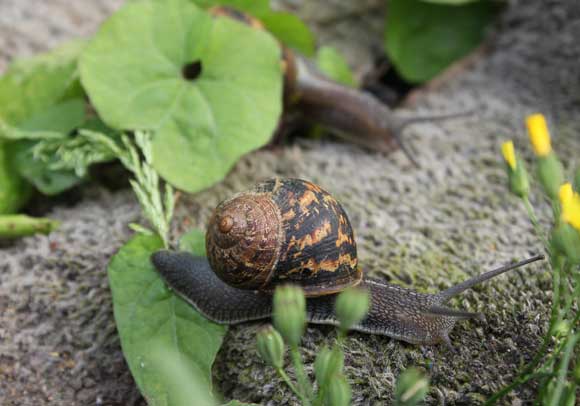
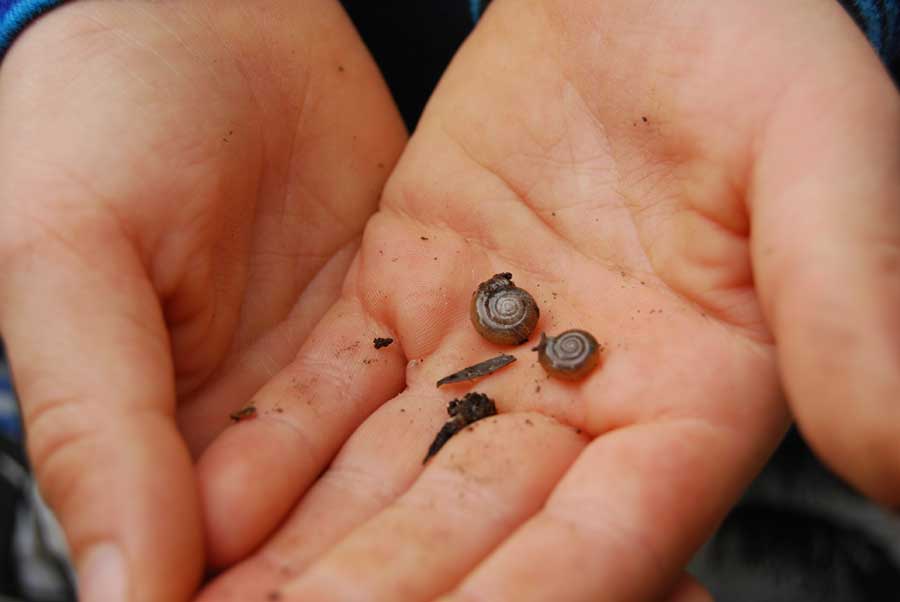
SLUGS come in a range of colours – from black, white, brown, speckled and grey – and sizes from something about as long as your fingernail to something as long as your finger. Snails too can range in size and colour with small round shells the size of your little finger nail to something the size of a small egg. Slugs and snails are present in our gardens all year round but it is in the cool, damp days of spring that they wreak the most havoc on food and flowering plants.
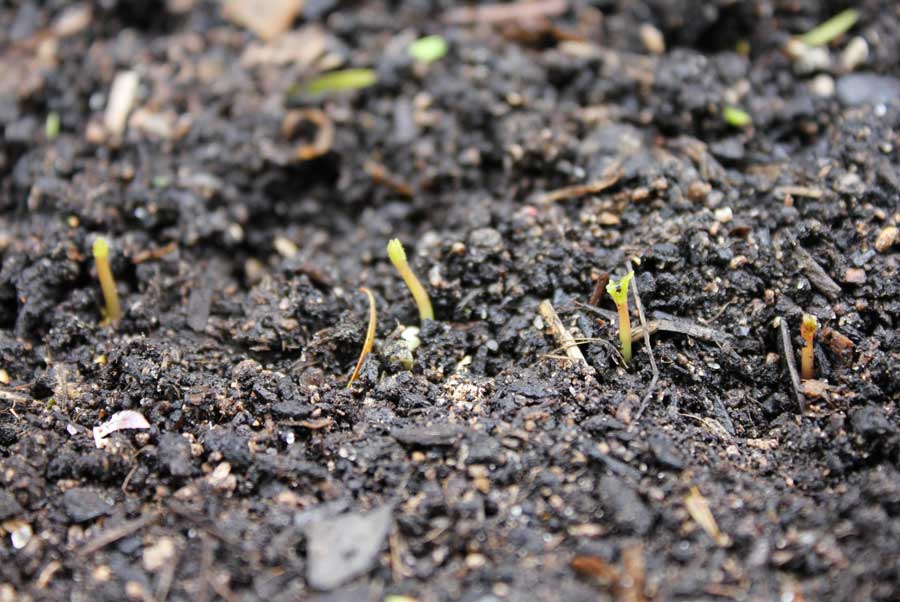
Slugs and snails feed on soft stems and leaf tissue as well as fruits and vegetables. They are most active in cool wet weather and after dark. Young seedling plants are especially vulnerable and can disappear overnight. Plants with large clusters of leaves such as cabbages, broccoli, lettuces and spinach offer not only a great food source but somewhere for slugs and snails to shelter during the heat of a sunny day. The signs of slug attack on plants are irregular holes and silvery trails on leaves and stems. Trails can also be seen on soil beneath plants. The heads of broccoli and cauliflowers can be nibbled and you’ll see shallow meandering trenches where slugs and snails have been feeding.
Slugs are active all year round whereas in cooler areas snails will cluster in crevasses in garden walls, beneath logs, in old pots, under sheds, behind stacks of timer.
Slugs and snails lay clusters of small, round translucent eggs in autumn and early spring. These can be found in small chambers in the upper levels of soil, beneath bricks, pieces of wood, pots and other means of shelter and protection.
Minimising damage


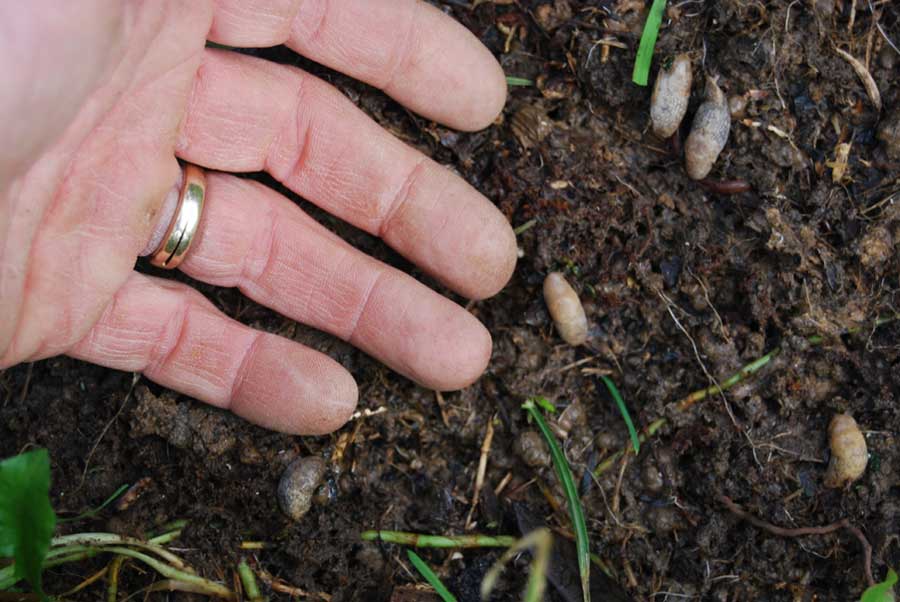

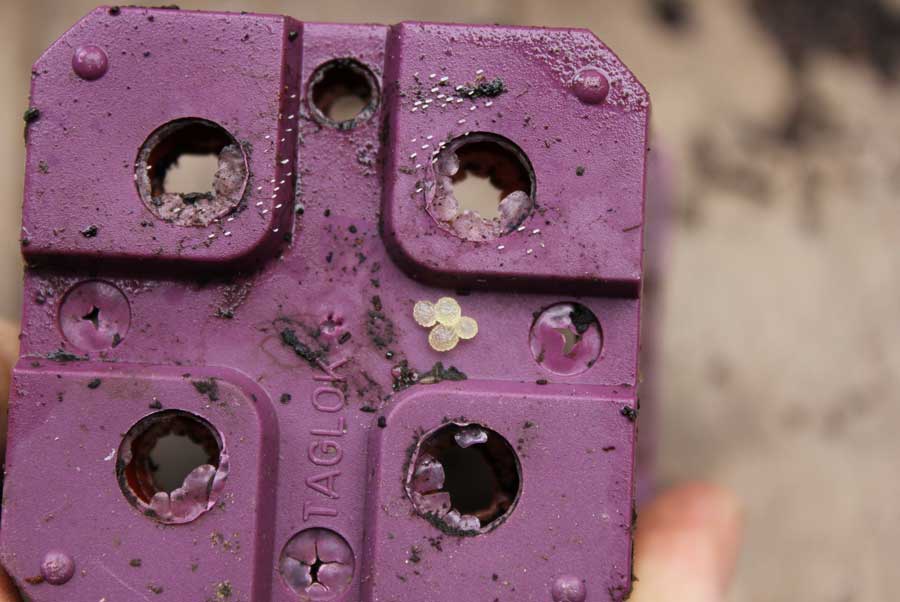
Slug eggs

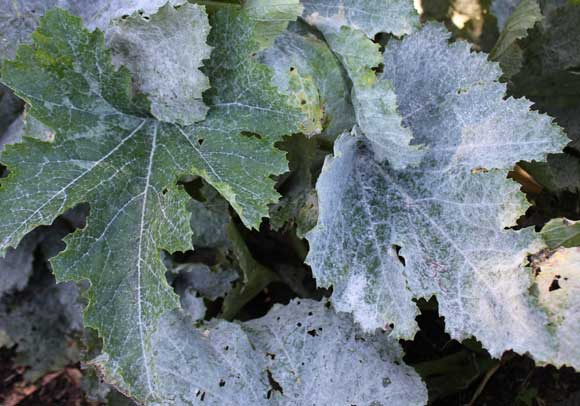
Remove any leaves as soon as you see the first spotty signs. This should help to slow the spread of the disease and buy some time. Throw any affected foliage away in household rubbish – DO NOT compost or you’ll spread spores back through your garden. You can spray powdery mildew in the early stages with Baking soda spray but, given the size of a zucchini or pumpkin plant, this can be impractical.
Care of the ecosystem
As always balance your eradication with the needs of other creatures in your garden. Birds do love to eat slugs so encourage them into your garden by offering habitat and shelter. Feed them during winter and place a bird-bath amongst your plants in summer.
Sow seeds in pots and punnets and only plant out in the garden when seedlings are strong, less vulnerable and more able to survive the odd nibble.