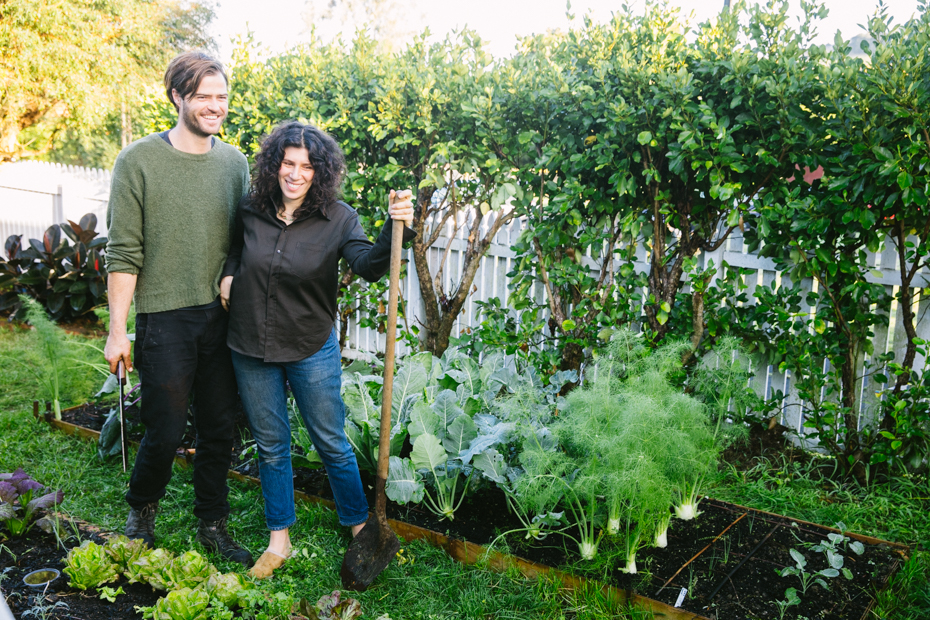





Apple
Fruit
Malus domestica
Just a couple of well looked after apple trees in your garden can reward you with a bumper autumn harvest of around 45kg of crunchy ripe fruits per tree. At around 8 apples per kg that’s a lot of fruit. Apples are not only delicious when eaten fresh from the tree, they also store well and are suited to being preserved or frozen – which means your potential harvest can go a long way. The average mature size for an apple tree is between 3 and 5 metres in height and spread. Just how tall and wide your tree will grow is dependant upon what type of tree you select, the rootstock it comes on and where you grow it. There are lots of varieties of apple tree available and you can choose to suit various factors – things such as growing conditions, climate and the sort of fruit you like. There is a wide range of fruit flavours and textures to consider when choosing your apple variety. Some are sweet and juicy, others tart and crisp – great for pies and preserving. The great thing about planting apples in you garden is that you can choose some of the more exciting varieties that simply can’t be bought in shops and supermarkets.
Apple trees are generally planted during the winter months. This is when ‘bare root’ trees (saplings with soil washed off their roots) are available at nurseries and online from growers. This offers us gardeners the widest choice of varieties to choose from.
In a nutshell
- Medium sized trees
- Need fertile soil with good drainage
- Sunny position
- May need two trees for pollination
- Potentially large harvest
Companions
- Garlic
- Comfrey
- Borage
- Dill
- Chives
- Nasturtium
Quantity
1–4 trees per family
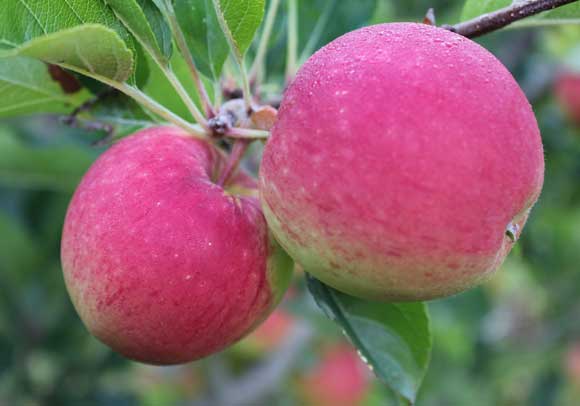
The growing lifecycle

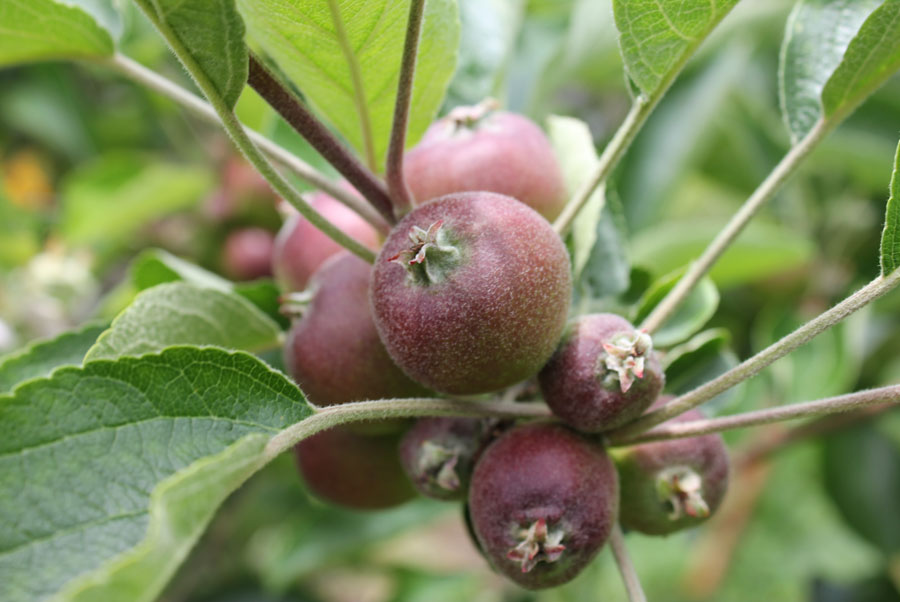


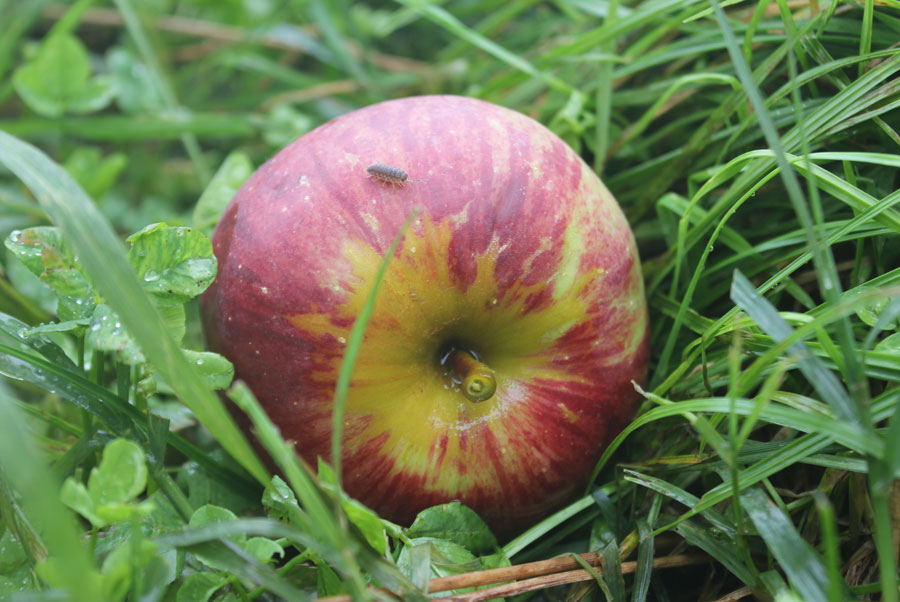
Varieties
There are over two thousand varieties of apple available to gardeners in the UK. The best way to work out what suits you is to order catalogues or go online to look at growers in late summer and match available varieties with your tastes, growing conditions and climate. Many apple trees are what’s called ‘self fertile’ meaning they can be grown on their own but some need another tree to help with pollination – this information is normally included on labels or in plant descriptions in catalogues. Take a look at some of the old-fashioned heirloom and heritage varieties that are returning in popularity, you’ll find some great apples not only rich in flavour but rich in history too.
Rootstocks.
Its is possible to get many apple varieties on one of several different rootstocks. A rootstock is the roots and lower stem of a host variety that will determine the overall size of a tree and things like time of harvest, it can also carry disease resistance. So in terms of size – the key factor – rootstocks are often referred to as ‘very dwarfing’, ‘dwarfing’, ‘semi-dwarfing’, ‘medium’, ‘semi vigorous’, ‘vigorous’ and ‘very vigorous’. Onto these rootstocks are grafted (fixed like a surgical join so that the two grow together) ‘scions’ or budded stems of a specific variety. The type of rootstock will determine the size and growing behaviour of the tree which will produce apples of the variety from which the scions are taken.
So…
A very popular rootstock is MM106 (semi-vigorous). This will produce a tree of about 4m in height (just under two stories of a house).
The same apple variety could be grown on an M116 (medium) rootstock. This will produce a tree of about 3m in height (about one and a half stories of a house).
Or it could be grown on an M9 (dwarfing) rootstock. This will produce a tree of about 2.4m (around one story of a house).
In the end, when you buy your trees you can discuss the right rootstock with your supplier.
Apples are divided into several categories and these few offerings may help you on your quest for what’s best:
Which apple for me?
1. Crab apple
Old-fashioned varieties with small, bitter fruit that are most often made into jams, jellies and sauces. Often planted with other apple trees as a pollinator. ‘Floribunda’ is often planted for its delicate pink blossom and ‘Golden Hornet’ for its decorative profusion of red and yellow fruits.
2. Golden Noble
A cooking variety in pollination group 4. Fruit is harvested in autumn. Versatile, hardy variety.
3. Charles Ross
Another versatile variety that can be used for cooking and eating raw , which harvests in autumn. Pollination group 3.
4. Fiesta
Grown for eating raw - making it a 'table apple'. Harvest in autumn but has a very good shelf life well into winter if stored correctly. Pollination group 3.
5. Pixie
Another table apple, but with smaller fruit. Trees are hardy, pollination group 4.
Getting started
When
Apple trees are generally planted during the winter months. This is when ‘bare root’ trees (saplings with soil washed off their roots) are available at nurseries and the widest choice of variety is available.

You can sometimes buy container grown apple trees from garden centres but the best way to buy and plant them is from bare root trees. These can be ordered from growers in late summer/autumn for mail order delivery in winter – and at a fraction of the price of container grown trees.
Where
Give your apple trees as sunny a spot as possible and an open position with good airflow – put them where you’ll be able to enjoy easily walking around them. You’ll find that they will produce fruit if grown in partial shade but avoid putting them in the shadow of buildings and tall trees.
If you can, avoid planting them directly in the path of any prevailing strong winds. Blossom in early spring can be damaged by late frosts so try not to plant them in any hollows if you are in a frost-prone area.
Young trees planted in lawns or grassy orchards will grow better if grass is removed from a circle around their stem – take a stride away from the stem and make this the radius of your circle, remove grass and add a finger-deep layer of mulch.
Soil
Most fruit trees like soil that drains well and does not get too water-logged. When roots sit in wet soil for too long they become deprived of the oxygen that they need for healthy growth. Apple trees are perhaps slightly more tolerant of damper soils than many other fruit trees such as cherries, citrus and apricots and they can grow in a wide variety of soils – this tolerance of growing conditions that are not ideal can be ensured by choosing certain varieties.
For best results apple trees should grow in a slightly sandy garden soil that crumbles when handled rather than pouring between fingers (too sandy) or forms a single lump (too much clay). Sandy soil can be improved with the addition of rotted compost and sterilised topsoil and sticky soil also benefits from the addition of rotted organic material but also grit, coarse sand or fine grit to improve drainage. However, unless you are planning on growing dwarf varieties this can be too big an ask when considering large varieties with trees that will ultimately have a wide root run. If your soil is really unsuitable you might consider planting trees in large raised beds or mounds of suitable soil.
Sow & plant
Container grown apple tree
Before planting, dig a hole about 20% larger than the size of the container that the plant comes in. Half-fill with well-rotted compost, rotted manure and some coarse sand or fine grit to help with drainage. Mix together with garden soil at the bottom of the hole. Soak the container-grown tree before gently lifting it from its pot. Check the roots on the outside of the root ball and loosen any that appear to have grown around it whilst inside of the pot – this should help them to get away and grow into the garden soil. Stand the root ball in the hole and adjust soil beneath it so that the top of the root ball is level with the ground around it. Back fill with the soil/compost mix and firm with downward hand-pressure as you go. The container soil level should be the same as soil level in the garden with the union (point of graft between main stem and roots) about a thumb’s length above soil. Drive three stakes in at even spacings around the outside of the root ball. Using a suitable tie – rope, cloth, plastic tree tie (but definitely no wire that will damage bark and stems) – secure the stem of the tree at about knee-height above ground. Water well.
Bare root apple tree
Soak your bare root tree in a bucket of water for at least an hour. Whilst the plant is soaking dig a hole – just over a forearm’s length wide and deep (approx 60cm x 60cm) – in your pre-selected planting spot. Half-fill the hole with compost and mix with soil at the bottom – if you want to you can add a couple of spadefuls of coarse sand or fine grit to help with drainage. Make a shallow mound in the centre of your hole and sit the bare root tree on the mound with the upward-pointing stem in the middle and the roots radiating away around it. The union should be about a thumb’s length above the soil when the hole is backfilled (you can judge where this will be by placing a bamboo cane across the top of the hole from one side to the other and noticing where this comes against the stem of the tree as you hold it in position. To back fill, gently work the mixture of soil and compost around the roots, firming the soil as you go until you have all but filled the hole back up to ground level. This will result in a slightly lower level visible inside the planting hole. Fill this with water so that it pools and wait as it slowly drains away – this will help the soil to settle around the roots and make sure it has good contact with them. Then finish filling the hole back up to finished ground level. Drive three stakes in at even spacings around the outside of the spread roots. Using a suitable tie – rope, cloth, plastic tree tie (but definitely no wire that will damage bark and stems) – secure the stem of the tree at about knee-height above ground.
Maintain
Water around the base of your young trees in dry periods, making sure that soil gets enough water for roots to be fully soaked. If you have a number of trees growing and live in a dry area it may be worth setting up a basic irrigation system to take care of this.
Mulch around base of newly-planted trees, especially if you have sandy soil. Cover a circle as wide as the spread of the branches with a finger-deep layer of compost, rotted manure or old straw and replenish this mulching layer when necessary (N.B. make sure the mulching layer doesn’t touch the stem of your tree as this can cause it to rot.) This should be done for the first three years after planting, thereafter you can plant borage, comfrey, dill and fennel beneath your trees to draw nutrients from deep in the soil and to attract beneficial pollinating and predatory insects with their flowers.

Feed
Trees can be fed with a sprinkling of blood and bone meal around the outer edge of their drip line (widest edge of outer branches) in early spring – there are specially formulated slow release fruit tree feeds available but they can damage soil microbiology. A more natural alternative is to use nitrogen-rich dried chicken manure pellets – a good reason to allow chooks into your orchard! Keeping the ground beneath your trees weed-free and well-mulched when its dry should help to reduce the amount of feeding that is required.
Pollination
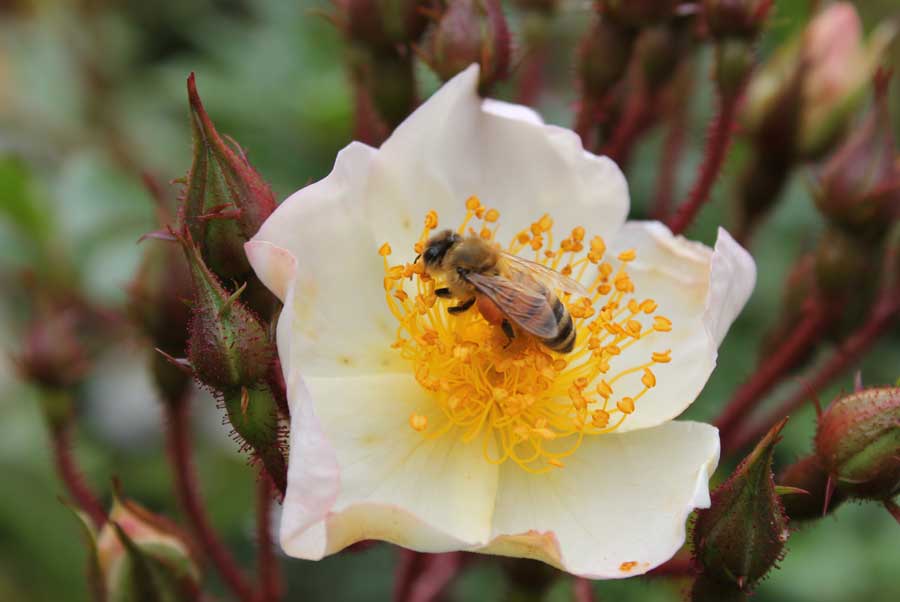
Some apple varieties are self fertile but for best results plant with another variety that flowers at the same time. Varieties are grouped into ‘pollination groups’, and it is best to plant apple trees with trees from the same group – some can even require two other individuals. Crab apple trees are also often planted nearby as pollinators. Bees are also vital for this process and you can encourage them into your gardens with companion flowers like borage and lavender.
Thinning
If your tree has too many fruits it will produce a poor harvest. Many varieties drop surplus fruits in mid summer but sometimes it can help to remove immature apples when they are about the size of a cherry. Reduce each cluster of fruits until they each contain around 3 to 4 fruits.
Harvest or Pick
Apples ripen at different times from season to season, depending on weather. A sign that fruit are becoming ready is when you see the first few windfalls on the ground beneath them
Ready
Skin colour becomes richer on fruit and in many cases the pips inside change colour from white to pale brown. The tell-all sign though is that when you lift a fruit on the tree and twist slightly it should come away easily with a short stalk attached to it. Usually fruit in full sun at the top of a tree ripen first and then those on the sides followed by shaded fruit in the middle of the tree. Handle fruit carefully when harvesting to prevent bruising. Line your bucket or basket with soft material such as cloth or newspaper.
Storage
A frost-free, dark, cool place such as a cellar, garden shed or garage is suitable. Check through your fruit before storing and only select those that are un-blemished and have their stalks in tact. Place fruits by variety in trays and boxes or on slatted shelves. – ideally with no two fruit touching each other. You can wrap individual apples in newspaper to help them stay juicy. Store away from onions and garlic as well as cans of petrol or diesel or the flavour will spoil. Inspect fruit every week or so for signs of rotting and remove any that are affected. You can store fruit in clear polythene bags with the mouth simply folded beneath them and a few pencil-sized air holes poked into them. This keeps apples dust-free and stops them from drying out. Check regularly for any signs of rotting.
Some varieties will only keep for a few weeks while others can last much longer. Bear this in mind when selecting your cultivars.
Pruning
Different apple trees will grow to different sizes. If you are short on space, ‘cordon’ (tall and thin) or dwarf/miniature varieties are a good option. A bit of forethought in this department can greatly reduce the amount of pruning required later on to contain a more vigorous tree in a small courtyard or on roof terrace, for example. Always prune during winter when the tree is dormant.
When pruning trees to maintain their vigour and maximise yields, here are some things to look out for:
Remove any dead, diseased or otherwise damaged stems.
Remove any rubbing stems that are crossing each other and opening up wounds.
Remove stems that are growing into and crowding the centre of the tree. The aim is to let in light and to promote good air movement through the tree when it is in full leaf during summer. This helps to prevent fungal disease from taking hold.
Remove any shoots from the base or lower stem of the tree.
Remove any stems that are rocketing vertically from main branches.
Cutting out the center stem on young trees can help to generate a more umbrella-shaped tree that makes picking fruit easier as the branches are lower down.
There is a range of pruning techniques – some of them quite specialised and complicated – for pruning apple trees. The basic principles are as follows:
In general, when removing stems follow them down to the point where they are growing off a main stem. Cut the stem you are removing just above the point where it joins the next stem so that this leaves a small protruding collar that will heal over.
Apple trees can be grown against walls and fences – trained into decorative fan shapes as well as cordons (single stems with short fruiting spurs along them). There are special pruning guidelines for these in books on pruning.
Maintain
The more you grow apples, the more you will learn what particular pests and disease might be an issue in your location. The extent to which you might lean towards chemicals is up to you, but remember that these chemicals are seldom used without side-effects that can be detrimental to the wider environment of your garden. To reduce the likelihood of your trees falling victim to and suffering from pests and diseases look after your trees.
Remove any dead or diseased stems and fruit regularly.
Sweep and compost fallen leaves.
Mulch and feed, ensure constant moisture during dry weather.
Spray fresh spring foliage with Neem oil spray to kill aphids, scale insects and mites.
Coddling moth is a particular pest and numbers can be reduced by hanging traps amongst your trees in mid spring.
For best advice on how to deal with local fruit tree related problems in your area seek out nearby organic growers and talk to them. A half hour chat can save on years of trial and error.