




What is Bindweed?
BINDWEED HAS TWINING, CLIMBING STEMS with elongated, arrow-shaped light-green leaves. Trumpet shaped white and pale pink flowers open along the stems in late spring and early summer. A single plant can easily reach head height and even taller. Bindweed dies back in winter and returns to re-grow in spring.

How does it grow?

Bindweed root fragments
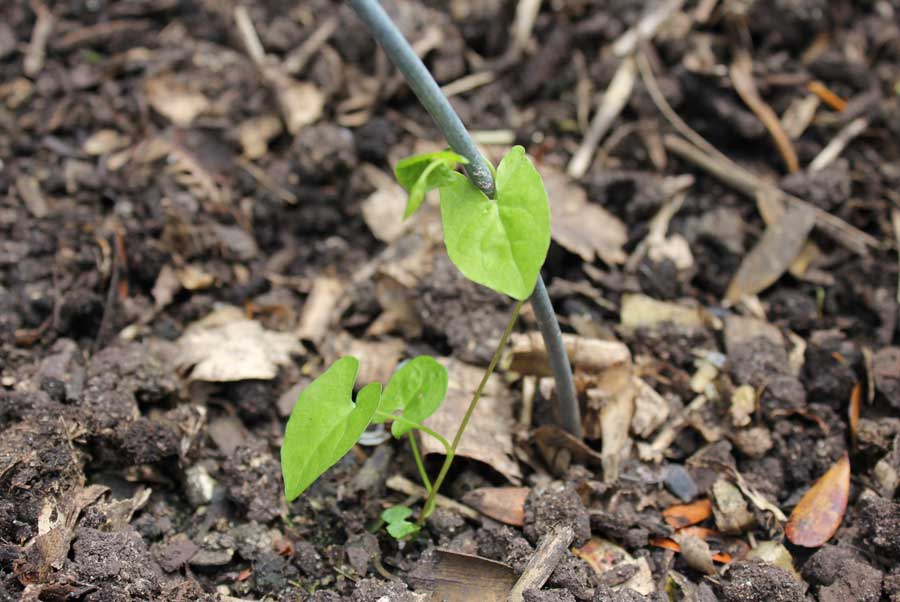
Young shoots of Bindweed on wire

Bindweed flower
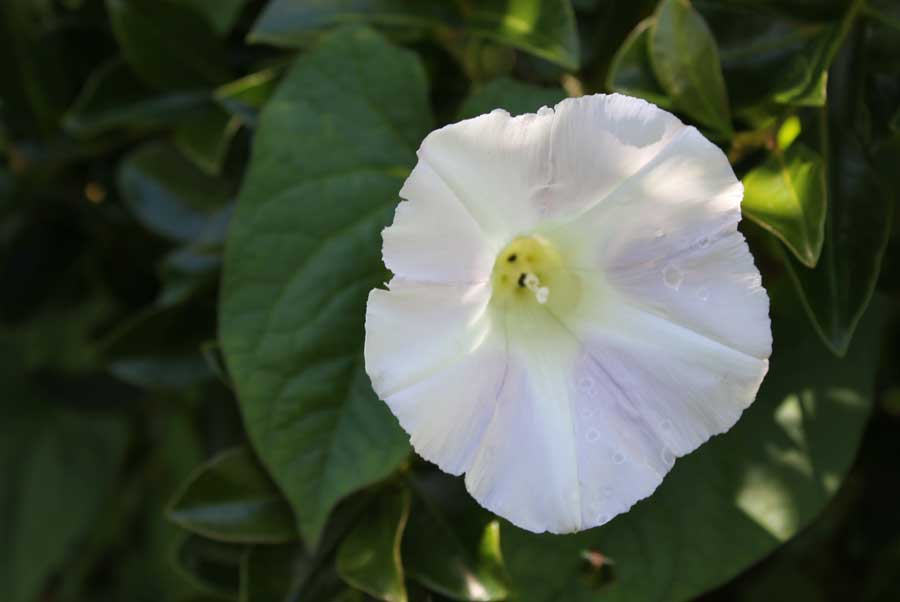
Close up
Bindweed is a bit of a thug. It spreads by seed and regenerates itself from white, soft roots in the ground. The flowers attract beneficial insects into the garden but this is little compensation for the damage that bindweed can otherwise do to plants it happens to come across. The twining stems quickly envelope and clamber over plants and then the masses of leaves deprive the enveloped plants of sunlight and they become weakened and often die as a result. Bindweed is a very persistent weed and one that can be challenging to completely eradicate.
Bindweed has a great ability to survive in the soil thanks to the soft, brittle roots that it grows from. When you tug on the stems and pull them out the roots are left behind – only to re-grow fresh stems. If you dig bindweed up then even the tiniest piece of broken root can regenerate in the soil. Flowers are pollinated and then swell to form pods from which seeds are easily spread to new and fertile parts of your garden.
How to control Bindweed?
Controlling bindweed without the use of chemicals takes time and patience. With constant and concerted effort you can make a worthwhile difference and reduce the quantity present in your soil – however, it’s likely you’ll have to learn to live with a certain amount of bindweed once it has found its way into your garden.
Remove all foliage whenever you see it but do so carefully. If you yank on the stems then they will probably tear or break the stems and foliage of any plants they have entwined with. The best way is to cut all stems at the point where they appear through the soil. Stems will then wither, die and loosen their grip making them easier to remove. This will weaken plants considerably over time and help to prevent re-growth.
Bindweed can be dug up by hand and roots carefully removed from the soil. It is important to dispose of any root matter in way the stops it re-entering your garden or compost heap where it will simply re-grow as new plants.
If you do have bindweed it will probably be around for some time so use it well. The flowers do attract beneficial insects and have a mild fragrance – so enjoy them but remove them when they wilt and start to form seed pods. The twining stems are flexible when first cut and can be used as plant ties.