




Brussels Sprouts
Grow
Brassica Gemmifera
Brussels sprouts are, like cabbages, a vegetable that must be tasted fresh from the garden to be fully appreciated. The small, rounded cabbage-like sprouts that appear on the stems of mature plants are all the sweeter for being home-grown. Brussels sprouts are a true cold weather vegetable – in fact if your area does not get winter frost then perhaps this one is not for you. Frost improves the flavour of sprouts as starches are converted to sugars on freezing.
In a nutshell
- Full sun
- Firm fertile soil
- Shelter from wind
- Best in cooler frost-prone areas
- Autumn and Winter harvest
Quantity
- 1 plant per person. A single plant can produce around 1 kilo of sprouts.
Companions
- Onions
- Garlic
- Marigold
- Mint
- Rosemary
- Sage
- Thyme

Sprouts on the stalk
The growing lifecycle

Brussels sprout seedling

Brussels sprout seedling
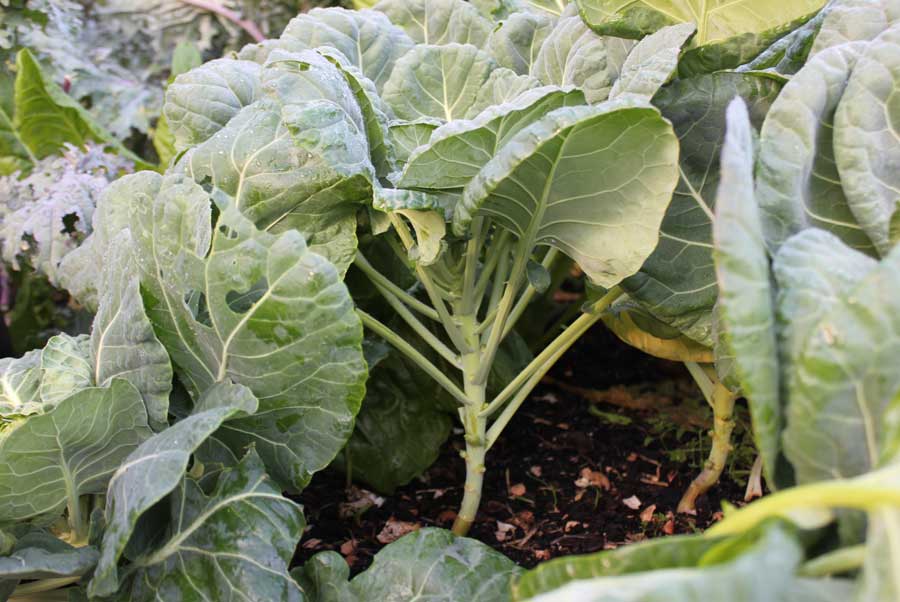
Brussels sprout seedling starting to mature

Small Brussels sprouts shown at base of leaf stem
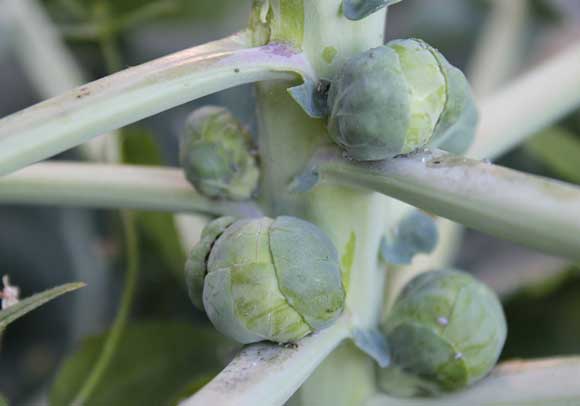
Brussels sprouts on the stalk ready for harvest
Top 2 varieties
1. Brigitte F1
An early cropping variety for harvest from October. Sprouts can remain on stem for some time and still taste good once ripe.
2. Igor F1
Very reliable frost-hardy variety that grows vigorously and holds its place in the soil. Prolific harvest of sweet and nutty, bright green sprouts.
Getting started
When
Brussels sprouts are sown under fleece or in a cold frame in spring between March and April and then transplanted in early Summer for Winter harvest. If you have a greenhouse you can sow an early crop in February for an earlier late summer/early autumn harvest.
Where
Once planted in their final position, Brussels sprouts need a place where they can grow un-molested for up to 5 months. Best if they get direct sunshine with shelter from prevailing winds.
Soil
Brussels sprouts, like other brassicas such as broccoli, and kale, grow best in a well-composted soil that does not hold onto moisture for more than say half a day. Ideally, they should be planted where peas or beans have previously grown so that they can take advantage of nitrogen that has been ‘fixed’ into the soil. Soil should be fairly firm so pat down with a rake after digging. This helps plants establish strong roots to support a tall, sprout-encrusted stem. Brussels sprouts grow to between knee and waist height.
Sow & plant
Sow
Most gardeners prefer to plant seedlings that have been grown in pots, punnets or trays as these often develop a nice strong root system. Sow seeds a finger tip deep into trays or punnets filled with seed compost. Within one or two weeks you should see shoots appearing. If sowing in trays, transplant seedlings into punnets when two sets of leaves have formed. Alternatively sow several seeds into each punnet and pinch out all but the strongest seedling. Seedlings should be ready for planting into the garden after about 4 more weeks.
Plant
Plant seedlings so that soil comes right up to the point where the bottom set of leaves start on the stem. This should help plants togo on to generate a good root system that will help them with stability – Brussels sprouts tend to be a little top-heavy when mature. Allow about a forearm by a forearm’s space on the surface of your bed for each seedling. After planting, gently firm the soil around each of your seedlings to ensure good contact with roots. Water in and protect with a juice bottle cloche until seedlings have established with several sets of leaves and are filling the cloche.
Maintain
I use a hoe to gently keep those early spring weeds down – be careful not to go too deep or too close to your plants or you might damage roots. In dry weather when plants are putting on new leaves it is important to see that your plants get at least a quarter of a watering can every two days. Give your plants a watering can of diluted feed every two weeks to boost growth. This should not be necessary after mid summer.
Keep an eye out for hungry pigeons – old cds and foil pie tins on strings between bamboo canes and happy, noisy children seem to be good deterrents. Cabbage white butterflies are a scourge to all brassicas so cover with mesh when they are particularly active in May and June. Or arm your kids with badminton rackets and send them on brassica watch in the garden.
Ensure you earth up and firm the soil beneath seedlings whenever a bout of strong wind passes through – this helps to keep roots strong and firm.
Keep mulching to maintain good soil moisture throughout the growing period.
As plants begin to mature, remove yellowing lower leaves to reveal sprouts. Support your plants by tying them to bamboo stakes.
Harvest or pick
Pick your sprouts by cutting them away from the stem with a knife. Start at the bottom of the stem and work upwards – removing a few sprouts from each plant at a time. Discard any sprouts that are ‘blown’ or loose without a firm centre. Picking regularly stimulates production of more sprouts and prolongs harvest.
When all is done you can eat the green at the top of your plant as if they were Kale or Cavolo nero.