




Chinese greens
Grow
Brassica rapa, Chinese Cabbage, Pak choi, Tatsoi
Chinese cabbage, Tatsoi or Pak choi – are a kind of halfway house between lettuce and cabbage (although strictly speaking they are brassicas – related to cabbages, broccoli and kale). They have a fresh, oriental appeal – great raw, steamed or stir-fried. Like a cabbage with ‘go faster stripes’ these delicious greens can be ready for harvest within 4 to 6 weeks of sowing. For a fairly lightweight-looking leafy green they offer a good dose of essential vitamin C, calcium and folic acid.
In a nutshell
- Fast growing
- High in Vitamin C
- Constant soil moisture
- Eat raw, steam or stir fry
Quantity
6 per person as successive individual savings.
Companions
- Garlic
- Peas
- Broad beans

The growing lifecycle
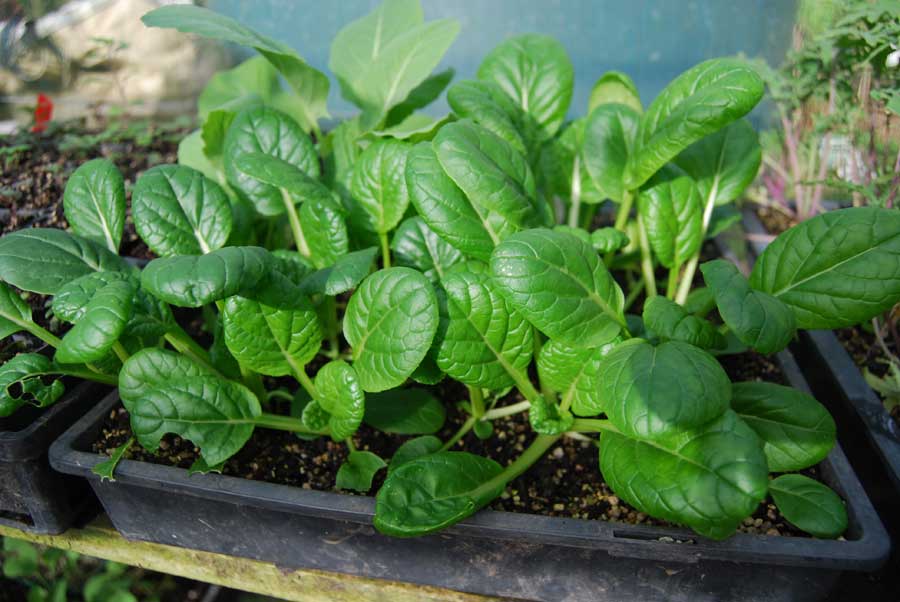
A tray of seedlings

Pak Choi seedlings ready for planting out
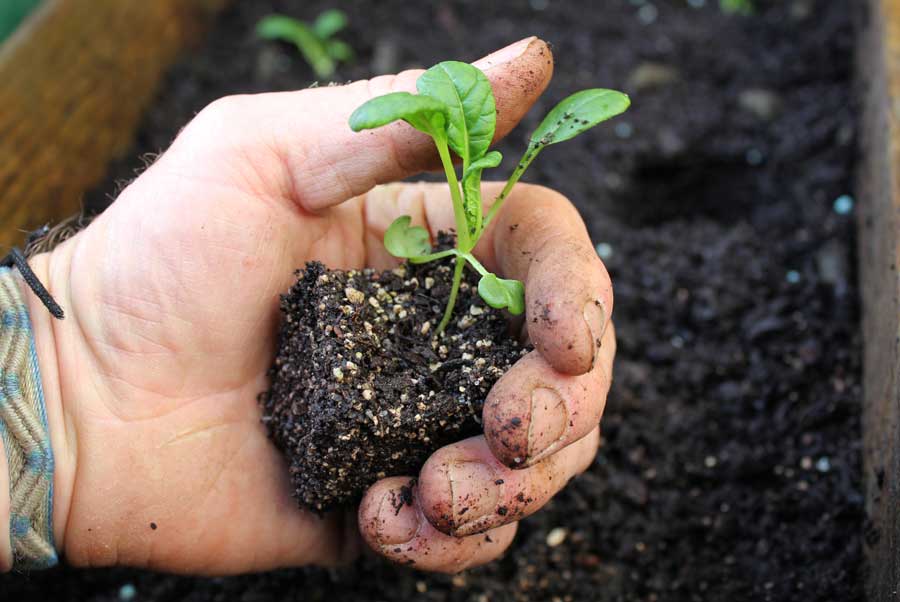
A young seedling ready for planting out

Newly planted seedlings

Well-spaced seedlings settling in to the garden

Chinese Cabbage

Chinese Cabbage growing in a raised bed

A Tatsoi seedling developing a crown of leaves

Healthy looking plants thinned to the right spacing with tasty looking leaves
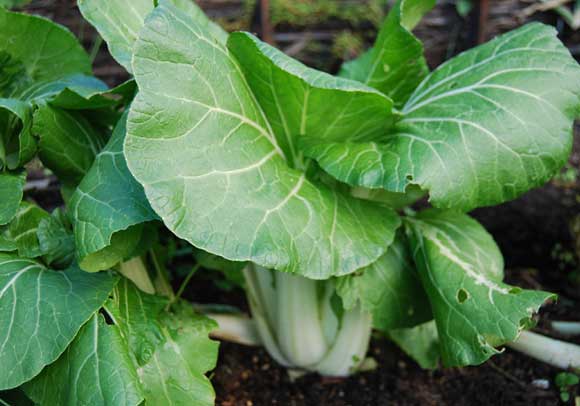
A large plant ready for harvest

A large plant ready for harvest

Red Pak Choi
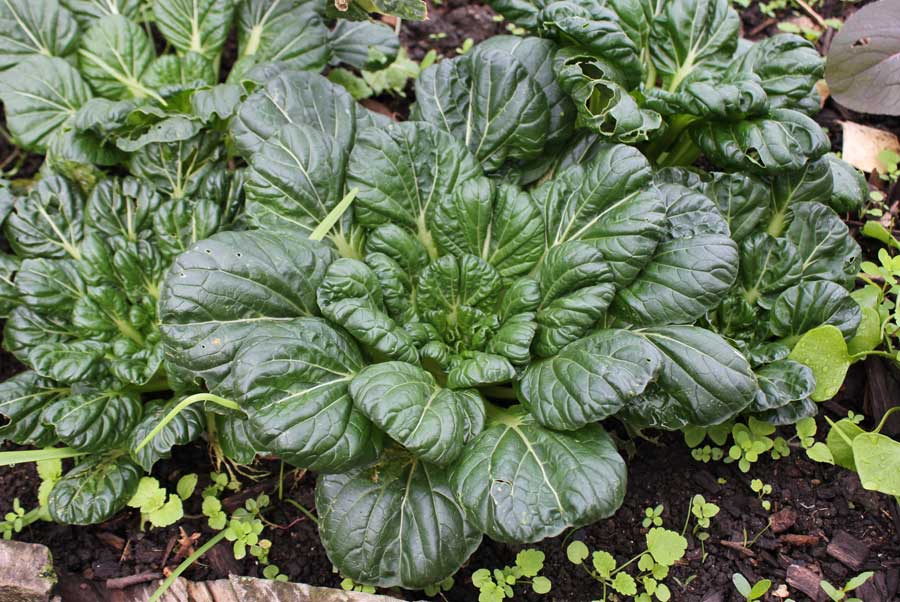
A large Tatsoi plant
Top varieties
1. Tatsoi Rozetto F1 (Chinese Cabbage)
A hybrid that produces dark green rounded leaves – good for growing in summer due to heat resistance.
2. Pak Choi Ivory
Pak choi with succulent leaves and pure white stems. Continues to produce new foliage after cutting.
3. Cabbage Chinese Yuki
Fast growing, produces a tight head of crisp leaves with yellowish center when cut. Sweet taste. Slow to bolt.
Getting started
When
Chinese greens are fast growing and you can expect a return on your investment soon after sowing.
Chinese Cabbage grows best when sown outdoors between June and August and will often bolt if sown at other times.
Tatsoi can be sown in the spring and then again in summer for two staggered harvests.
Pak Choi can be sown outdoors from mid-spring to late summer.
Where
Preferably a sunny and sheltered part of your garden although Chinese greens will grow in light shade.
Soil
Chinese greens are hungry feeders and, like other brassicas such as broccoli, and kale, they grows best in rich, well-composted soil that does not hold onto moisture for more than say half a day. Ideally, Chinese greens should ideally be planted where peas or beans have previously grown so it can take advantage of all the nitrogen that has been ‘fixed’ into the soil. Soil should be fairly firm so pat down with a rake after digging and before you sow.
Sow & plant
Best to sow straight into your beds although in wetter months you might sow into trays or punnets and then plant out once seedlings have developed more than two pairs leaves. You can sow seed in rows or scatter them across an area. Seeds should be popped into long drills (if sowing in rows) or small depressions. Cover with a finger-tip deep layer of soil.
Whether sowing or planting each seedling will need about a hand’s length of clear soil all round so that it has enough space to grow to maturity uninterrupted (for heading varieties like Wong Bok you may want to give a bit more – say 1 ½ hands all round). Water after sowing with a rose fitted to your watering can for a gentle shower rather than a deluge.
Maintain
Keep your seedlings moist and weed free and feed the soil to produce extra juicy heads and leaves. Mulch to retain moisture and suppress weeds and keep an eye out for slugs. You can boost soil nutrient levels with a liquid feed (liquid seaweed, or even a liquid feed you’ve made from lawn trimmings and weeds that will give a good dose of nitrogen – the essential nutrient for healthy leaves). With Chinese greens being a fast grower you may only need to apply once or twice.
Ensure you firm soil and draw earth up around your seedlings – this helps to keep roots strong and firm. Keep mulching to maintain good soil moisture throughout the growing period.
Cabbage white butterflies are the number 1 pest. You can protect your plants with fine mesh to stop the butterflies laying their eggs on the lush leaves (it’s the caterpillars that do all the damage). Remove any visible caterpillars by hand and feed to garden birds or chickens. Caterpillars can also be deterred by treating leaves with Chilli spray or by giving them a dusting with household flour.
Chinese greens are also susceptible to attacks from aphids. Treat any visible infestations with Neem oil, Garlic oil spray or Tomato leaf spray.
Harvest or pick
Usually entire plants are harvested when they have reached about a hand’s length in height – unless they are rosette-forming when you are looking for a nice broad plant instead of a tall one.
Ongoing: Sow in successive batches – several plants every few weeks should provide a regular supply of greens for the kitchen.