




Globe Artichoke
Grow
Cynara scolymus, French artichoke
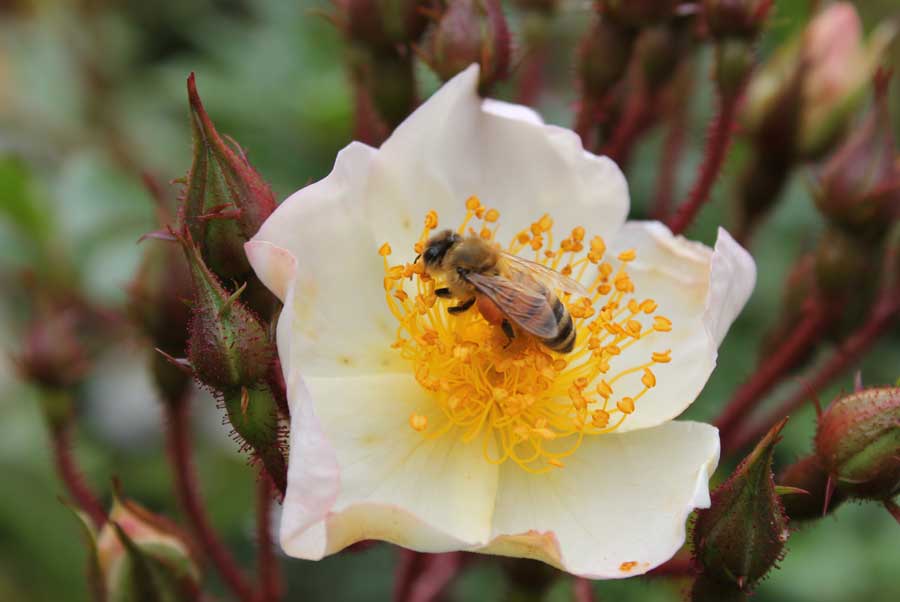
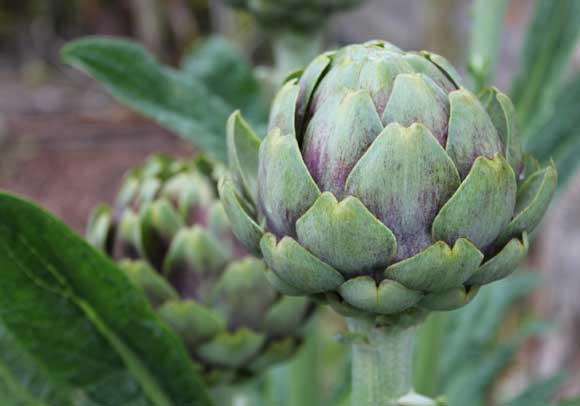
These six foot plus giant food plants are eye catching with their edible thistle-like flowers rising above a wide base of huge silvered leaves. Globe artichokes are a beloved ingredient of many a cookbook and are easy to grow and enjoy. The flower buds are harvested when still closed tight and they are delicious to eat. Artichokes are a true ‘bang for your buck’ plant. For a few pounds per seedling you’ll end up with a conversation piece, a stunning plant, a harvest of delicious vegetables and a flower to blow the socks off any shop-bought arrangement. Because they take up a large space, globe artichokes are often grown in beds around the edge of many a space-hungry vegetable garden, they look great amongst companion flowers and are popular with bees.
Artichokes contain an unusual amount of anti-oxidants and are nutrient dense – containing 16 essential nutrients.
In a nutshell
- Full sun
- Rich fertile soil
- Good for cool areas
- Large silver leaves
- Edible flower buds
Quantity
1 plant per person
Companions
Allow a couple of flowers to open – the visual reward is just as nourishing as the edible one.
The growing lifecycle

A young Globe Artichoke seedling growing in a pot
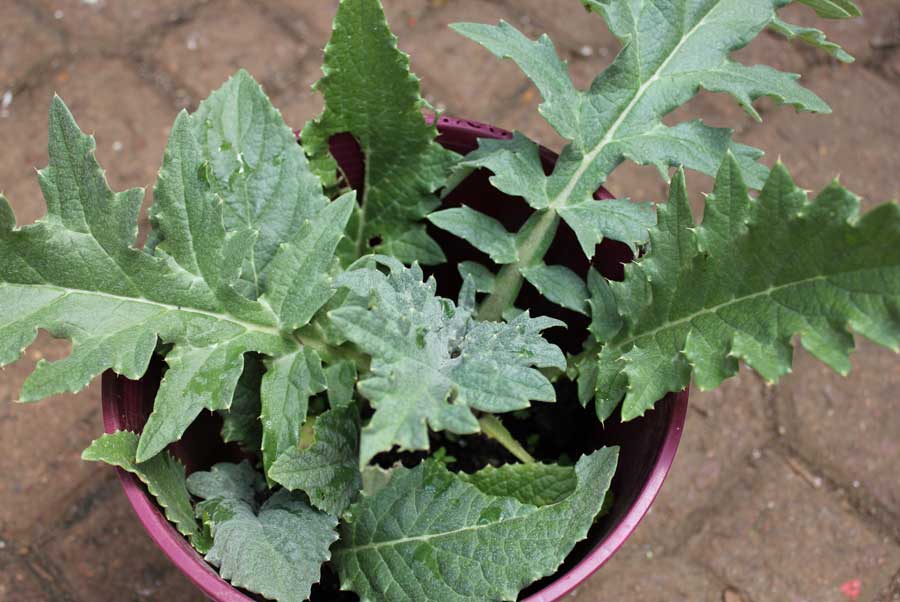
A Globe Artichoke seedling ready for planting out

A Globe Artichoke seedling planted out with any large leaves trimmed back to prevent rocking
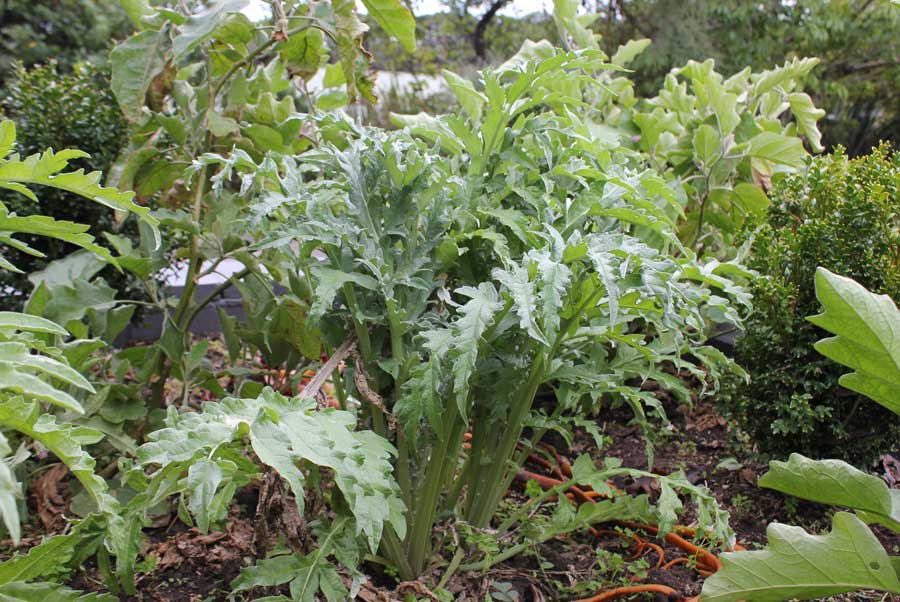
A young Globe Artichoke plant growing well

Globe Artichoke plants showing strong stems with young artichokes

Globe Artichokes with a good crop growing in a raised bed
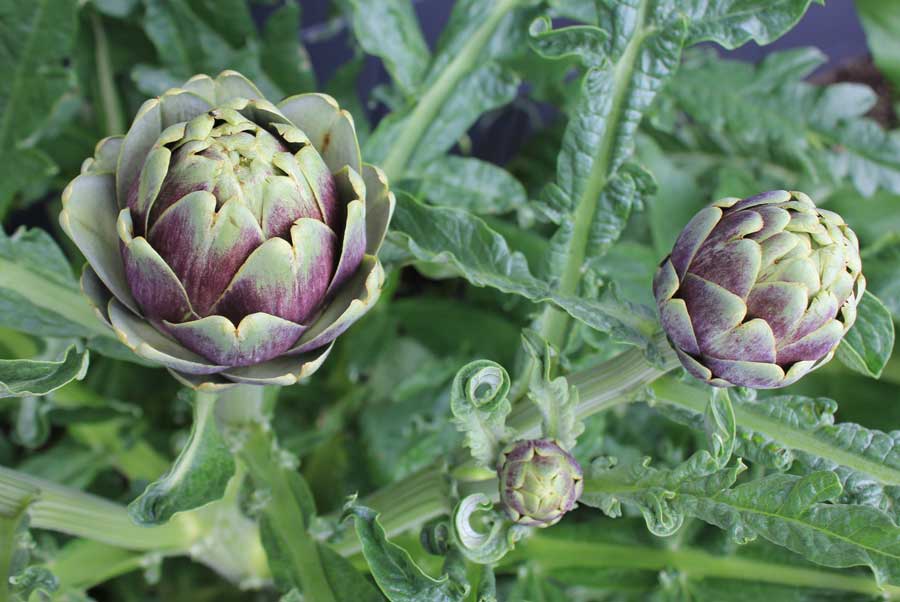
Purple Globe Artichokes ready for harvest
Perfect Globe Artichoke heads ready for the kitchen
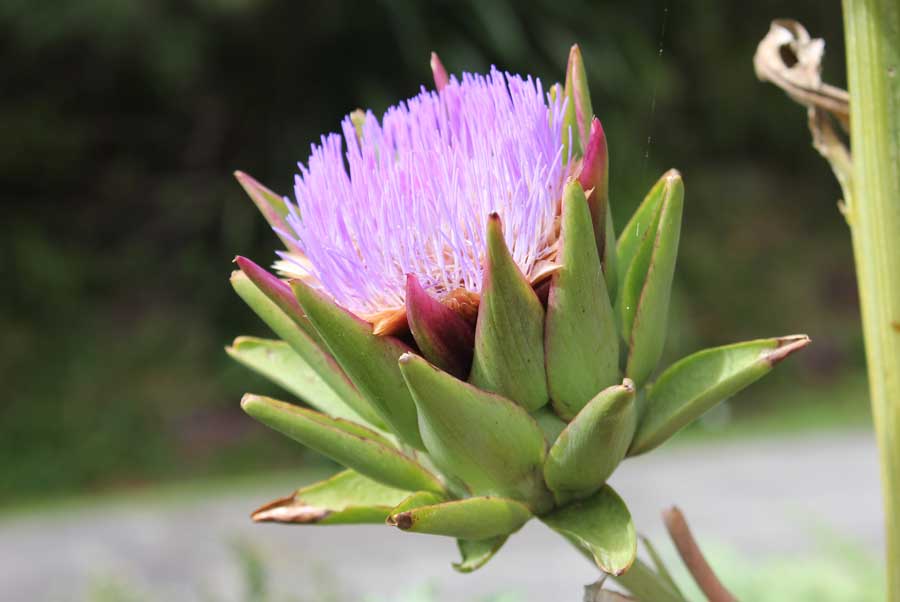
A stunning Globe Artichoke flower
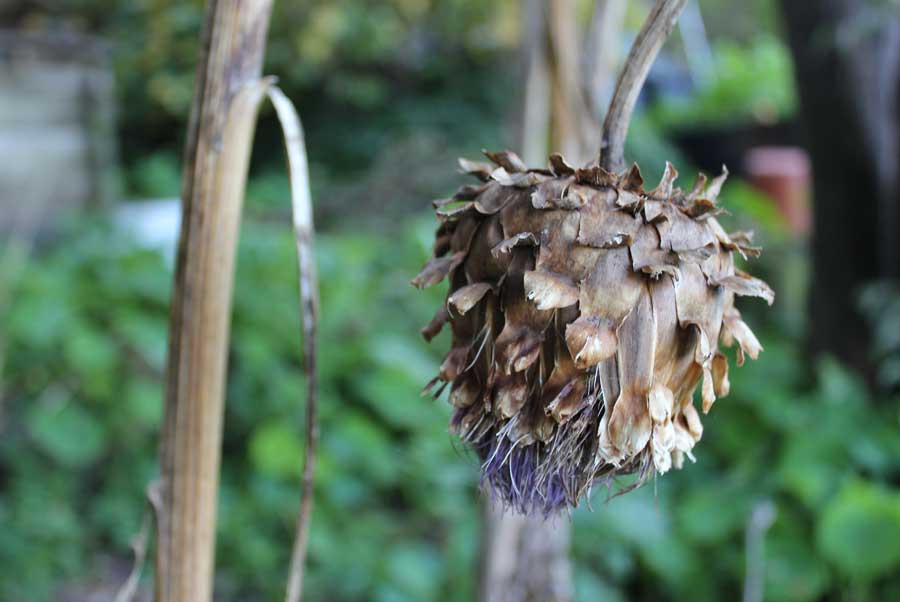
A dried Globe Artichoke seed head left for the birds to feed on
Top 3 varieties
1. Violet de Provence
Early variety with attractive purple buds that are picked when very small - about gold ball-sized - and often eaten raw. So first in a successive harvest if you plant with larger and later growers.
2. Green Globe
Very popular variety with large, globe-shaped green buds that are great for roasting. Fairly spine free – so easy to harvest.
3. Imperial Star
A relatively compact and fast growing variety that will grow from a seedling to produce around half a dozen green buds in its first season.
Getting started
When
Plant offsets outside in March or April.
Where
Artichokes love sunshine, their silver grey foliage is designed to reflect the sun’s heat. They are mostly frost tolerant (but may need heavy mulching in extra cold weather) and generally love hot, dry summers.
Soil
Artichokes will do best in soil that has plenty of organic material tucked away in it. We are talking several spades full of rotted horse manure or garden compost per plant – and probably a handful or two of slow release plant food too. Your pile of rich goodies should be dug into a broad hole – about an arm’s length in diameter and a spade blade deep – and mixed in with soil. The idea is to provide adequate nutrition and nourishment for this large growing perennial (a plant that will come back year after year). The store of organic material will help prevent the artichoke being starved of moisture and nutrients as its roots support majestic foliage and flowers during summer.
Sow & plant
Offsets:
Offsets are side shoots that grow from the base of mature plants and are normally found in autumn and winter. The advantage of planting offsets is that they can go into the ground well in advance of seedlings that are generally available in the spring. If you are starting out, try procuring a few offsets from a gardener friend if possible. Offsets should be cut away vertically from the base of the parent plant so that some of the root material comes away with them. Do this when offsets are about a hand’s length tall.
If you are planting an offset ensure that garden soil comes up to the soil mark on the offset itself.
Seedlings:
Seedlings usually become available from garden centres in the Spring. A seedling should be nestled into a hole that is about the same depth as its plastic pot. Give each plant at least a full arm’s length of space all round from the stem to grow into – this looks like a lot of space but they will fill it.
Mulch both offsets and seedlings well to retain moisture and, if planting in spring, protect from full-on sunshine with some shade cloth on bamboo canes for the first few weeks as the young plants start to spread their roots into garden soil. If you want to further help your plants along you can trim all leaves back to about the length of your middle finger to reduce the chance of plants drying out in their early days. Once seedlings start to grow and establish they will produce fresh new leaves that can be left to reach full length.
Maintain
Keep a good layer of mulch around the base of your plants and water well during dry periods. Feed with liquid comfrey (high in potash which stimulates flower growth) every fortnight – about half a watering can per plant should do it.
Keep an eye out for slug damage overnight. If you see evidence of attack then go on a slug hunt and utilize slug control methods.
Harvest or pick
Harvest is all about timing. The edible part of a globe artichoke is the ‘unopened’ flower bud in its tightly closed form before it bursts into striking purple flower. Usually this means harvesting when buds are tight and about the size of a clenched fist – or a golf ball in early varieties like ‘Violet de Provence’. With regular harvesting, plants will usually continue to produce flowers for about 8 or so weeks. Using secateurs, cut the flowers about a thumb’s length below the head and eat as soon as possible.
The heads are boiled in acidulated water (water with vinegar or lemon juice added to it to stop the artichoke from turning a muddy brown) for around 30 minutes or until a leaflet comes away from the head with only marginal resistance.
N.B. If you harvest all buds from an early variety you can cut stems down to ground level and the plant will produce another crop before the end of the season.
At the end of summer foliage will start to die back along with the stems that have produced all those delicious flowers. This is natural and all you need to do is trim away dead material – you can use this to mulch around the base. In colder areas it helps to mulch the base of the plant with a hand deep layer of straw as you go into winter – ensure that mulch does not totally cover the plant’s stems. Come next spring, new plants – or offsets – will grow from the side of the base of the old plant. A single plant can regenerate itself in this way for around 5 years.