




Mizuna
Grow
Brassica rapa japonica, ‘Spider mustard’, ‘Japanese greens’, ‘Chinses lettuce’.
Mizuna is a resilient and productive salad green with a mild, lettuce-like flavour. It can be used raw as a perky addition to salads, sandwiches and pasta dishes as well as cooked in a soup or stir fry. Fast growing and easy going Mizuna is a useful salad green. Mizuna is a decorative, low-maintenance super-tough vegetable with saw-toothed leaves that sometimes see it used as an edging to flower beds. It grows well in containers too – particularly handy for spring crops in cooler and wetter areas where garden beds can become unworkable. All it takes is a few moments’ application now and in about 2 to 5 weeks you could be sampling garden fresh Mizuna in your kitchen. A single plant of Mizuna can provide you with a steady and sustainable harvest of lush leaves for several months if you pick leaves regularly.
In a nutshell
- Sun/part shade
- Rich soil
- Grow in beds or pots
- Matures quickly
- Long harvest
Quantity
6 plants per person
Companions
- Carrot
- Celery
- Onion
- Lettuce

The growing lifecycle
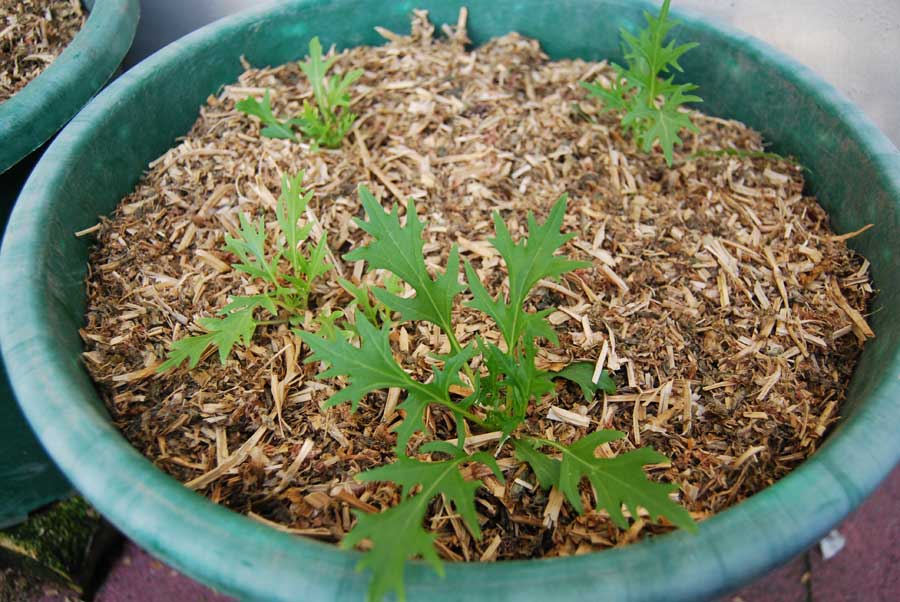
Mizuna seedlings growing in a container with mulch to help retain moisture
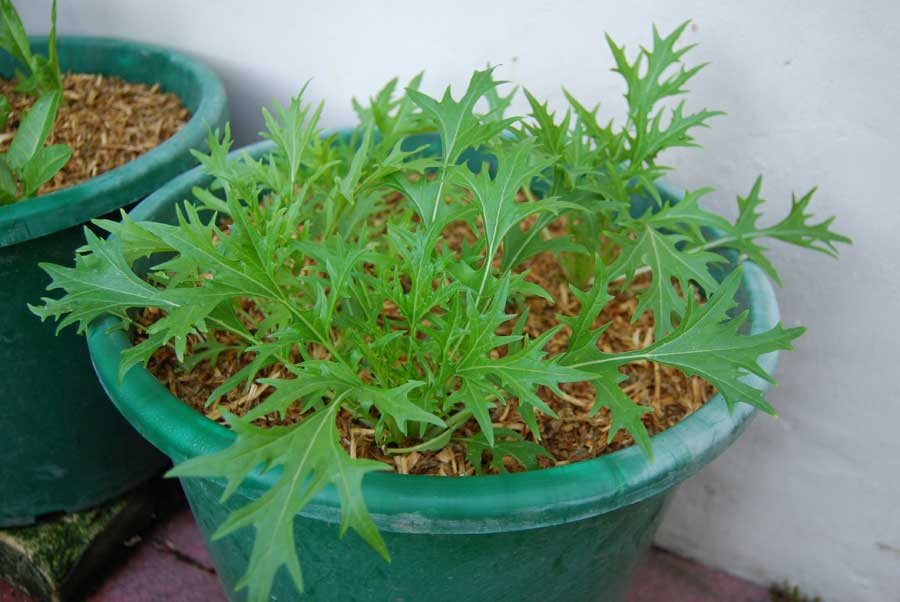
Mizuna seedlings large enough for a few leaves to be picked
Mizuna growing out in the garden
Top 3 varieties
1. Mizuna
Reliable and vigorous-growing, straight and green. Best harvested as 'cut and come again' - plants will produce for months in this way.
2. Mibuna
A close relative of Mizuna with longer, narrow leaves. Has a strong peppery taste.
3. Red Empire F1
Good as a baby leaf or micro green. Has finely serrated, reddish-purple leaves with lime green underside.
Getting started
When
Sow seeds outdoors from March to August. It is possible to sow earlier in February in a greenhouse. Alternatively sow in a greenhouse in September to provide a crop through the winter.
Where
Mizuna is really a cool customer – preferring soil to be more moist than other greenery. It is prone to bolting during high summer, so will appreciate plenty of water and some shade cover during the driest months. It also grows well in beds between larger and slower growers such as sweet corn and runner beans. Alternatively sow in pots.
Soil
Soil needs to be a touch moist so I make sure that there is plenty of well-rotted manure and compost dug in before I sow or plant. This organic material, as well as providing nutrients, will help to hold moisture in the soil and keep the fresh green leaves tasting sweet and mild.
Sow & plant
Sow & Plant
In warmer areas sow directly into the ground in rows or across a patch in your bed. Thin your seedlings as they appear. Alternatively, sow into trays and plant as seedlings if slugs are a problem – seedlings will stand a better chance of reaching maturity. If you are in a cooler area at a cooler time of year then sow under protection of fleece, plastic cloches or even better – in a greenhouse. When your seedlings have reached about a thumb’s length in height you can slowly move them out of protection for a few hours every day so they get used to the colder temperatures of the open air and then plant as seedlings directly into your garden once this ‘hardening off process’ has been completed.
Maintain
Keep an eye out for slug damage overnight. If you see evidence of attack then go on a slug hunt and utilize slug control methods.
Maintain soil moisture and temperature. A mulching layer of pea straw, barley straw, shredded newspaper, dismantled cardboard box or even re-usable black plastic sheeting will help.
Harvest or pick
You can use Mizuna in one of four different ways. How you chose to harvest should dictate the spacing between plants:
Cut and come again – this means you cut all foliage down to an inch or so from the ground and then wait whilst the plant regenerates in the coming weeks before repeating. Plants need to be thinned to a spacing of about a finger’s length between each other.
Young plants can be harvested when small to be added whole to recipes. Plants need to be thinned to a spacing of about a finger’s length between each other.
Grab a leaf – plants can be grown for regular harvesting of young, outer leaves whilst the centre of the plant remains un-touched. For this, plants need to be spaced about two full finger-lengths apart from each other.
Mizuna that is grown to be harvested as an entire plant when fully in its prime will appreciate a bit more space. Give seedlings a spacing of around a hands’ length from each other.
Remember that you can make successive sowings or plant your seedlings – say every three weeks – to prolong your harvest.