




Parsnip
Grow
Pastinaca sativa
Parsnips are a vegetable that will sit quietly in a bed through the summer almost until you’ve forgotten they are there and then suddenly you have a crop of purest white, tender roots to invigorate a roast meal and spice up a winter soup or stew. Parsnips taste all the sweeter for spending some time in frosted ground before harvest. ‘Hollow Crown’ is an old variety that is so sweet you could try making marmalade from it!
In a nutshell
- Sun/part shade
- Fertile sandy soil
- Good in cool areas
- Long growing period
- Autumn/Winter harvest
Quantity
10 plants per person
Companions
- Peas
- Lettuce
The growing lifecycle

Parsnip seeds sprouting

Parsnip seedlings developing their first sets of leaves

A wide row of Parsnip seedlings ready for thinning

Parsnip seedlings thinned to correct spacings

Parsnips crowding a raised bed
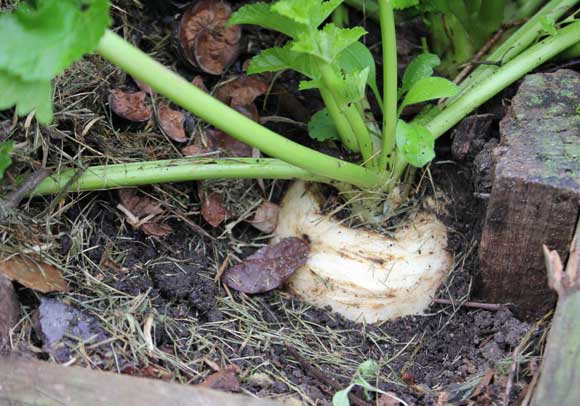
Parsnip ready for harvest
Top 2 varieties
1. Guernsey
A medium length variety with quite broad shoulders. Stores well in the ground through winter and has a sweeter flavour after being subject to a frost or two. Pull the roots before they start re-sprouting when warm spring weather arrives after winter.
2. Hollow Crown
A very old, reliable variety with large tapering roots that have mild-flavoured white flesh. Needs a good depth of soil for straight roots.
Getting started
When
Sow March to end of May.
Where
Preferably a sunny and sheltered part of your garden although parsnips can also grow quite happily in light shade.
Soil
Like carrots and beetroot parsnips produce a root that grows best in a deeply dug sandy soil with a good amount of organic material mixed into it. Ideally you’d be planting them in a part of the garden that was composted for a previous crop – say cabbages, broccoli or chard as these hungry plants take up a lot of nitrogen that parsnips don’t really need. Potassium is a nutrient that helps parsnips grow well and a ready source of this is in untreated wood ash from a wood burning stove if you have one. Simply sprinkle on the surface as if you were icing a cake then dig the ash into your bed and mix well with the soil before sowing seed. A light dressing of lime added to soil a few weeks before sowing seed will also help towards a good crop of parsnips 4 to 5 months down the line.
If soil has too much nitrogen in it due to over-manuring or soil does not drain sufficiently well roots can be affected by canker and rust. To avoid these spoilers it is worth getting your soil mix right from the start.
Sow & plant
Sow & Plant
You can sow seed in rows or scatter them across an area. To guarantee as good a crop as possible sow three or four seeds together in groups and set these about a finger’s length apart. You want to plant them about a finger-tip deep. After about 4 weeks when they have sprouted you can then thin out the weaker seedlings and leave the strongest to grow on.
Maintain
Keep your seedlings moist and weed free. Once they get to about a hand’s length in height you can mulch them with straw or untreated wood chips or shavings to maintain constant moisture and suppress weeds. Because they take upwards of 5 months to reach maturity you may want to plan some inter-planting with lettuces, bok choi, radishes and other shallow-rooted fast growers that can productively utilise the otherwise occupied space.
Parsnips can be affected by canker and rust – this is caused by too much nitrogen in the soil (too heavily composted) or if parsnips are sown too early. Roots will also rot if soil has poor drainage.
Harvest or pick
Tender, young parsnips can be pulled in late summer. Otherwise, just to coincide with soup, stew and roast season mature parsnips should be ready for pulling from autumn into winter. The large leafy tops to your parsnips will start to turn yellowish when they are at their optimal best. Best to wait till after the first frost before lifting your crop as this freezing give them a sweeter flavour. As long as you soil does not get too water-logged, you can leave parsnips in the ground through winter and harvest when you need them. Mulch the crowns for protection from really heavy frosts.
Leaving a few parsnips in the ground after harvest to flower in the following year will help bring attract useful predators such as hoverflies into your garden.