





Cornflower
Grow
Centaurea cyanus, Bachelor’s buttons.
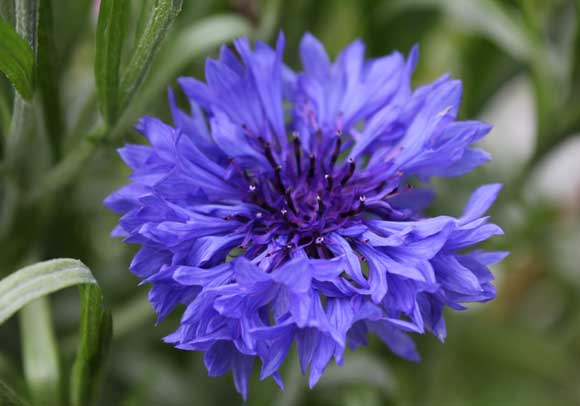
Cornflowers produce a mass of a beautiful cobalt blue flowers that make them very popular with bees and butterflies. They are an annual flower – which means they grow, flower set seed and die all within one season. They quickly add colour to vegetable gardens once summer has arrived and make the place look all the more attractive for their presence. In addition they do their bit by drawing in diverse beneficial insects like pollinating bees, as well as ladybugs, lacewings and hoverflies whose larvae feed on aphids. There are also varieties with white, pink and even rich burgundy flower colours. Cornflowers can grow to around knee height depending on soil. The flowers dry very well and keep their colour after picking.
In a nutshell
- Sun/part shade
- Free draining soil
- Best sown in autumn
- Bright blue flowers
- Attract bees and butterflies
Companions
Cornflowers are a companion to many vegetable and fruit plants because they attract pollinating bees into the garden.
Plant lifecycle


Getting started
When
Sow or plant in spring countrywide. Cornflowers can also be sown in autumn and this head start usually means they establish well through winter and are quick to flower in the following season
Where
Cornflowers grow well in full sun as well as partial shade.
Soil
Cornflowers grow well on pretty average soil without added fertiliser or compost.


Sow & plant
Sow
In autumn or early spring, sow seeds less than a finger-tip deep in trays or punnets filled with seed compost or directly into the garden or proposed container. Ideally seeds should be about a thumb’s width apart. When they get to about a thumb’s length tall, thin seedlings so that plants end up about two hands’ lengths apart.
Plant
When your seedlings are about a finger’s length in height plant seedlings at an average spacing of two hands’ lengths apart. I usually dot them around the vegetable garden – planting them between plants and at the corner of beds.
Cornflowers tend to get a bit top-heavy and flop around when mature. When you plant or sow them push in some short bamboo canes or sticks around them. These should be about just over knee high – stick something on the ends to protect your eyes from being poked later on. Fix two layers of mesh at different heights on the canes or sticks. The plants will grow through these and this will support them so they’ll stand straight.
Harvest or pick
You can pick the petals and scatter them in salads – they have a slightly spicy, clove-like flavour for which reason they are used in the making of Lady Grey tea.
Keep cutting flowers to stimulate more. At the end of summer allow flowers to form seed heads – these will help to feed the birds and plenty should self-seed around the garden. You can also pick the dried heads and save seed for re-sowing or simply scatter them around the garden on bare soil and wait to see what happens.


