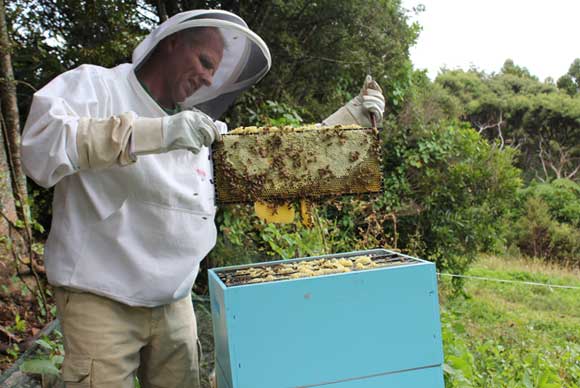
A typical functioning hive in Summer will have;
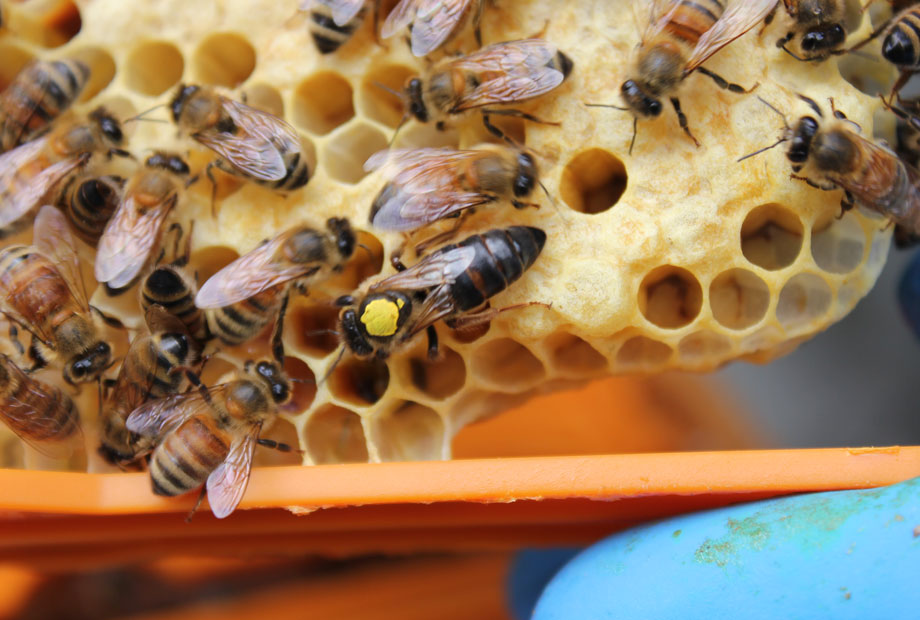
A Queen: A queen can lay up to 2000 eggs per day. Typically, queens live for two to three years.
A colony of approximately 50000 to 60000 bees consisting of:
Female worker bees: Worker bees have stingers and do all the work – collecting nectar and pollen and defending the hive. Worker bees comprise the major part of the population in a beehive, they tend to the queen as well as young newly-hatched drones and larvae. Workers build the comb cells out beeswax for the queen to lay eggs in and for honey storage. During summer workers live for about 6 weeks. Those still alive at the end of summer will survive for several months through winter into spring.
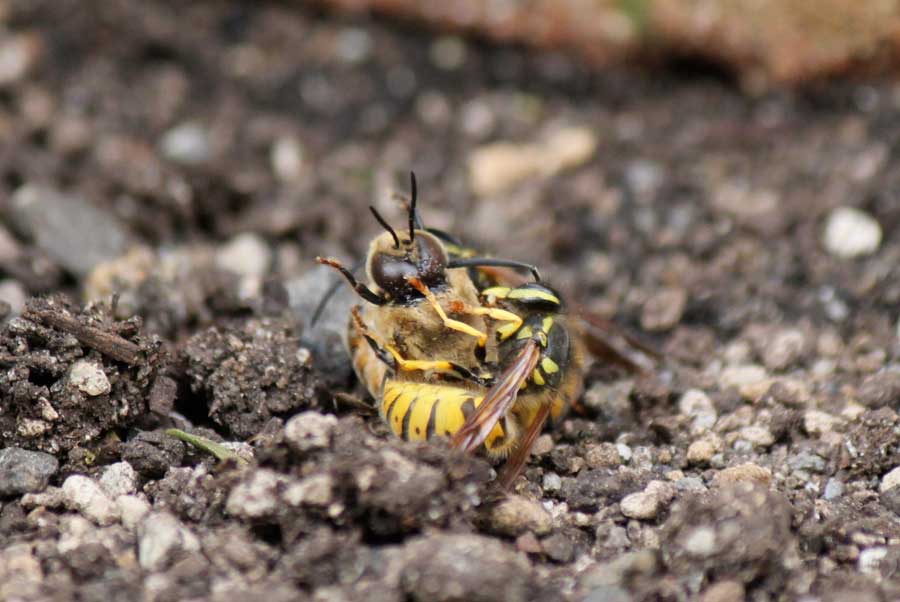
Male drones: These are stingless and have no means of collecting nectar or pollen. Their primary role is to mate with queens from other hives and numbers are a tiny proportion of total hive population – between 300 and 3000. They do help with temperature control – fanning their wings to cool the hive or shivering to generate heat. Drones live for about 3 months and at the end of summer any that still remain are driven out of the hive by the female workers to perish. New drones will be created in the spring.
Hives are most active during spring and summer when colony numbers soar from 10,000 or 15,000 to 50,000 or 60,000. This is the most productive time when honey is produced – typically a hive can produce around 40kg of honey per year depending on size. At the end of summer, colony numbers dwindle and honey is stored for consumption over winter. Through winter, the remaining workers huddle around the queen to keep her warm. In spring she starts laying again and the hive swings into action once more.