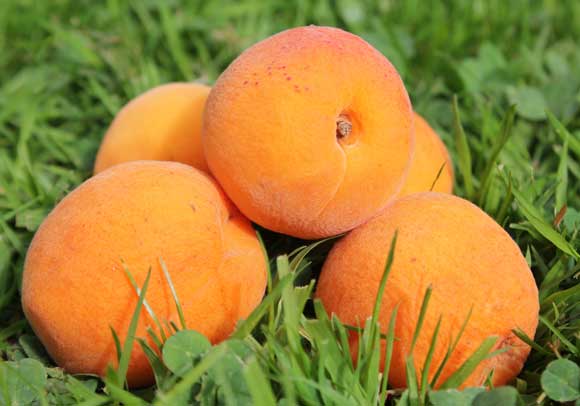





Cherry
Grow
Prunus spp
Fresh juicy cherries straight from the tree are a delicious treat in summer and its great to be able to harvest them in the sort of quantities that lead to full-on feasts. If you grow your own then you’ll hopefully not only have enough to satisfy a taste for sweet fresh cherries but also surplus to store as jams, preserves and frozen puddings. Although most individuals are no more than four metres tall, some cherry trees can grow to the height of a two-storey house and they often make an attractive, spreading shape. They grow well countrywide, needing a cold spell in the middle of winter to stimulate production of flower buds and then a hopefully dry summer to ripen fruit. They are frost hardy, although blossom can be damaged by late spring frosts. Cherries don’t thrive in humid areas, although newer varieties have been developed that can tolerate a greater range of conditions.
There are two main cherry varieties. Sweet cherries whose fruit are eaten raw and sour cherries whose fruit are eaten cooked. Many cherry varieties need the company of another cherry tree to help with pollination but some are self fertile – meaning they can be grown on their own. For cherry varieties to cross-pollinate with each other they need to flower at the same time.
You can also get trees with two varieties grafted onto them – this means flowers of the two varieties pollinate each other and often you’ll get fruit for longer than if growing a single variety. These are usually quite small trees.
In a nutshell
- Small to medium sized trees
- Fertile soil with good drainage
- Sunny position
- May need two trees for pollination
- Sweet and sour varieties
Quantity
- 1 tree per family – you may need an additional tree for pollination.
Companions
- Borage
- Chives
- Comfrey
- Strawberries
- Marigold
- Calendula
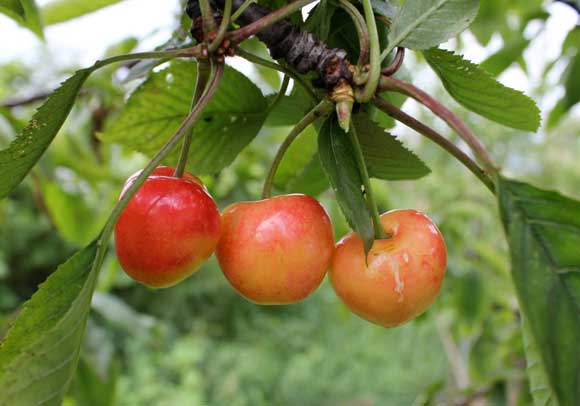
The growing lifecycle
Our top varieties
1. Morello
A cooking cherry very popular with jam makers. This is a self fertile, sour fruit variety that grows well all over the UK and has been domesticated here for centuries. Will cross pollinate with Stella.
2. Kordia
Eating cherry. Self sterile which means it requires cross-pollination with other varieties such as Lapin and Stella among others. Produces dark red, sweet but also tart fruit. Hardy throughout the UK, but its blossoms can be vulnerable in areas with late frosts.
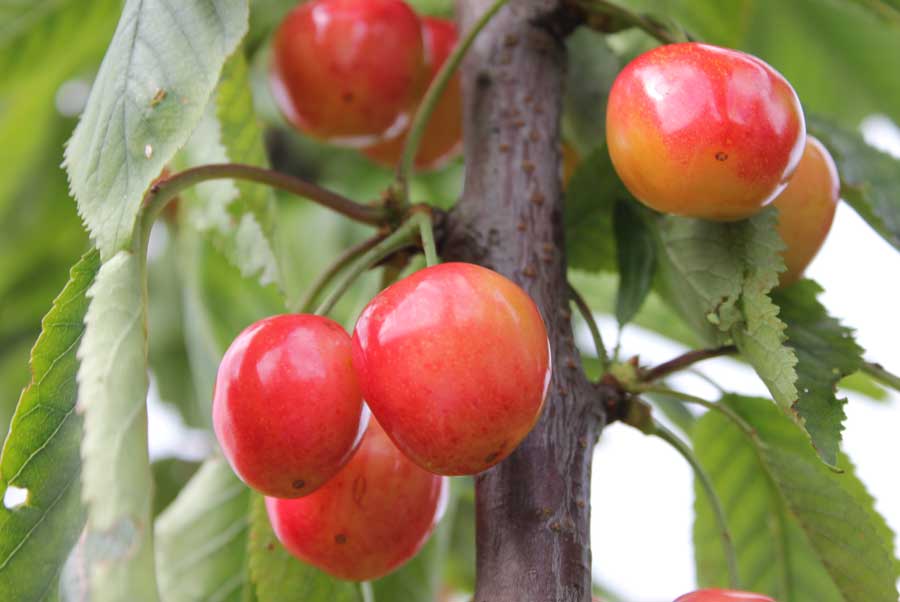
3. Stella
A self fertile eating cherry which grows better in warm areas and doesn't like lots of moisture. Produces large crop of juicy dark red cherries. Helps to pollinate Rainier.
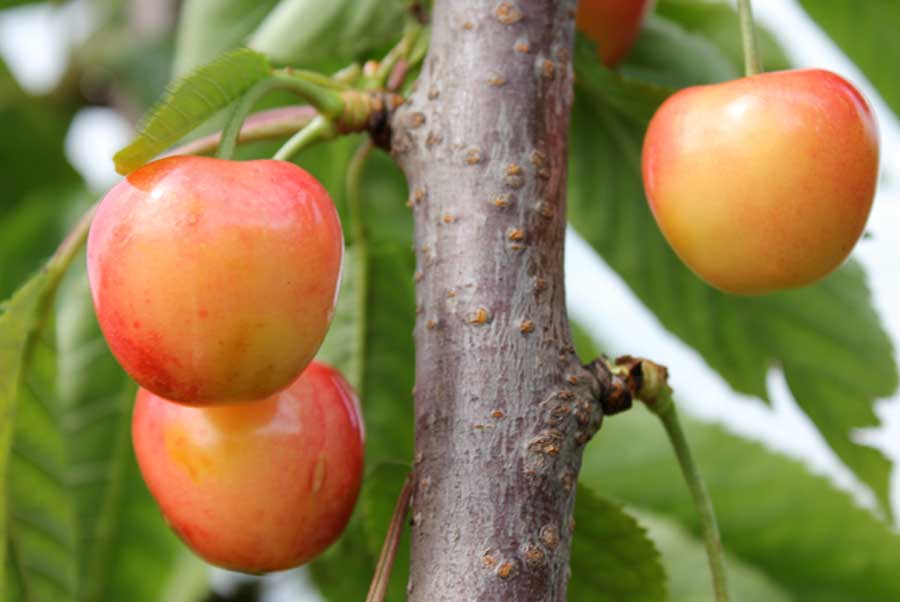
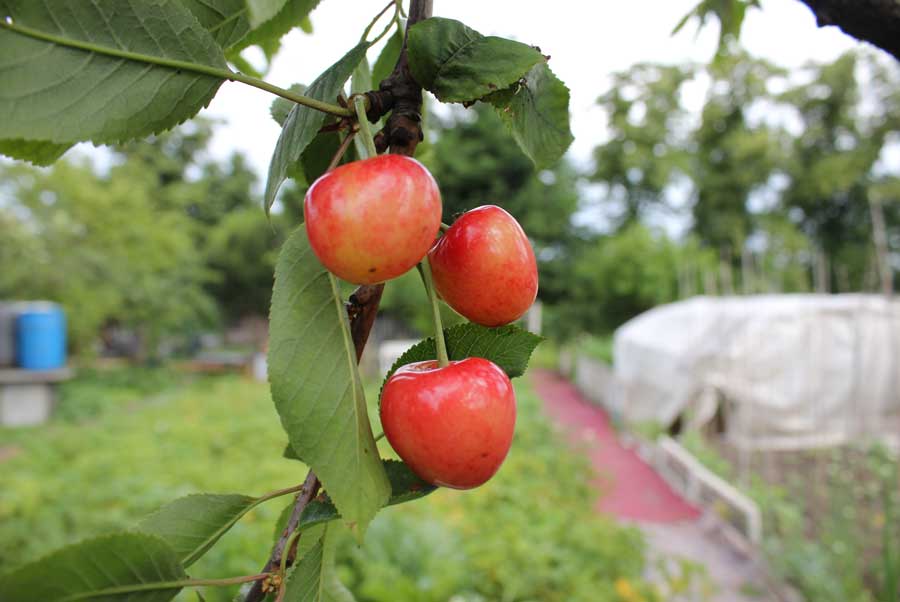
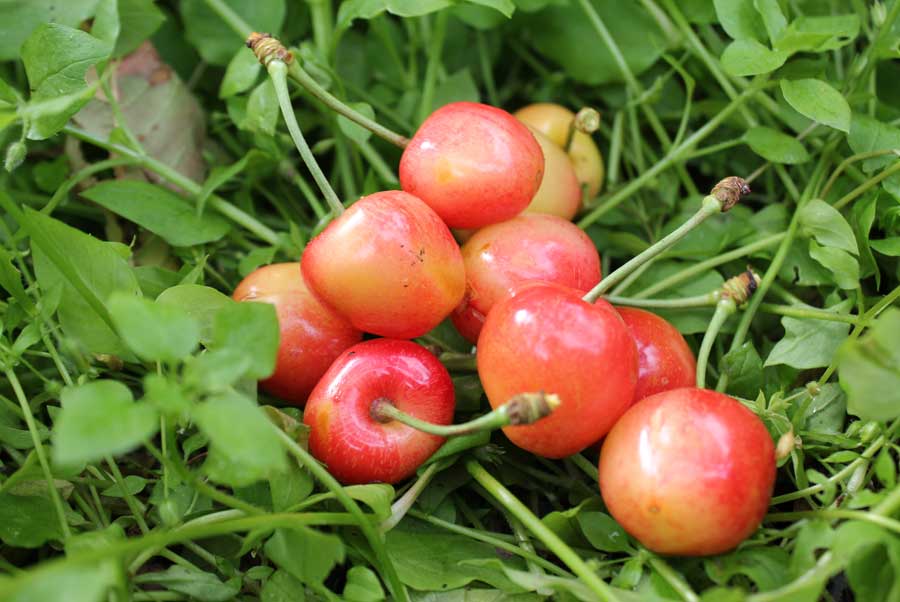
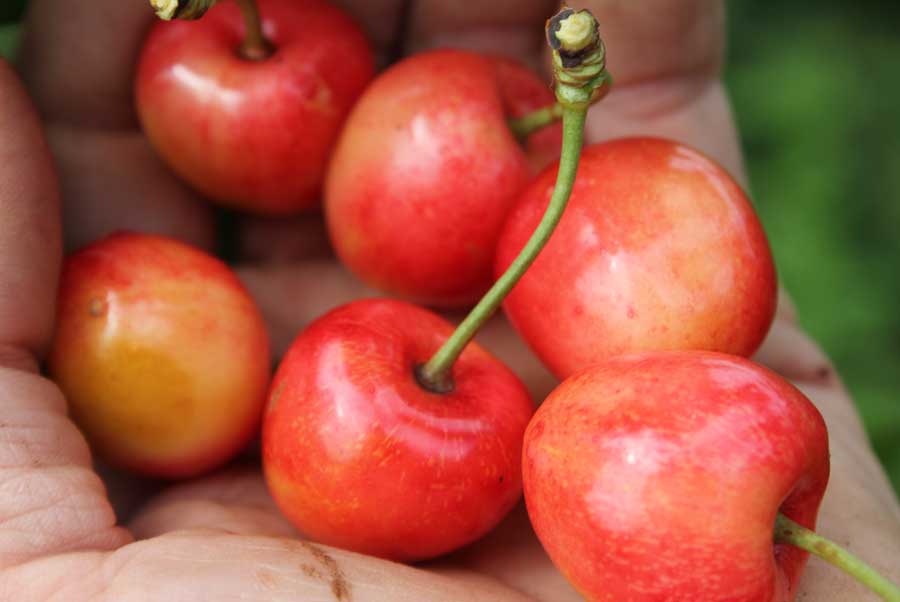
4. Rainier
Eating and cooking cherry. This variety is popular in the states, but is a great addition if you can get a hold of it over here. Cross-pollinates with Stella and Compact Stella. Produces bi-coloured yellow and red fruits that are brilliantly sweet. Can grow up to 9m tall, depending on the rootstock and pruning techniques. Grows well throughout the UK.
5. Lapin
Eating cherry. Self fertile variety with tolerance of humidity – so good for warmer areas. Large, juicy red cherries.
6. Summer Sun
Eating cherry. Self fertile, but benefits from a few cross pollinating companions. These include Lapins, Stella and Morello. A smaller tree, great for colder areas of the UK.
Getting started
When
Almost all cherry trees available for purchase are grafted. Buy them online or from your local garden centre or online from growers. You will find them either ‘bare root’ (naked tendrils with no soil) or in small containers. Bare root trees are available in and should be planted during winter. Containerised trees are available year round, but it is best to transplant them in spring.
Where
Cherries like an open position with good air circulation. Avoid dips and hollows where damp air can collect and create humid conditions. Cherry trees are often grown in lawns and orchards. Depending on variety they can be large or modest-sized trees. They need to grow into their recommended full shape to produce a decent harvest and do not respond well to being hacked back. Put them where you’ll be able to enjoy easily walking around them and ensure access is good for harvest. Sweet cherry varieties need full sun and shelter from strong prevailing winds. Sour cherries prefer partial shade and are often pruned and trained into fans on cool, shaded walls and fences. Avoid putting cherry trees in the shadow of buildings and tall trees. Blossom in spring can be damaged by late frosts so try not to plant them in any hollows if you are in a frost-prone area. Trees planted in lawns or grassy orchards will grow better if grass is removed from a circle around their stem – take a stride away from the stem and make this the radius of your circle, remove grass and add a finger-deep layer of mulch.
Soil
Cherries like a deep, rich fertile soil that is well drained.
Planting
Plant
Space cherry trees about six long strides from trunk to trunk. Keep trees that are being grown together within the same part of the garden to ensure good cross-pollination.
Container grown tree.
Soak bare root trees for two hours before planting, ensure that containerised trees have been watered regularly and give them a top up drink a few hours before transplanting. Dig a hole about 20% larger than the size of the container the plant comes. Half-fill with well-rotted compost, rotted manure and some coarse sand or fine grit to help with drainage. Mix together with garden soil at the bottom of the hole. Gently lift container grown specimens from their pot. Check the roots on the root ball and loosen any that appear to have grown around the inside of the pot – this should help them to get away and grow into the garden soil. Stand the root ball in the hole and adjust soil beneath until the top of the root ball is level with the ground around it. Note that the graft union must be a few inches above soil level. Backfill with the soil/compost mix and firm with downward hand-pressure as you go. Drive three stakes in at even spacings around the outside of the root ball. Using a suitable non plastic tie – rope, cloth, no wire that will damage bark and stems – secure the stem of the tree at about knee-height above ground. Create a circular dustbin-lid sized berm around the little tree to allow water to sit and infiltrate downward, then give your cherries a big drink.
Bare root tree.
Dig a hole about 20% larger than the root mass of a bare root tree – ie enough for roots to spread out unimpeded. Half-fill the hole with well-rotted compost, rotted manure and some coarse sand or fine grit to help with drainage. Mix together with garden soil at the bottom of the hole. Gently lift container grown specimens from their pot. Stand the tree roots in the hole and adjust soil beneath until the roots and at least a few inches of the stem are below surrounding soil level (there is often a mark on the stem showing where soil came up to on it when it was last planted). Note that the graft union must be a few inches above soil level. Backfill with the soil/compost mix and firm with downward hand-pressure as you go. Drive three stakes in at even spacings around the outside of the root ball. Using a suitable non plastic tie – rope, cloth, no wire that will damage bark and stems – secure the stem of the tree at about knee-height above ground. Create a circular dustbin-lid sized berm around the little tree to allow water to sit and infiltrate downward, then give your cherries a big drink.
Maintain
Water around the base of your young trees in dry periods, making sure that soil gets enough water for roots to be fully soaked.
Mulch around base of newly-planted trees, especially if you have sandy soil or trees are planted in lawns or grassy orchards. Cover a circle as wide as the spread of the branches with a finger-deep layer of compost, rotted manure or old straw and replenish mulch when necessary. Make sure the mulching layer doesn’t touch the stem of your tree as this can cause it to rot. This should be done for the first three years after planting, thereafter roots should have spread wide enough to draw sufficient moisture and nutrients without help. However, if growing cherry varieties on dwarfing rootstocks in containers it may be wise to apply a thin mulch over the container in summer – particularly in drier parts of the country – as these trees are more vulnerable to soils drying out. You can plant borage, comfrey, chives and strawberries beneath your free growing trees to draw nutrients from deep in the soil and to attract beneficial pollinating and predatory insects.
Feed: Trees can be fed with a sprinkling of blood and bone meal around the outer edge of their drip line in spring, however if you keep the ground beneath your trees weed-free and well-mulched when its dry this should help to reduce the amount of feeding that is required.
Harvest or pick
Harvest: Depending on variety and weather you can be picking cherries from late spring through to late summer. In the case of sweet cherries, taste is a good enough indicator of ripeness but generally fruit are ripe when full-coloured and glossy skinned. If in doubt, the birds will also let you know! Handle carefully when harvesting to prevent bruising, pick cherries with their stems intact. Line your bucket or basket with soft material such as cloth or newspaper. Best to pick on a dry day as wet fruit will deteriorate quickly off the tree.
Storage: Fresh cherries don’t last all that long, keep them in the fridge. Cherries can be frozen and then stoned when de-frosted. Frozen cherries are usually only good for cooking.
Pruning
Pruning: When first planted check over your young trees and if they have more than 5 upward growing stems off the main stem remove the surplus by cutting them back to main stem. This sets up a good framework for the tree to then grow into a balanced open shape. In general, when removing stems follow them down to the point where they are growing off a main stem. Cut the stem you are removing just above the point where it joins the main stem so that this leaves a small protruding collar that will heal over.
Cherry trees don’t need much pruning if grown as a tree. Regular maintenance involves cutting out dead, diseased and crossing stems. This is usually done after harvest in late summer or early autumn.
Hybrids and sour cherry varieties can be pruned to grow as fans of carefully spaced stems against a wall or fence. Stems are pruned to maintain a strong framework and to stimulate new shoots that will produce flowers and then fruit.
Pests
Birds are a common arrival just as cherry trees start to ripen. Trees of commercial growers are covered with mesh to protect fruit, where practical.
Aphids are also a nuisance. The best method is prevention and planting to attract beneficial predators as controlling an outbreak on a tree can be hard without resorting to sprays. Neem oil spray will help if aphids get out of control.
To reduce the likelihood of your trees falling victim to and suffering from pests and diseases look after them and maintain a diverse planting in your growing area.
Sweep and compost fallen leaves.
Mulch and feed, ensure constant moisture during dry weather.
Spray fresh spring foliage with Neem oil spray to kill aphids, scale insects and mites.
For best advice on how to deal with fruit tree related problems in your area seek out local organic growers and talk to them. A half hour chat can save on years of trial and error.