




Asparagus
Grow
Asparagus officinalis
There can a be a lot of moving around involved in vegetable gardening as plants come and go from season to season so it’s nice to come across a plant like asparagus that can yield a delicious harvest every spring for up to 20 years whilst staying put. Asparagus is one of the most delicious vegetables we can grow and is well worth the initial effort to get a bed going.
In a nutshell
- Delicious harvest for 20 years
- Full sun
- Free draining sandy soil
- Frost tolerant
- Great for coastal gardens
Quantity
- 1 or 2 crowns per person
Companions
- Tomatoes
- Parsley
- Basil
- Lettuce
- Calendula

The growing lifecycle


Top 2 varieties
1. Mary Washington
A heritage variety that does well throughout the UK, it grows with purple-tipped green spears
2. Jersey Giant
Thick purple spears with good flavour. Highly productive.
Getting started
When
Plant asparagus crowns from March to April. Before planting, be sure to dig in a bucket of compost per square metre of planting space.
Where
Asparagus loves sunshine. It is frost tolerant and generally grows best in cooler parts of the country that have hot, dry summers. Asparagus is also more salt-tolerant than most other vegetables so it’s a great plant for coastal gardeners too. Once established, asparagus is a great seasonal treat from the garden. The right preparation will see your plants go a very long way.
Soil
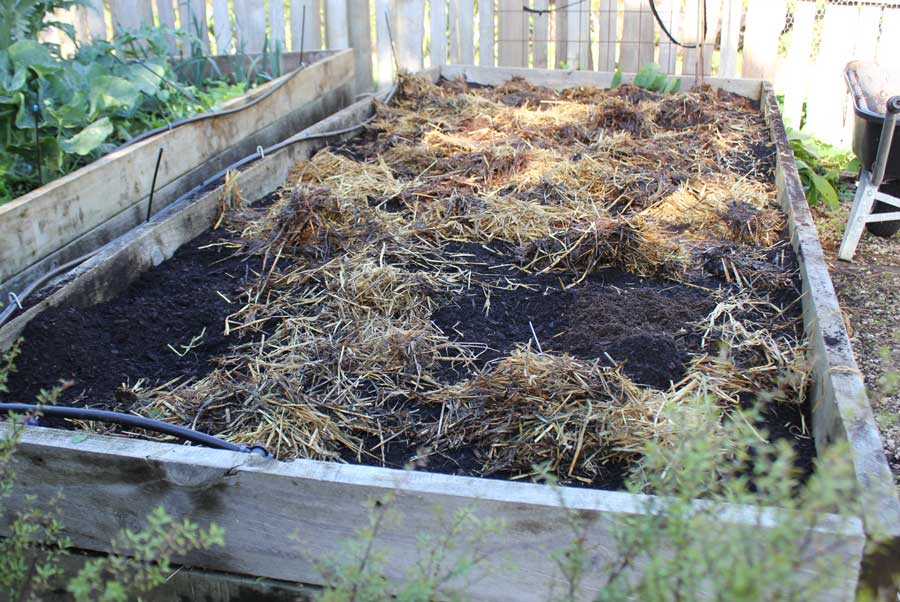
Asparagus naturally grows in coastal dunes around the Mediterranean and so a free draining, sandy soil is an absolute necessity for guaranteed success. Where soil is not naturally sandy and free draining, asparagus can be grown in raised beds and along ridges so that excess moisture easily drains away. Soil must be deep – ideally just over knee-deep. It needs to be enriched with a generous serving of weed-free, well-rotted organic material – compost, manure or seaweed straight from the beach. We are talking at least two to three buckets of compost and rotted manure and the same quantity of coarse sand or fine pumice in an area about a stride by a stride. Dig this drainage and organic material so that it is fully mixed with soil down to a depth that is around twice the depth of your spade’s blade. Asparagus does not like to have its roots disturbed so make sure that your planting site is free from all weeds especially persistent perennial weeds such as bindweed, docks, dandelion and buttercup.
Sow & plant
Sow
You can grow your own plants from seed but this process takes about 3 years and for around £10 you can buy about 20 ‘crowns’ (sections divided from mature plants) that are ready to go straight into the garden.
Plant
Asparagus crowns can be planted in winter and spring. Whether planting in free-draining garden soil at ground level or on prepared raised mounds and in raised beds the method is the same.
Year 1. Dig a trench the length of your bed that is about a hand’s length deep and two hands’ lengths wide (the side may cave in a little but that’s okay). If you are digging more than one trench then space your trenches about a stride apart. Make a gentle mound along the bottom of your trench (like the curve across the top of a loaf of home-baked bread) and sit your crowns on top. Place crowns so they are two to three hands’ lengths apart in the trench. Carefully spread the roots across the soil so that they radiate around the crown like rays of the sun. Backfill to cover the crowns so that they are buried about a thumb’s depth beneath the soil. They will appear to be semi-buried allc along the bottom of your trench. As the central stems start to grow keep covering them back up until the trench has been filled.
The crowns should be kept weed free and watered during dry weather. Shoots will start to appear and these should be left to grow and open to ferny foliage. These long thin stems can become brittle and should be carefully tied together above each plant in late summer as they start to die back and return important nutrients to the crown and roots below. In autumn when they have gone yellow and completely died back these redundant stems should be cut away and a generous layer of rotted animal manure and or seaweed laid across the planted area.
Year 2. Repeat the process of weeding, watering and allowing shoots to mature. Ideally you don’t harvest any of the fresh young stems in this second season but allow them to fully develop once more. The aim is to give your plants the opportunity to put their energy into developing strong roots before you tax them and harvest the young shoots.
Harvest or pick
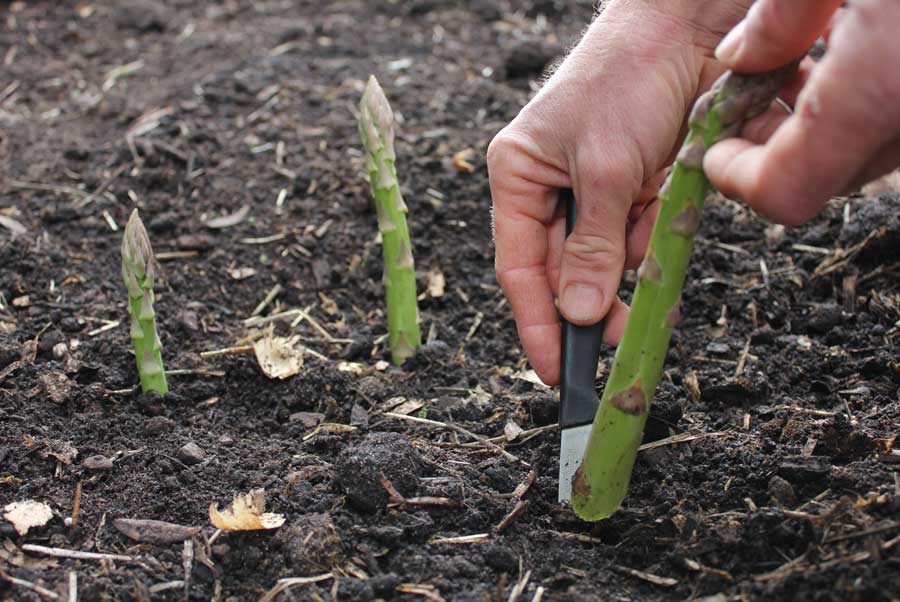
In the third spring after planting you should be rewarded with delicious fresh asparagus. As your plants will still be young you should try to take only a few spears from any one plant in this first year of harvesting. When spears are about a palm to a full hand’s length above ground cut them carefully about a finger’s length below ground with a sharp serrated knife. The first harvest should be kept to a 4 week period. Remaining shoots should be allowed to mature as before.
In subsequent years all shoots can be harvested during a 6 week period. You can expect between 15 and 20 shoots per plant. After this harvest period any subsequent shoots should be allowed to mature, as before, to nourish the crowns below ground. Keep beds weed free at all times and feed heavily with rotted compost and fresh seaweed every autumn.