




Blueberry
Grow
vaccinium spp
Blueberries are delicious, super good for you and they don’t come cheap from the shops which makes giving them a go in your garden all the more worthwhile. With one of the highest antioxidant contents of all fruits and vegetables these rounded dark blue berries are a healthy addition to muesli, porridge, pancakes, muffins cakes and puddings. Blueberries are very versatile – eat them fresh, preserve them or freeze them. Blueberries grow on shrubs that can be planted individually, in small groups or in rows as a hedge. They can also be grown in containers where space is limited. Plants grow to about waist height and about a full stride from side to side. Thanks to tolerance of cold weather they can be grown and enjoyed countrywide. Summer foliage is an attractive bluish grey and in autumn the leaves turn brilliant reds, yellows and oranges before they fall.
Blueberries can produce fruit on their own but pollination and fruit production are greatly improved when several plants are grown together. With the right range of varieties in your garden you could be harvesting fresh blueberries daily from mid July through to September.
In a nutshell
- Plants grow into woody shrubs
- Need two ensure good pollination
- Varieties for all parts of country
- Rich, acidic soil
- Delicious and healthy berries
Quantity
- 3 plants per household.
Companions
- Basil
- Thyme
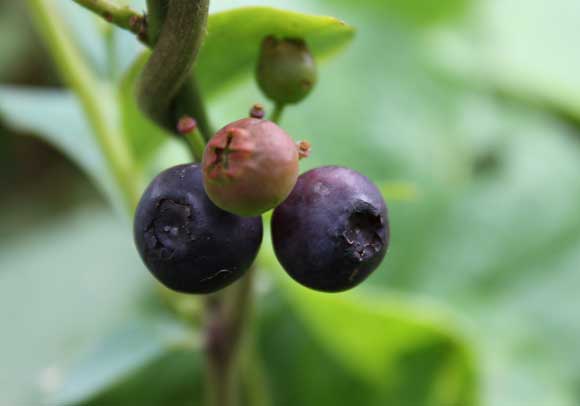
The growing lifecycle
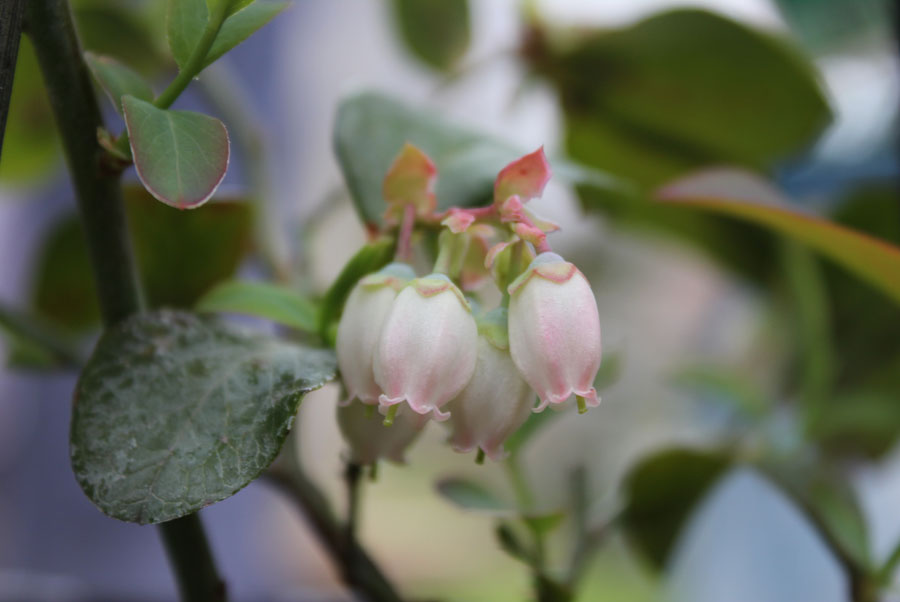
Blueberry flowers
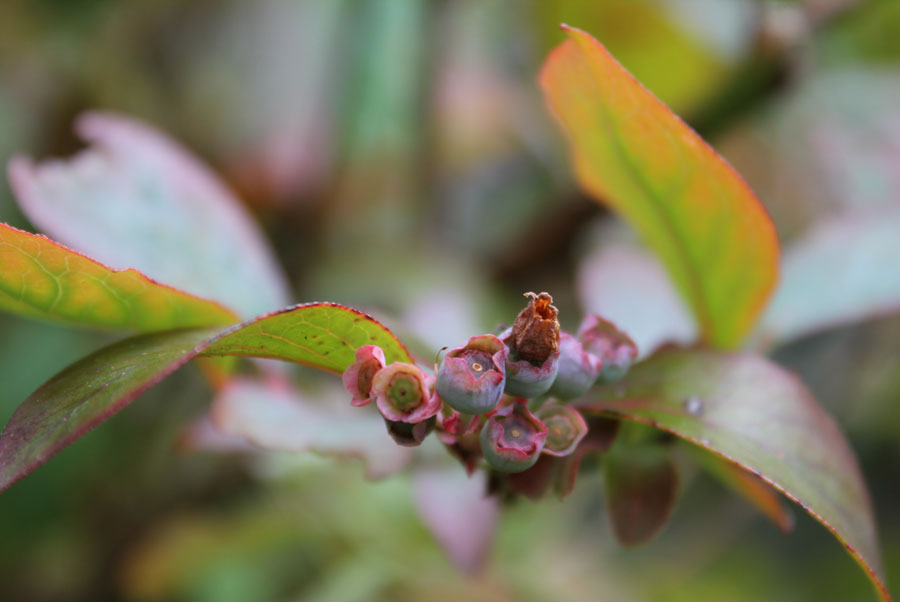
Pollinated Blueberry flowers starting to form tiny fruits

Blueberry fruits forming in clusters

Blueberry fruit starting to swell in size
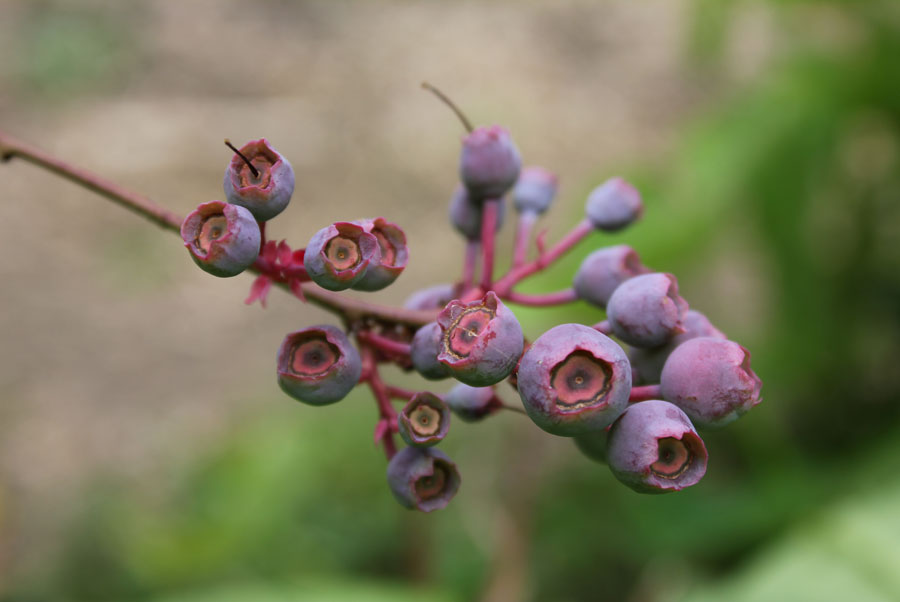
Young fruit starting to show a blush of colour
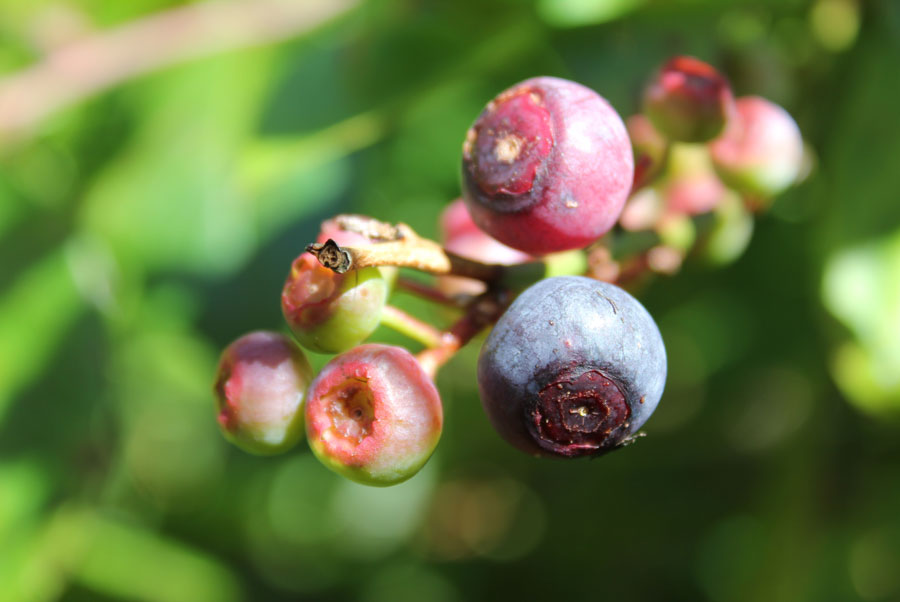
Fruit reaching full size and starting to ripen
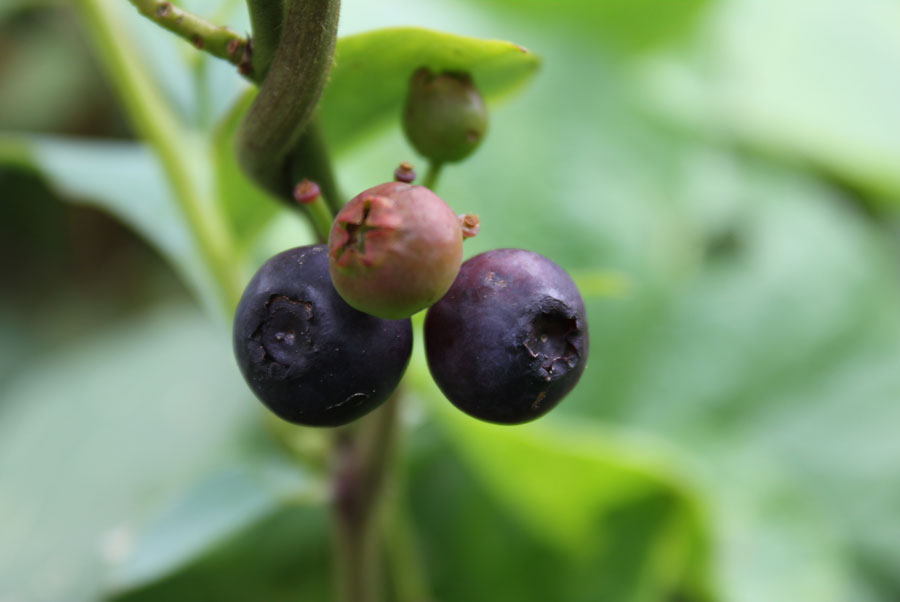
Fruit darkening and therefore coming close to harvest
Our top 7 varieties
1. Bluecrop
A mid season Blueberry producing a heavy yield in August. A compact grower - so prefect for pots and for smaller gardens with limited space. Known to attract lots of bees.
2. Nui Early
Self fertile variety, produces early crops of light blue berries that store slightly longer than the most blueberry varieties.
3. Chandler
Chandler is a self fertile variety, it produces a late crop of very large purple fruits - getting on for an inch across! Also known for its ornamental qualities as an attractive compact shrub.
4. Duke
The most popular early ripening variety. Upright growth habit - reaching up to 2.5m, produces large early crops in mid July and early August. A single bush can produce up to 20lbs in weight. Grows well in northern spots with shorter summers.
5. Jersey
Traditional variety. Grows into a tall upright plant over head high. A late season heavy cropper producing fruit between late July and August. Medium sized berries are good for baking.
6. Powder Blue
Tall and upright plants growing to around head height. Harvest is mid-to-late with a large crop of light blue berries that store well. Good for growing in all areas. Powder blue isn't reliably self fertile - better yields will be achieved by growing with several other blueberry plants.
Getting started
When
Plant blueberries year-round, as long as the ground is free of frost or ice.
Where
Plant blueberries in full sun – though they will tolerate some partial afternoon shade. They can handle windy locations as well as winter cold.
Blueberries are great in containers such as half barrels. This means you can put them in your sunniest spot – say on a deck or terrace – if your veg garden doesn’t happen to be big on suntraps.
Soil
Blueberries are only particular about the soil they are grown in. For best results they need a rich, moist soil that doesn’t get water-logged. Soil should be acidic – so look for lots of organic material as an indicator. Alkaline soil is insoluble, which greatly prohibits nutrient uptake for plants. If your soil is sandy or slightly sticky then you’ll need to add ericaceous compost at the time of planting and continue to mulch with rich compost and pine needles as your plants get established. You can always grow blueberries in a raised bed filled with ericaceous and well-rotted organic compost if you have a sticky clay soil.
Planting
Plant
Buy blueberry bushes from your local garden centre, or order online. Soak plants in water before planting them.
Prepare the planting area. Soil should be weed-free and well dug through to at least a full spade’s depth. Add well-rotted compost and peat if necessary and mix with surrounding garden soil. Carefully remove blueberry plants from containers by turning them upside down and holding the plant across the base of its stem with a spread hand. Tap the bottom of the container until the plant and its root ball come loose. Handle plants by the root ball to prevent damage to stems and shallow roots. Place blueberry plant in a hole that is just larger than the container it came in. Back fill around root ball making sure there are no air pockets. Water well and mulch with a finger-thick layer of peat, pine needles, shredded bark or untreated sawdust.
If planting in a container ensure it is large enough. Half barrels look good with blueberries and they are the right size too. Use a rich peat-free compost and plenty of organic material. Add slow release granules or sheep pellets before planting. When blueberries are grown in containers they should be constantly monitored to ensure soil is moist – particularly in dry weather.
Maintain
Keep plants weed free and maintain constant moisture levels – this is especially important in the weeks during which the berries swell and ripen. In the first year you can rub all flowers off so that plants put their energy into producing strong roots.
Feed: Depending on how well you have composted the ground you might want to give your developing plants an extra boost with some liquid seaweed or worm juice every 4 to 6 weeks. If you maintain a nutrient rich layer of mulch around their base this should give them all they need in the first few years as they become established. The same goes for container grown plants although you may need to feed them a sprinkling of blood and bone meal in early spring.
Flowering: Blueberries flower in spring, they are self fertile and pollinated by bees. Having more than one plant of the same variety will allow cross pollination and in doing so greatly improve the yield of your plants and size of fruit.
Harvest or pick
Fruit are formed between early summer and autumn depending on variety. Berries turn from green to pink to dusty dark blue. – which is their ripe colour. They should be sweet within about seven days of turning blue. Probably best to keep trying every few days until the flavour is fully sweet and juicy. Young plants can produce around 200grams of fruit in the first year and this weight should double with every year until plants are fully grown and can produce anything from 3 kg to 10kg of fruit in a season. Keep picking to encourage more fruit to ripen.
Storage: Blueberries should not be washed before storing as this will cause them to rot. Keep in the fridge for up to two weeks. To freeze, pop freshly-picked, unwashed berries on a plate or tray in the freezer. When they have frozen add them to a bag. Repeat this process over a period of time until you have frozen and stored all you want.
Pruning
Pruning is kept to a minimum with dead, diseased and crossing stems that are rubbing each other being removed. Thin spindly stems are also cut back. You can prune your plants to improve their shape any time but save hard pruning for mid winter to early when plants are dormant and soon to generate new growth. After about 5 years one third of the oldest stems are removed at the base of the plant to stimulate production of fresh new fruiting stems.
Pests
Blueberries are relatively trouble free if given the right growing conditions. Aphids may have a go at them, this can be dealt with by planting fragrant nasturtiums nearby which seem to discourage them. Also, wasps love to eat aphids so keep this in mind when you discover wasp nest if you are a blueberry grower . Birds are an issue as soon as fruit start to ripen so protect your plants with mesh.
Waterlogged soils harbour the fungus that causes blueberry rot, which will gradually destroy the root system and kill the plant. This can be remedied by improving soil drainage and monitoring that successive plants are free of the fungus, which can persist if not dealt with.