




Boysenberry
Grow
Rubus ursinus x idaeus
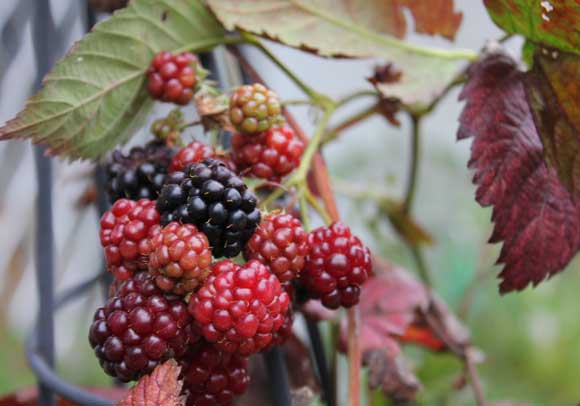
Boysenberries are big, fat, delicious fruits that look like a cross between a raspberry and a blackberry which in fact they are (although a dewberry and a loganberry were also apparently involved). Boysenberry plants behave just like blackberries and produce arching stems that can be as long as a car. In our gardens we generally restrain them by training them against a wall or fence or growing them into a tree or over a shed like a climbing rose. The berries are delicious raw or made into jam, high in antioxidants they are a ‘must’ if you have room for a plant or two.
In a nutshell
- Very versatile plants grow into large thorny bushes
- May need support of trellis or frame
- Varieties for all parts of country
- Rich, acidic soil
- Fat, juicy, delicious berries
- Crop very heavily
Quantity
- 1 plant per household – more if you have room.
Companions
- Marigolds to draw predatory insects like ladybugs and hoverflies
Getting started
When
The best time to plant boysenberries is from mid spring. Harvest from mid summer to autumn.
Where
Plant boysenberries in full sun. Good for growing countrywide, they can handle winter frosts down to -5 degrees centigrade. They are often trained against trellis or fences.
Soil
Boysenberries like a rich, free draining soil with lots of organic material in it. Soil should be slightly acidic – so look for lots of organic material as an indicator. If your soil is sandy or slightly sticky then you’ll need to add a well-rotted ericaceous (acidic) compost at the time of planting and continue to mulch with rich compost as your plants get established. You can always grow a boysenberry plant in a large container or raised bed filled with good organic compost if you have an unsuitable, sticky clay soil.
Planting
Plant
Plants should be spaced two strides apart. Soak plants in water before planting them.
Prepare the planting area. Soil should be weed-free and well dug through to at least a full spade’s depth. Add ericaceous compost and lots of organic material if necessary and mix with surrounding garden soil. Carefully remove boysenberry plant from container by turning it upside down and holding the plant across the base of its stem with a spread hand. Tap the bottom of the container until the plant and its root ball come loose. If it is in a plastic plant bag simply slit it down the side whilst the plant is standing in the planting hole, you can then slip the plastic bag from underneath. Handle plants by the root ball to prevent damage to stems and shallow roots. Place boysenberry plant in a hole that is just larger than the container it came in. Back fill around root ball making sure there are no air pockets. Water well and mulch with a finger-thick layer of compost, pine needles, shredded bark or untreated sawdust.
If planting in a container ensure it is large enough. Half barrels look good with boysenberries and they are the right size too. Use a rich ericaceous compost with plenty of organic material. Add slow release granules or chicken manure pellets before planting. When boysenberries are grown in containers they should be constantly monitored to ensure soil is moist – particularly in dry weather. Plants are often placed against a wall with trellis on it or horizontal training wires to which they can be attached.
Maintain
Keep plants weed free and maintain constant moisture levels – this is especially important during spring and summer when plants are growing and crucial once plants have formed fruit. Always water at the base of plants – avoid splashing foliage as this can spread fungal disease.
Feed: Depending on how well you have composted the ground you might want to give your developing plants an extra boost with some liquid seaweed or worm juice every 6 weeks. If you maintain a nutrient rich layer of mulch around their base this should give them all they need in the first few years as they become established.
Flowering: Boysenberries flower in spring, they are self-pollinated but bees will help to increase yields.
Care: Tie stems to training wires or trellis as they grow. Keep plants open and ensure good airflow – especially in warmer areas where humidity can result in fungal diseases like mildew.
Harvest or pick
In order to encourage a stronger yield in year three, pinch out flowers in their first two years to focus the plant’s energy on stem and foliage growth. After plants have had a few years to establish themselves allow flowers to form and become pollinated. Fruit are formed in spring and early summer when they start to ripen. Fruit should become ready for picking from mid July to September. Harvest does not last that long – normally between 4 and 6 weeks. Regular picking keeps fruit ripening. Fruits are ready when they turn from red to a deep, rich purple. They should come away from the stems easily when they are fully ripe. Taste is, of course, the ultimate test of readiness – boysenberries have a rich, sweet, rounded flavour. Don’t wash fruit as this causes them to deteriorate quickly. A mature plant can yield up to 4kg of fruit in a season.
Storage: Boysenberries keep in the fridge for up to a week as long as they are not piled high in a bowl. To freeze, pop freshly-picked, unwashed berries onto a plate or tray in the freezer. When they are frozen add them to a bag. Repeat this process over a period of time until you have frozen and stored all you want. When they are defrosted they will collapse due to excess moisture and are best used in puddings and jams where they are cooked.
Pruning
In winter cut back all the canes that have produced fruit to ground level and remove any others that are damaged or spindly and weak. Fresh young canes left on the plant will grow to produce the next season’s crop, pinching out their tips encourages growth of fruit bearing side shoots.
Pests
Boysenberries can suffer from a range of pests and disease – some of which are easier to deal with than others. Aphids, thrips and scale insects can be treated with Neem oil spray.
If grown in the right soil and the right location and kept weed-free plants should be less susceptible to diseases such as mildew and cane rust. Combat these infections my removing affected canes and foliage and disposing of them away from the growing area.
Birds are an issue as soon as fruit start to ripen so protect your plants with mesh.