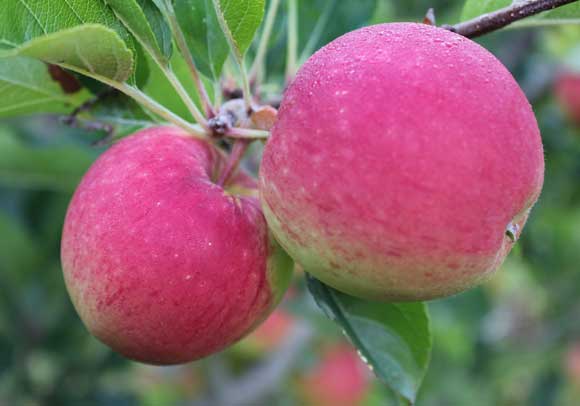





Grapes
Grow
Vitis vinifera
Grapes grow on vigorous leafy vines that can get quite large. They are often grown as ornamental plants and can be highly productive given the right conditions. With the right pruning vines can be restrained to an appropriate size and this allows many home gardeners to grow their own grapes for a super-sweet harvest in summer and autumn. Pruning not only helps to contain growth but it also stimulates good fruit production. Grapes can be grown countrywide, they are frost hardy and cold winter temperatures help to form flower buds. They grow well in greenhouses and conservatories, poly-tunnels and beneath glass verandahs. They look great on pergolas and can also be grown in containers like half wine barrels. Grapes are mostly enjoyed raw but they are also good for making into juices, wine, jams, preserves and puddings.
In a nutshell
- Vigorous deciduous climber
- Grow well on pergolas
- Can be grown in containers
- Most soils
- Sweet summer/autumn harvest
Quantity
- 1 plant per household
Companions
- Basil
- Beans
- Oregano
- Peas
- Blackberries
- Clover
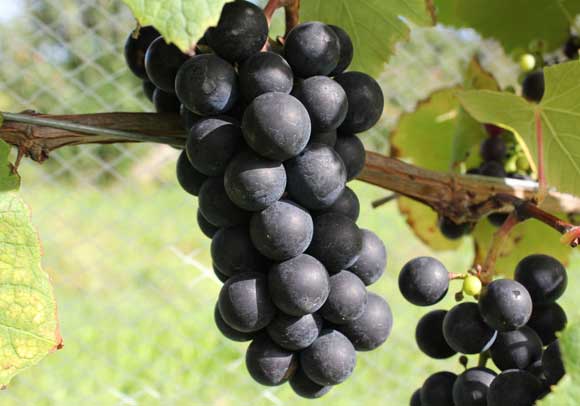
The growing lifecycle

Grapes ripening behind protective mesh

Red grapes

Black grapes on the vine
Black grapes looking ripe and ready for picking
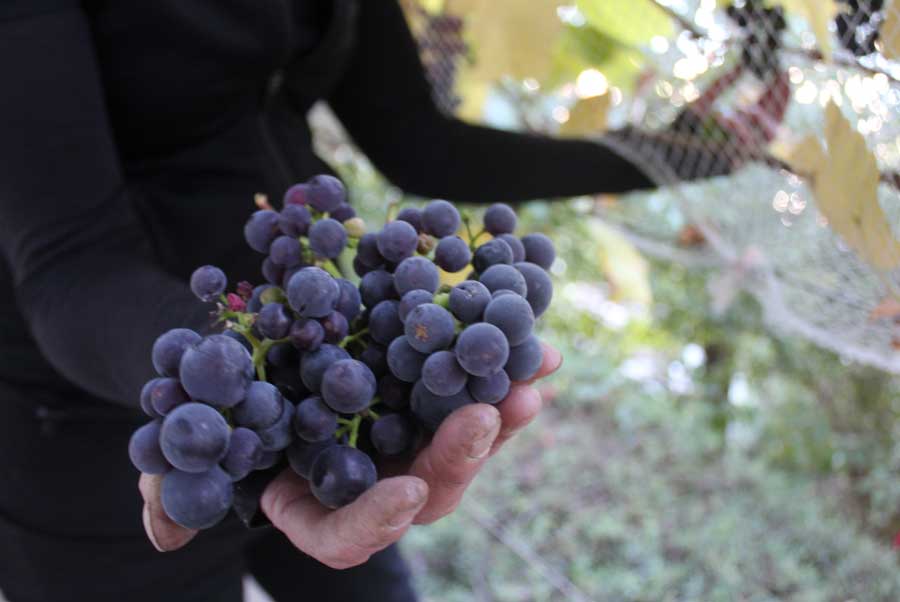
Black grape harvest

Black grape harvest showing the fading colour of foliage

Bunches of black grapes laid carefully in a crate
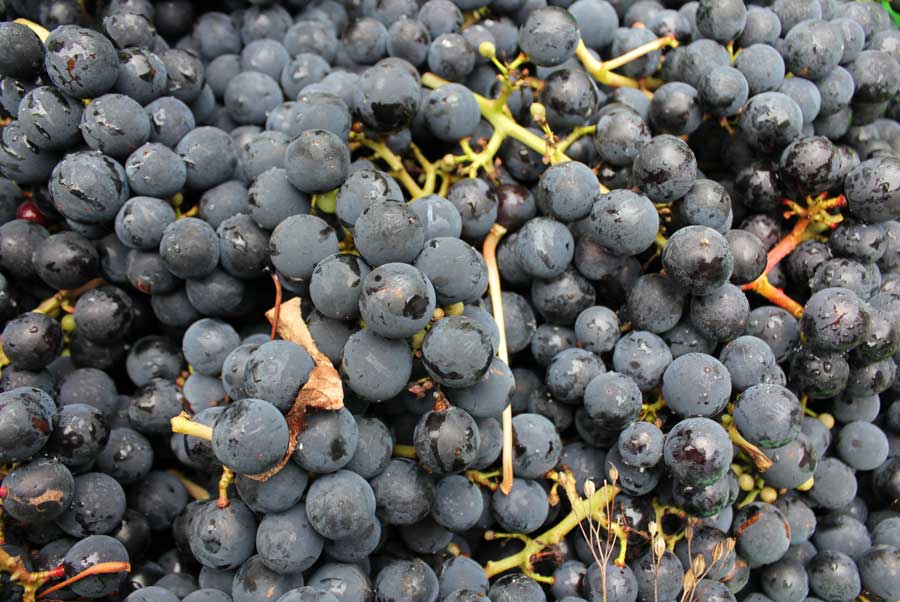
Black grapes ready for eating, juicing or processing
Our top 6 varieties
1. Suffolk Red Seedless
Produces very sweet medium to large seedless red grapes. Quite hardy and grows well in a sheltered south-facing spot. Popular grape for amateur wine makers. Harvest from August to September.
2. Lakemont Seedless
A vigorous vine producing delicious sweet golden yellow seedless grapes with great flavour. Has good disease resistance. Harvest in late September.
3. Siegerrebe
Produces small plum-red grapes that have an intense sweet musky flavour that makes them good for eating, juicing and making white wine. Fruit contain seeds. Autumn harvest.
4. Pinot Noire
A very well-known bluish-black grape with small tasty fruit that are delicious straight from the vine but are most well-known for the wine they give their name to and many others such as Champagne, sparkling and some white wines. Very hardy, so good for UK gardens. Has good disease resistance too. Harvest from August to September.
5. Brant
A popular variety that produces sweet purplish-black grapes with a dusty bloom on them. Harvest from August to September. Foliage turns a deep burnt red, with green veins, in late autumn.
6. Regent
A popular variety with wine makers in the UK. Produces deep red grapes that are good for juicing and wine making. In good years with hot summers outdoor fruit are sweet enough to be eaten as a dessert grape - when grown indoors this is usually the case every year.
Getting started
When
Plant container grown grapes in the ground from late winter to early spring. Plants can be planted into pots and containers all year round.
Where
Plant grapevines in full sun with protection from prevailing winds. Ideally in a sheltered, south-facing position or, best of all, against a south facing wall. Grapevines are perfect for growing over a pergola where they will soak up summer sun and offer much needed shade to anyone sitting below. They can be grown through trellis and trained along wires fixed to fences and walls. They are also great for camouflage – grow one over an ugly garden shed and get a sweet harvest as well.
Grapevines can be grown in containers such as half barrels and wide pots where their roots can spread. This means you can put them in your sunniest spot – say on a deck or terrace – if your garden doesn’t happen to be big on sun-traps.
Soil
Grapevines grow in most soils as long as they drain well. If your soil is too rich or too sticky they’ll not fruit well. If your soil is slightly sticky and you want to improve it, you can add well-rotted compost and grit or fine pumice to make a large mound at the time of planting and continue to mulch with rich compost as your plants get established. You can always grow grapevines in a raised bed filled with a mixture of sterilized topsoil and well-rotted organic compost if you have a really sticky clay soil.
Planting
Plant
Space plants at least three strides apart. Soak plants in water before planting them.
Prepare the planting area. Soil should be weed-free and well dug through to at least a full spade’s depth. Add well-rotted compost if necessary and mix with surrounding garden soil. Carefully remove grapevine from container by turning upside down and holding the plant across the base of its stem with a spread hand. Tap the bottom of the container until the plant and its root ball come loose. Handle plants by the root ball to prevent damage to stems and shallow roots. Place grapevine in a hole that is just larger than the container it came in. Back fill around root ball making sure there are no air pockets. Water well and mulch with a finger-thick layer of peat, pine needles, shredded bark or untreated sawdust.
If planting in a container ensure it is large enough. Half barrels and wide rimmed terracotta or glazed pots all look good with grapevines. Use a 50/50 mix of standard compost with plenty of organic material and a loam based compost to add some body. Place layer of drainage material in the bottom of the container before you fill it. Add slow release granules or chicken manure pellets before planting. When grapevines are grown in containers it pays to put them where you can easily monitor them to ensure soil is moist – particularly in dry weather. Plants are often placed against a wall with trellis on it to which they can be attached or with a metal training pyramid or cylinder standing above the pot. Container grown grapes are best when kept to a fairly tight shape through appropriate pruning. You will need to water almost daily throughout the growing season unless wet weather is on your side.


Maintain
Keep plants weed free and maintain constant moisture levels – this is especially important in the weeks during which the fruit swell and start to ripen.
Feed: To give plants a boost you can feed them with a sprinkling of blood and bone meal around the base of the stem in spring. Container grown plants may need more regular feeding with a constant layer of mulch maintained at all times and a sprinkling of blood and bone meal in spring and summer.
Harvest or pick
Fruit ripen in late summer and early autumn. Grapes are ready when they taste sweet. Ripe colours range from green to yellow, purple and black. Birds will descend onto your vine when the fruit are at their sugary ripest. Cut bunches carefully with secateurs and lay them carefully in a basket or shallow plastic tray. Try and pick on a dry day as wet grapes will deteriorate quickly.
Storage: Fruit only ripen on the vine so pick when they are ready. Grapes will store for a few days in the fridge. If you have to, wash them just before you intend to eat them. Grapes can be made into jams, jellies, puddings, juices, wine and they can be dried.
Pruning
Pruning can be complicated if vines are trained on wires to perform as well-behaved vineyard plants. The main aim is to prune and train a plant so that it has good air circulation and is not shrouded in foliage. This helps to prevent fungal disease taking hold and focuses the plant’s energy on ripening fruit.
In the home garden you can do a modified version to get a vine started:
In the first winter after planting choose the strongest stem and tie this to a bamboo cane – this will be the main stem of your grapevine. Cut away all other stems. This main stem will produce new shoots. Select one shoot on either side of the top of the main stem and fasten them to wires so that they form the flat line across the top of a ‘T’ with the stem in the middle.
Allow the ‘T’ shape to remain and prune back to it every winter. Cut back shoots to within four buds of the side stems of the T in winter. In summer, when flowers appear, snip off the stems about two leaves further on. This puts the plant’s energy into ripening the resulting fruit.
If you really get into it you can train a grapevine into a bush, a cordon, a decorative espalier or fan. A cordon is a single stem trained on wires with short fruiting spurs formed by pruning side shoots. Grapes are produced on these spurs. An espalier is trained from a vertical centre stem with side shoots grown as branches on either side. These stems are set at intervals about two full hand lengths apart. Fruiting spurs are produced along these side stems.

Pests
Grapes are relatively trouble free if given the right growing conditions. Varieties now come on disease-resistant rootstocks. Fungal disease like mildew and botrytis are a problem for domestic gardeners. Scale insects, aphids and thrips may have a go at them – treat with Neem oil spray in spring to interrupt breeding cycles and repeat as necessary. If soil is not suitably drained then this may open the door to problems like root rot.
Birds will swoop on vines when grapes are ripening. Protect them with netting.
Wasps can become a problem – especially with certain varieties – but the tip is to pick your grapes as soon as they are ripe. Wasps seem to be attracted by ripe fruit with high sugar content so keep your plants well-picked.